
Under Article I, Section 27 of the Constitution of Pennsylvania, “the people have a right to clean air, pure water, and the preservation of the natural scenic, historic and esthetic values of the environment.” This right isn’t just promised to us today, but for “generations to come,” too.
This Environmental Rights Amendment was ratified in 1971, but for thousands of years before that, native plants have been quietly working to provide millions of dollars in ecological services to help humans enjoy healthier lives. These plants are also key contributors to ecosystem health – hundreds of Pennsylvania species rely on them for survival.
That’s why our dwindling native landscapes, whether they’re next door or in the wilds of PA, are so important and worth protecting – especially in an age of overdevelopment and data center expansion.
Plants important to our heritage
Big bluestem (Andropogon gerardii) is a living symbol of American heritage and represents resilience due to its ability to survive drought, floods and fires. The plant routinely sends roots eight to 12 feet deep, aerating the soil, feeding healthy microbes and creating healthy conditions to absorb excess rainfall like a sponge. Big bluestem is one of thousands of native species that not only protect us from flooding, but they also act as water filters and help fill underground aquifers to protect us during times of drought.
Then there’s the Eastern white pine (Pinus strobus), Pennsylvania’s state tree, and a species that played a crucial role in building early American ships, homes and settlements.
White pines also help absorb carbon dioxide from the atmosphere, which aids in a healthier climate today. Their evergreen needles work tirelessly to capture dust, smoke and tiny pollution particles, making it easier for us to breathe day in and day out. Beyond that, our native trees create shade and cool the surrounding air temperatures, which can even prevent the formation of ground-level ozone on hot days.
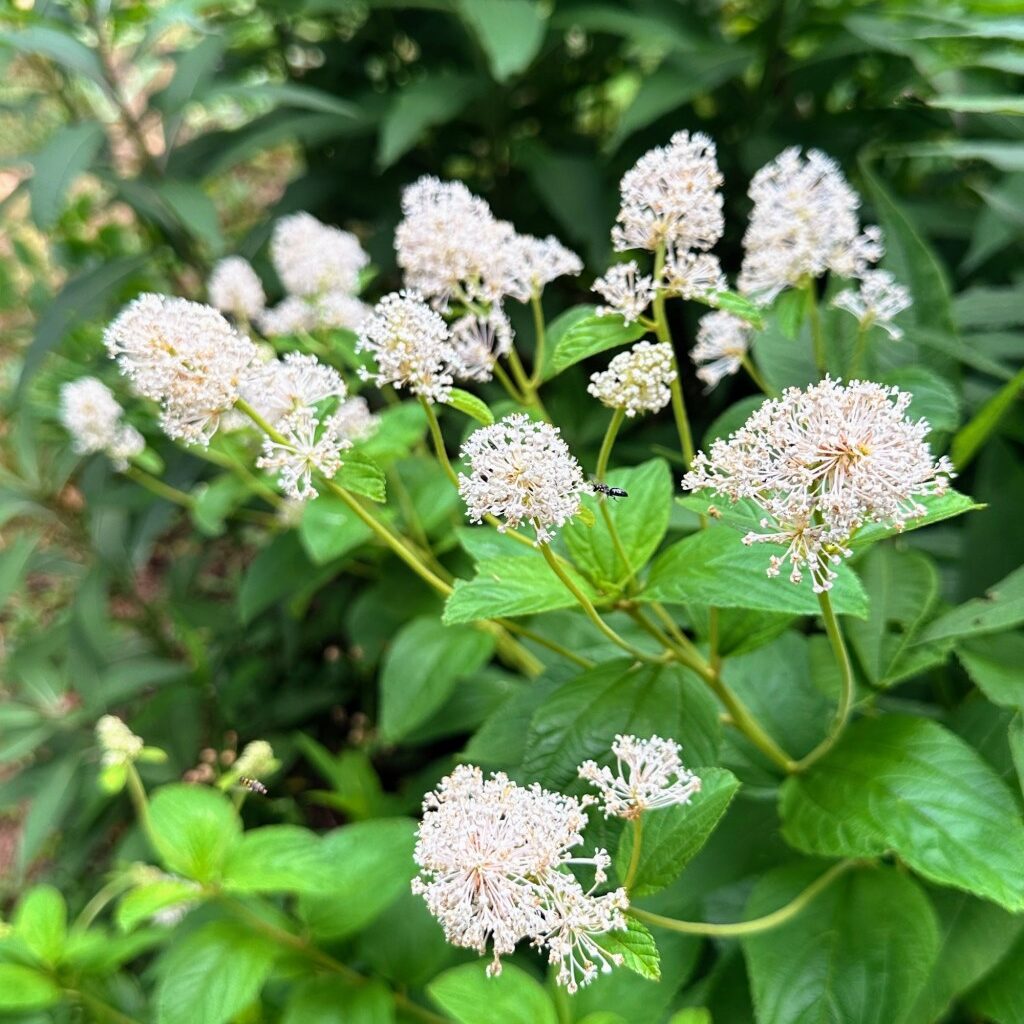
And a discussion about patriotic plants wouldn’t be complete without mentioning New Jersey tea (Ceanothus americanus). During the American Revolutionary War, colonists boycotted imported British tea after events like the Boston Tea Party. Instead, many brewed the dried leaves of New Jersey tea as a caffeine-free substitute – and a way to support American independence instead of relying on British goods.
So this Fourth of July, whether you’re relaxing in the shade of a white pine or admiring a hummingbird visiting the red fireworks-like bloom of scarlet bee balm (Monarda didyma), take a moment to soak in our natural heritage and reflect on how Pennsylvania native plants have made your life better. (And then vow to plant more this fall!)