
Filling in the gaps
Philadelphia’s historical sites, cultural destinations and museums keep conversations about slavery alive in different ways. For The Lest We Forget Museum of Slavery, the only museum in the Philadelphia region dedicated to slavery artifacts, that means inviting visitors to engage with history firsthand through guided tours.
“I provide a guided tour, which provides a review of slavery from capture to emancipation and beyond,” Gwen Ragsdale said. “We start at slavery, and we actually walk around the museum, starting with the first shackle, which is Uncle Bub’s shackle, and other shackles.”
Exhibitions at The African American Museum in Philadelphia also detail the history of slavery. “Audacious Freedom: African Americans in Philadelphia 1776-1876” is a permanent exhibition that illustrates the lives of free and enslaved people over the century following the nation’s founding. The museum also has a new video exhibit on Ona Judge made in partnership with the Ona Judge Coalition. Judge was an enslaved woman who escaped from the Washington, D.C. household and fled to freedom in New Hampshire.
Black Americans are at the heart of the story of the nation’s founding, even if they aren’t always talked about, said Morgan Lloyd, programming coordinator at The African American Museum in Philadelphia.
“We should also include those who are often overlooked in that narrative, not only so that other people can feel included, but to also emphasize the fact that Philadelphia, and thus this nation at its inception, has always had a diverse narrative and unique perspectives,” Lloyd said.
Another museum that includes enslaved people in its history exhibitions is The Museum of the American Revolution. However, the histories are presented more broadly, with stories of marginalized people woven throughout diverse exhibits so viewers can understand how oppressed groups fit into the context of American history.
“No one person, no one family, no one group made America,” Whaley said. “It was always intersecting lines, and we think it’s important to show that.”
Historical sites serve as evidence of slavery’s presence in their own ways. At Stenton, the former house of James Logan, the founder of the University of Pennsylvania and former mayor of Philadelphia, visitors can hear the story of Dinah, a formerly enslaved woman, from historical reenactor Irma Gardner-Watson. Oral historians claim that Dinah stopped British soldiers from burning down the estate in 1777.
“I want my freedom, and I want it now,” Gardner-Watson, acting as Dinah, said to a crowd. “I want to be able to come and go when I get ready. I want to wear the clothes that I want to wear. I want to have some time when I have time.”
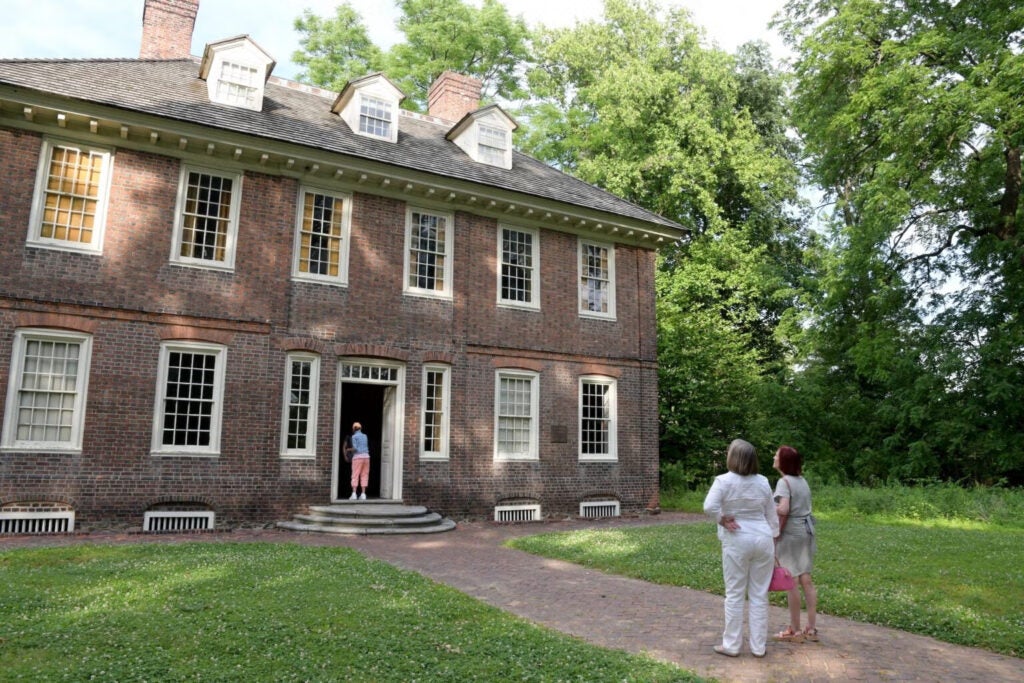 The exterior of the Stenton house in northwest Philadelphia. (Marissa Weekes Mason/For WHYY)
Stenton features a monument dedicated to Dinah, who lived and worked at the site before being freed in 1776. Watts, who works with Stenton, said Dinah’s memorial is important because it highlights the history of slavery in the North, including the role some Quakers played as enslavers, despite their later association with abolition.
“It just really shows that racism, white supremacy, all that stuff transcends state lines, transcends boundaries,” Watts said. “And that’s history that we all need to be very clear about.”
‘These stories help them to see themselves in history’
The legacy of enslaved people in Philadelphia reaches to today, with stories of slavery and freedom resonating deeply with city residents and out-of-town visitors.
Gwen Ragsdale said the history of slavery isn’t just for people of African descent to learn, but for everyone. The Lest We Forget Museum of Slavery draws visitors from overseas, such as a group from Germany that comes annually.
“People want to know,” Gwen Ragsdale said. “They want to know this history, and they want their children to know this history.”
She added that people can become overcome with emotion when viewing artifacts from slavery, often bursting into tears.
“I have tissue boxes that I always have handy,” she said. “I have to hand a tissue box to a person because they just become overcome by the stories that I tell them.”
Whaley said people of African descent have told her that the Museum of the American Revolution’s exhibits have helped them understand that the American Revolution is a story for them, too.
“It’s so beautiful to know that they can now see themselves as a part of the ongoing revolution,” Whaley said.
Gwen Ragsdale said she is dedicated to telling the history of slavery because it will never go away and can’t be erased.
“I’m not going to stop, because as long as people want to know and learn about it, I’m here to tell it, and other people like me are willing to tell them as well,” she said.