
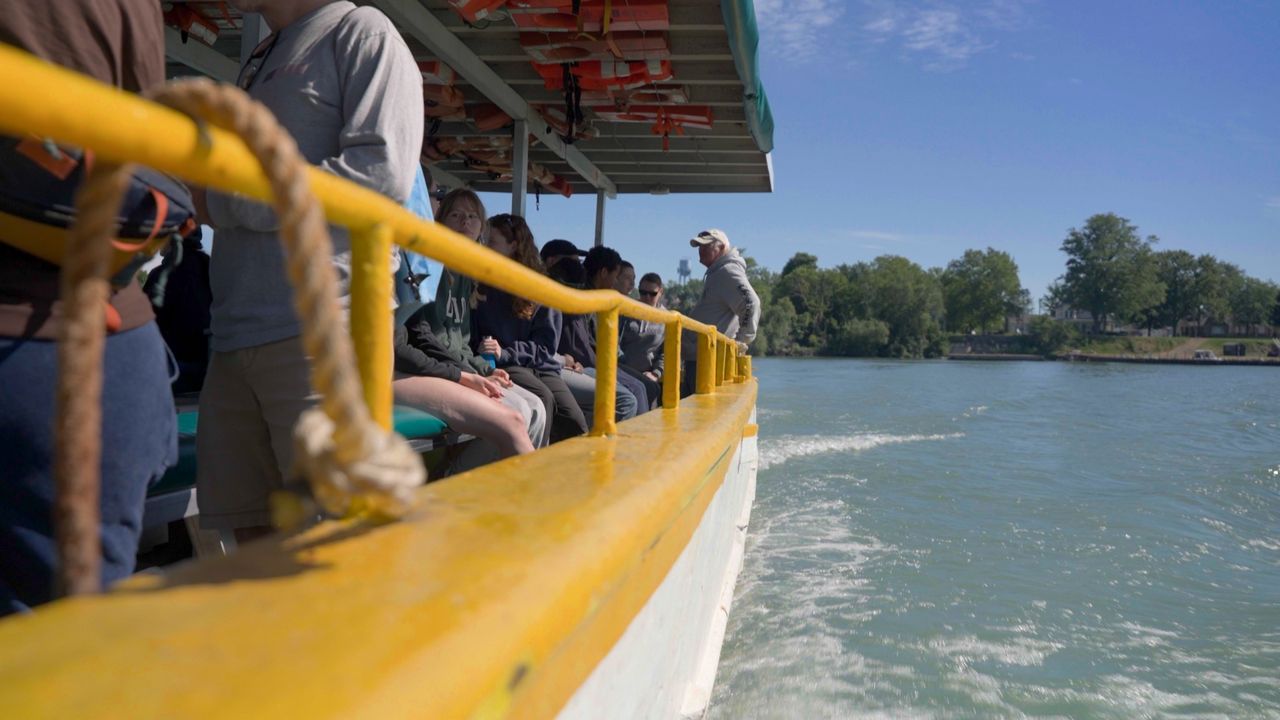
CLEVELAND — Students from all over Cuyahoga County filed onto a ferry at Kelley’s Island for a trip that blurred the line between education and recreation. For some students, it was their first time on a boat.
“I was so excited to come out to Kelley’s Island and, like, be on a boat,” said Reya McLellan, a student headed into her senior year.
She’s part of the newest cohort of “Freshwater Fellows,” a group of Cuyahoga County high school students who applied to be a part of an ongoing educational program run by the Freshwater Institute.
This is the second year of the Freshwater Institute, a county-led initiative to help create the next generation of freshwater stewards.
The Kelley’s Island Trip occurred during their “Immersion Week,” an itinerary of hands-on educational outings designed to connect the students with real-life examples of topics they had explored in the classroom.
On the ferry, they broke up into teams in order to collect water samples at different depths and test the water for various ‘vital signs.’
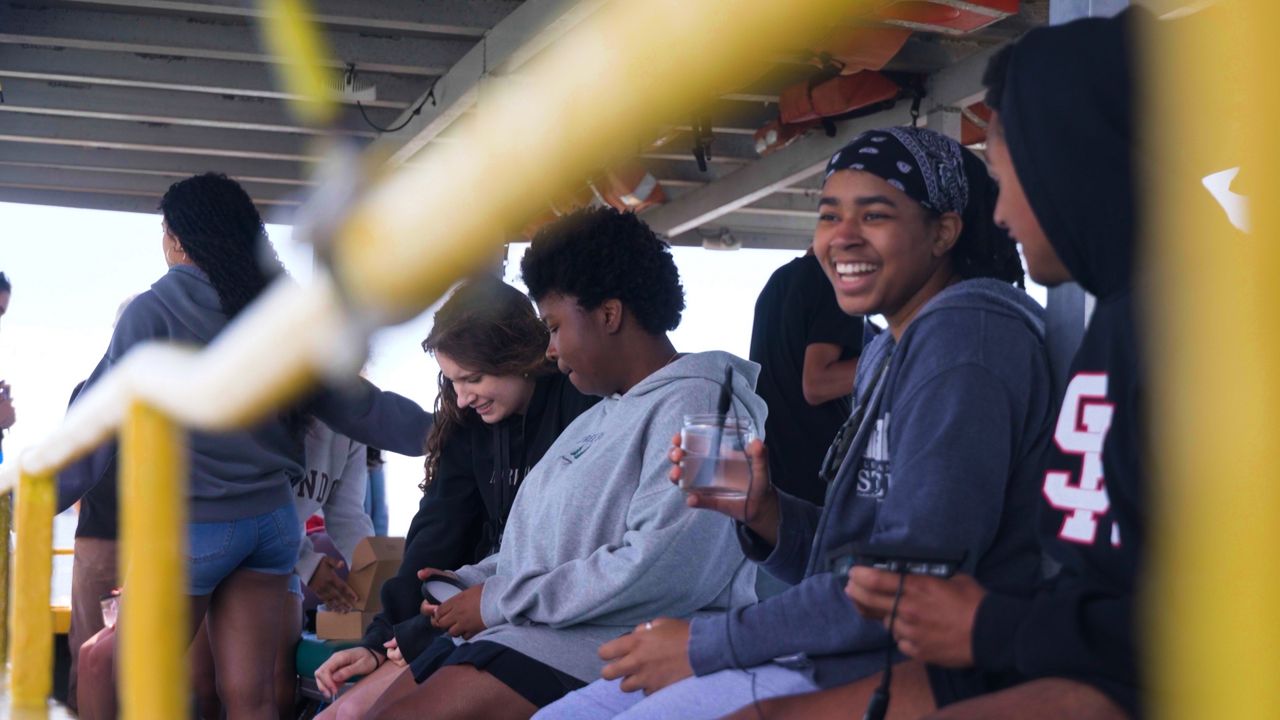
Students conduct water testing on Lake Erie. (Spectrum News 1/Corey O’Leary)
“I was looking at everyone’s data, make sure we got all the numbers recorded for the various tests that we were doing,” said Olivia Slocum, a Freshwater Fellow.
Slocum said being part of the program has helped her understand how vital Ohio’s waterways are to the region.
“It surprised me how many jobs rely on Lake Erie, not just in conserving it, but also when it comes to manufacturing, social aspects,” she said. “All facets of our economy are somehow tied to the lake.”
By providing the students with hands-on, immersive learning experiences, those lessons sink in.
“We always talk about glacial grooves and how they’re formed, well guess what let’s go walk on them, let’s go experience them,” said Ebony Hood is the Director of Syatt, an educational nonprofit that helps create the Freshwater Institute’s programming.
Hood said the hands-on nature of the trip helps students learn what sort of careers are available in the ‘blue economy,’ a term for jobs relating to bodies of water.
“It’s like a beautiful lightbulb that goes off, and it’s like, ‘Ah, this is why this is amazing.’ You can literally see it before your very eyes,” Hood said.
Since Jan. 2026, the fellows had been meeting outside of school to learn more about the region’s freshwater bodies. By the time immersion week happened, some were friends already; others had friendships forming.
“Once you’re part of a cohort, there’s like a brotherhood and sisterhood thing,” Hood said.
The program brings together students from all around the county. Whether they go to a public, private or home school, they all received a stipend for the time they spent in the program, opening up doors for students to apply that would normally have to work outside of school.
Immersion Week saw them tour water treatment plants, visit Niagara Falls, and go kayaking.
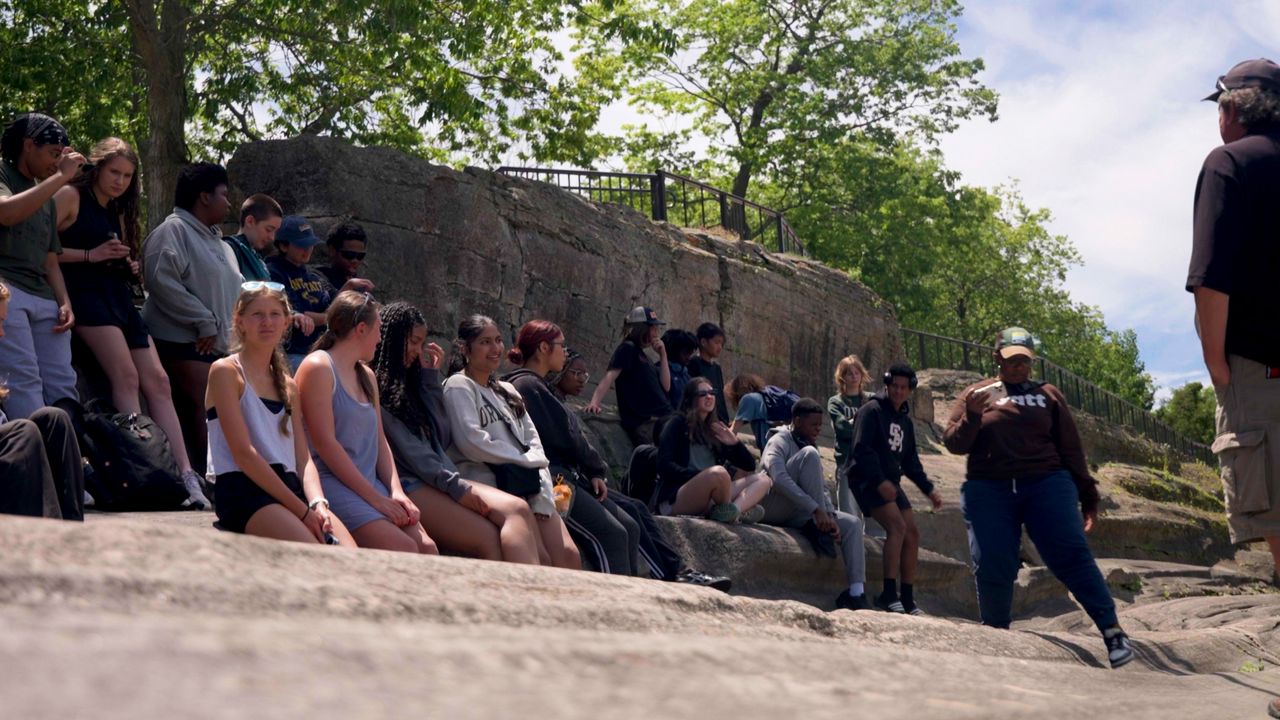
Freshwater Fellows gather on Kelley’s Island Glacial Grooves. (Spectrum News 1/Corey O’Leary)
“Just learning things that you wouldn’t be learning in school. Because we’re really connecting with our community, school really isn’t about that,” Slocum said.
The students saw firsthand how the water around us shapes our lives.
“That’s really important, to kind of have a sense of identity and a sense of pride in your community and where you live,” McLellan said.
The program is meant to instill curiosity about the world and open their eyes to potential careers.
“Now they’re asking questions, they’re looking at systems, they’re learning about the blue economy,” Hood said.
McClellan said the program sparked curiosity about the region’s water history.
“I read a book and learned there used to be a swamp in Northeast Ohio,” she said. “When they cleared that out, it really affected the health of Lake Erie.”
Now, McClellan said she hopes to become a wetland conservationist or go into horticulture after high school.
“The lake is our most vital resource here; it’s a very limited resource, and it’s a very rare resource to have freshwater just in your backyard. And I think there needs to be every effort made to preserve it and every effort made to understand it and to respect it,” Slocum said.
The program had its first cohort in 2025, and those students were invited back for a second year of programming, with a majority of them opting to come back. For this class of 2026, the option to return is also on the table.
For McLellan, it’s not a hard decision to make.
“Oh, absolutely,” McLellan said when asked if she planned to return.