
Paul Thornell first became interested in his ancestry as a child, after watching the landmark 1977 TV series “Roots,” the story of author Alex Haley’s family beginning in Africa and the days of slavery.
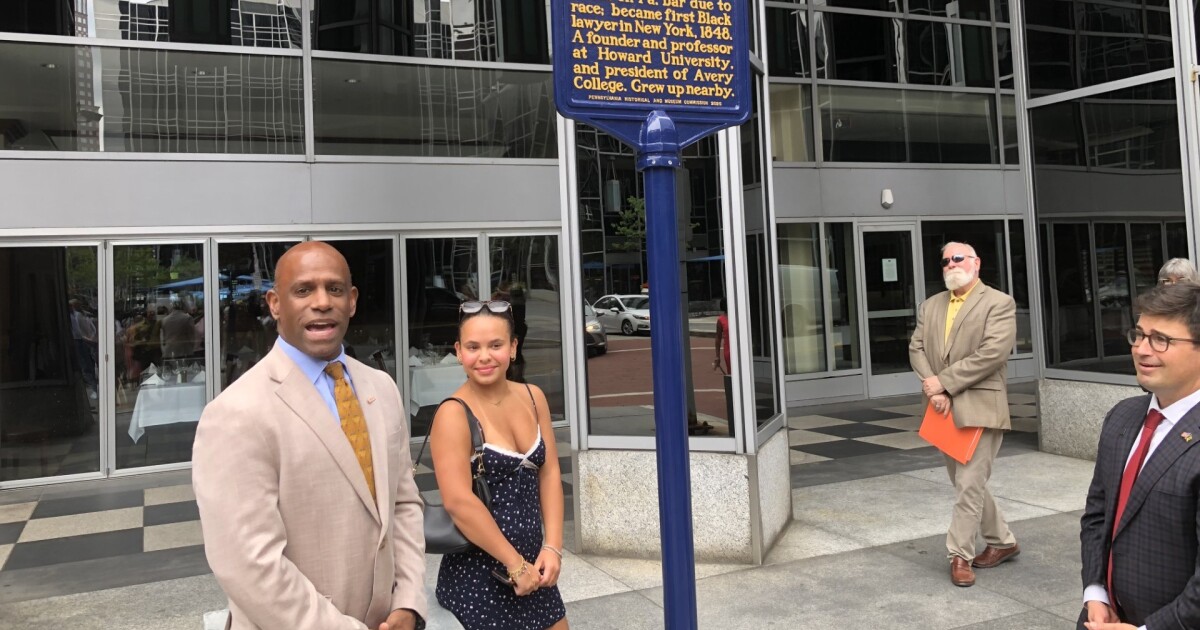
Thornell’s grandmother told him the story of her own grandfather, George B. Vashon, a Black abolitionist and educator who lived in Pittsburgh in the 1800s. That inspired Thornell to conduct years of research into that half-forgotten history. It culminated last week in the dedication Downtown of a Pennsylvania Historical & Museum Commission marker honoring Vashon.
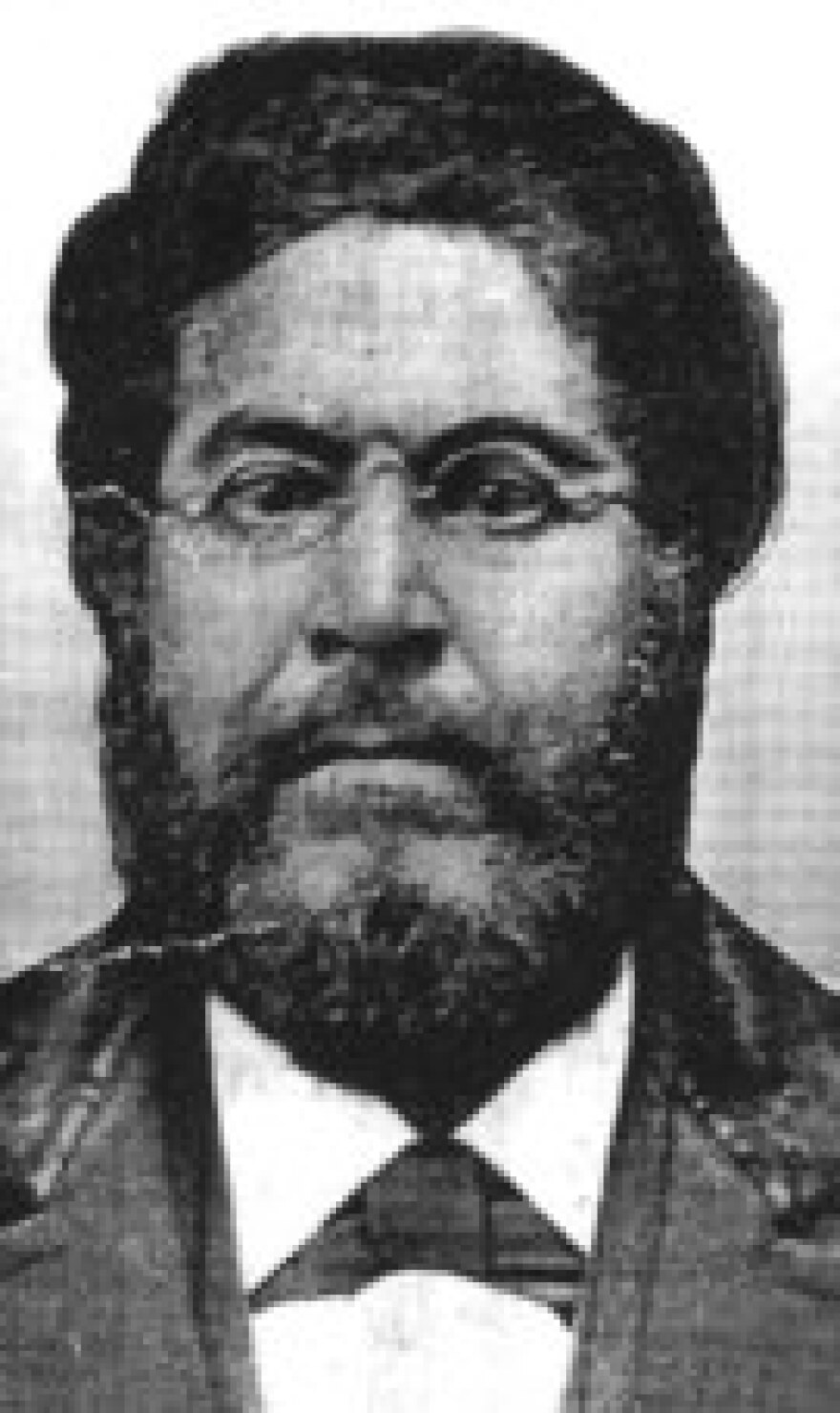
One of the few surviving photos of George B. Vashon
The plaque is at Third and Market streets, amid the glass-walled skyscrapers of PPG Plaza Place, on the former site of the Vashon family home.
“It’s really passing down a story that’s compelling, not just because of the amazing historical significance that so many of my ancestors have, but because it is the story of a family,” Thornell said. “And I’m proud to be the one to be able to tell it.”
Vashon was among the first Black Americans to graduate from college — the very first at Oberlin College — and the first Black lawyer in New York state.
Speakers at the June 25 marker dedication included Mayor Corey O’Connor and Alonna J. Carter, associate curator of the Museum of African American History at the Heinz History Center.
Carter called Vashon “an absolute trailblazer, and he’s doing this at a time when the majority of African Americans in the United States, especially in the Southern states, are enslaved. So for him to be able to make these strides during a time when there is segregation, where there is a lot of conversation about who’s a person, and who belongs, is just really amazing.”
‘A way to contribute’
George B. Vashon was born in 1824, in Carlisle, Pa. The family shortly moved to Pittsburgh, where his father, John B. Vashon, became an outspoken abolitionist and successful businessman.
Thornell said the elder Vashon operated a barbershop and the city’s first public bathhouse. The enterprises doubled as a stop on the Underground Railroad, where the Vashons helped escaped slaves to freedom.
For a Black man to attend college circa 1840 was nearly unheard of. But another speaker at the dedication, former Oberlin professor A.G. Miller, said George Vashon — who organized an anti-slavery society at the Ohio school — was class valedictorian.
“Vashon paved the way for generations of African American students at Oberlin and beyond,” said Miller. He added that Vashon also mentored Oberlin’s second Black grad — John Mercer Langston, who became the first Black lawyer in Ohio, the first Black congressman from Virginia, and founding president of Howard University Law School.
But Vashon’s path remained filled with obstacles. Back in Pittsburgh, he studied law with former Congressman and U.S. Treasury secretary Walter Forward. But he was denied admission to the Pennsylvania bar because he was of African descent. (He was admitted to the Commonwealth’s bar posthumously, in 2010.)
The New York bar was kinder, and Vashon practiced and taught law there before returning to Pittsburgh in the years before the Civil War.
“He came back to Pittsburgh because he wanted to find a way to contribute to his hometown,” said Thornell.
A family of activists
Thornell, partner in a government affairs consultancy in Washington, D.C., said Vashon was also an outspoken advocate for the 13th, 14th and 15th amendments to the U.S. Constitution, which expanded civil rights for Black Americans. At a time when Black students were not allowed in Pittsburgh’s public schools, he taught in Black primary schools and served as president of Avery College, a Pittsburgh-based institution of higher learning for Black people.
The History Center’s Carter noted that along with his father, Vashon’s colleagues in his mission included his eldest sister, the abolitionist writer and an entrepreneur Mary Francis Vashon Colder. His wife, Susan Paul Smith Vashon, “George’s most important partner,” was herself an educator who aided free Blacks settling in the city, Carter said.
Thornell, based on his years of research, nominated his great-great grandfather early in 2025, around the time the City of Pittsburgh hosted a display about Vashon in the lobby of the City-County Building for Black History Month.
The nomination was reviewed by the commission, which is chaired by Pittsburgh resident Hayley Haldeman. The review panel included David Grinnell, the University of Pittsburgh Library System’s coordinator of archives and manuscript collections, who like Haldeman also spoke at the dedication.
Pennsylvania has more than 2,500 historic markers. Vashon’s stands near one honoring famed abolitionist Martin Delaney, who was for a time a member of the Vashon household.