
By Jon Marks
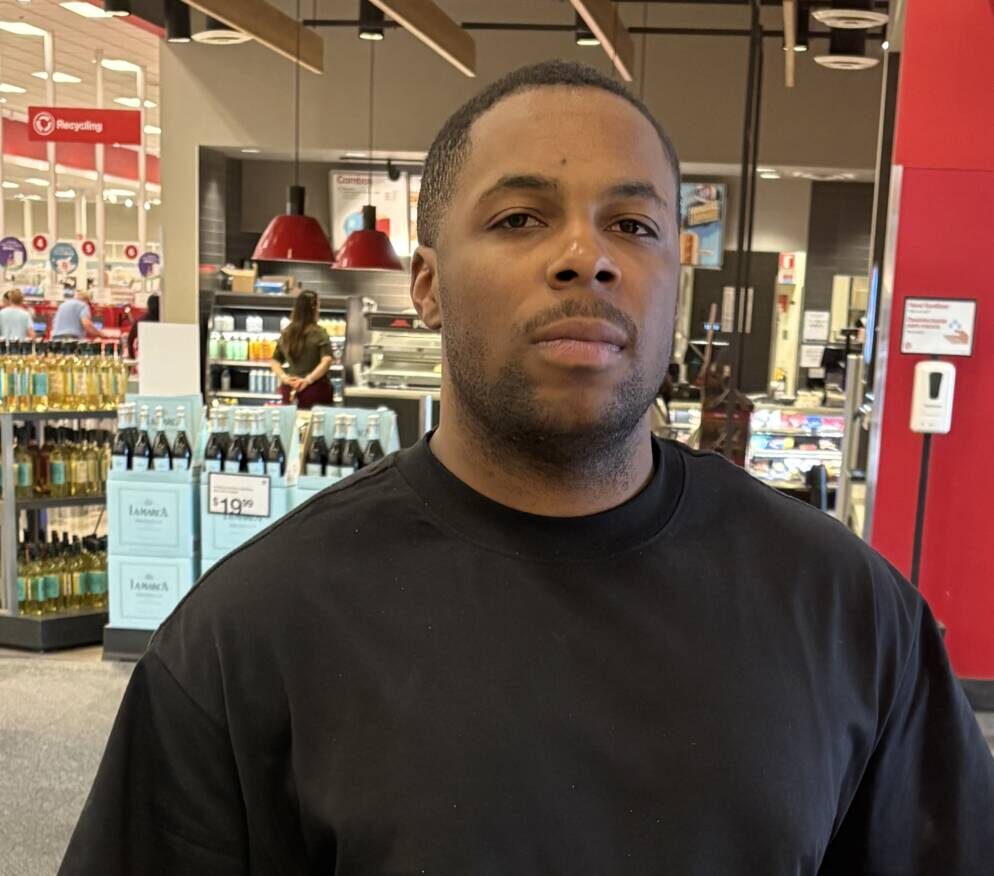
 Jared Armstrong (Jon Marks)
Yes, Jared Armstrong was there. No, he doesn’t like to talk about it.
But when his Elizur Ashkelon coach called early the morning of Oct. 7, the kid who grew up in Philadelphia and in recent years has returned to the area knew there was no time to lose.
“I was in Ashkelon about 20 kilometers from Gaza,” said Armstrong, who’d been playing in Israel professionally a few years following his playing days at Slippery Rock University. “I got a phone call from my coach who told me the situation was life or death.
“There’s nothing more you can really explain. I got my teammates together and we took a risk and drove up to Tel Aviv. We stayed there until I was able to get a flight out five days later.
“Everybody was in panic mode. They didn’t know what was going on. Obviously, there was a lot of tragedy. It was an experience; not something you want to talk about. But it happened and you could’ve died.”
Not only did Armstrong survive, he’s gone on to flourish, having recently returned from a trip back to Israel where his personal company, JAB (Jared Armstrong Basketball) Courts, refurbished 10 courts throughout the country. His focus is on hoops and on the youth he believes can be the start to bringing us all together.
“I think to focus on the next generation, that’s the key,” said the 29-year-old Armstrong, who fell in love with Israel during his four years playing there and eventually became an Israeli citizen. “I don’t think you can really steer someone at 60, but you can build on the next generation and try to educate them on what’s right and wrong and try to unify them.
“You don’t have to be the best of friends with someone who doesn’t look like you, but respect and understanding is super important.”
Armstrong grew up in the Mount Airy section of the city, where he attended Congregation Temple Beth’El, the synagogue founded by his family, until age 12. “My parents were not that strict,” Armstrong said about his Jewish education ending prior to what have been his bar mitzvah. “But I’ve gone to synagogue on High Holidays with my friend Mike Solomonov.”
The famed chef and restauranteur welcomes his company. “He’s really a wonderful kind of relentless, loyal friend,” said Solomonov, who says Armstrong’s other pet project, JAB Camps, has had a significant impact on his 15-year-old son, David. “He just hustles and is constantly asking questions about what he can do in terms of anti-hate initiatives.
“He just wants to be involved and do good things for the world, for the Jewish community. He considers the impact that sports and that community engagement has and obviously the return is more spiritual and emotional.”
Besides Solomonov, Armstrong’s also developed a relationship with Brian Shankman, who was looking for a new challenge after serving 30 years with AIPAC.
“He told me about his story and what he had done and his family and playing in Israel,” recalled Shankman, who grew up in Memphis but lived all over the country as well as Israel. “I was going to be up in Philly for some meetings and said, ‘Why don’t we get together?’ We met and hit it off.”
Before long, Shankman and Armstrong were partners in JAB Courts, which next year plans to redo 18 courts in Israel. Prior to that, Armstrong plans to expand his JAB Camps operation.
“I have kids from all different backgrounds at my camp,” said Armstrong, whose campers convene at the Kaiserman JCC, ranging from first through eighth grades. he also wants to have some in Israel. “I think racism and that kind of stuff come as you get older.
“I haven’t had that with our kids. I’m trying to build a connection between kids in Israel and America. Expand into summer camps and summer programming and hopefully even to year-round.”
Shankman, a former chief strategy officer at AIPAC, loves the idea. “One day we’re talking about JAB Camps and the work he’s put in and the images that were amazing,” recalled Shankman, who soon after became Armstrong’s business partner. “I said ‘Why don’t we try and see if we can put together a tour?’
“So we came up with the concept of the JAB Resilience Tour. Next summer we plan to refurbish 18 courts.
“There’s a generational connection that can be built through these courts, getting these folks connected to Israel. But we also open it up to bar and bat mitzvah families to refurbish the courts, design them and get their names on them.
“There’s something pretty magical about the direct impact he’s had on people’s lives.”
Among them is Solomonov, who once dealt with his own personal tragedy when his younger brother, David, was killed by a Hezbollah sniper while patrolling near the Lebanese border. “He figures out how he can do good things for people,” said Solomonov, who got connected to Armstrong through a mutual friend. “I think he considers the impact that sports and that community engagement have on youth.
“That can be applied quite honestly anywhere. The impact this has on the community is certainly greater than on himself.”
Aside from that, both Shankman and Armstrong are working on individual projects. For Shankman it’s 2048 Strategies, focused on what will be Israel’s 100th birthday. On the other hand, Armstrong’s JAB Classic, a three-day, invite-only global tournament designed to combat hate featuring ex-NBA players, future NBA players and international players, will take place Aug. 14-16 at the Palestra.
Armstrong has already lined up a bevy of sponsors for the event in which JAB Courts will build a court in the hometown of the tournament MVP. After that he’ll go back to what’s become his heart and soul: the kids.
“They play together,” he reiterated. “They laugh together. They have fun.”
For the man who once survived the worst, it’s simply the best.
Jon Marks is a freelance writer.