
What’s the history behind Arch Street Meeting House?
The first burial at this site happened in 1683, with Penn deeding the land in 1701 to become a Friends burial ground.
Early Philadelphia Quakers would often meet in private homes to worship, but as the Quaker community continued to grow, a need arose to provide a meeting space where larger groups of Friends could gather to worship.
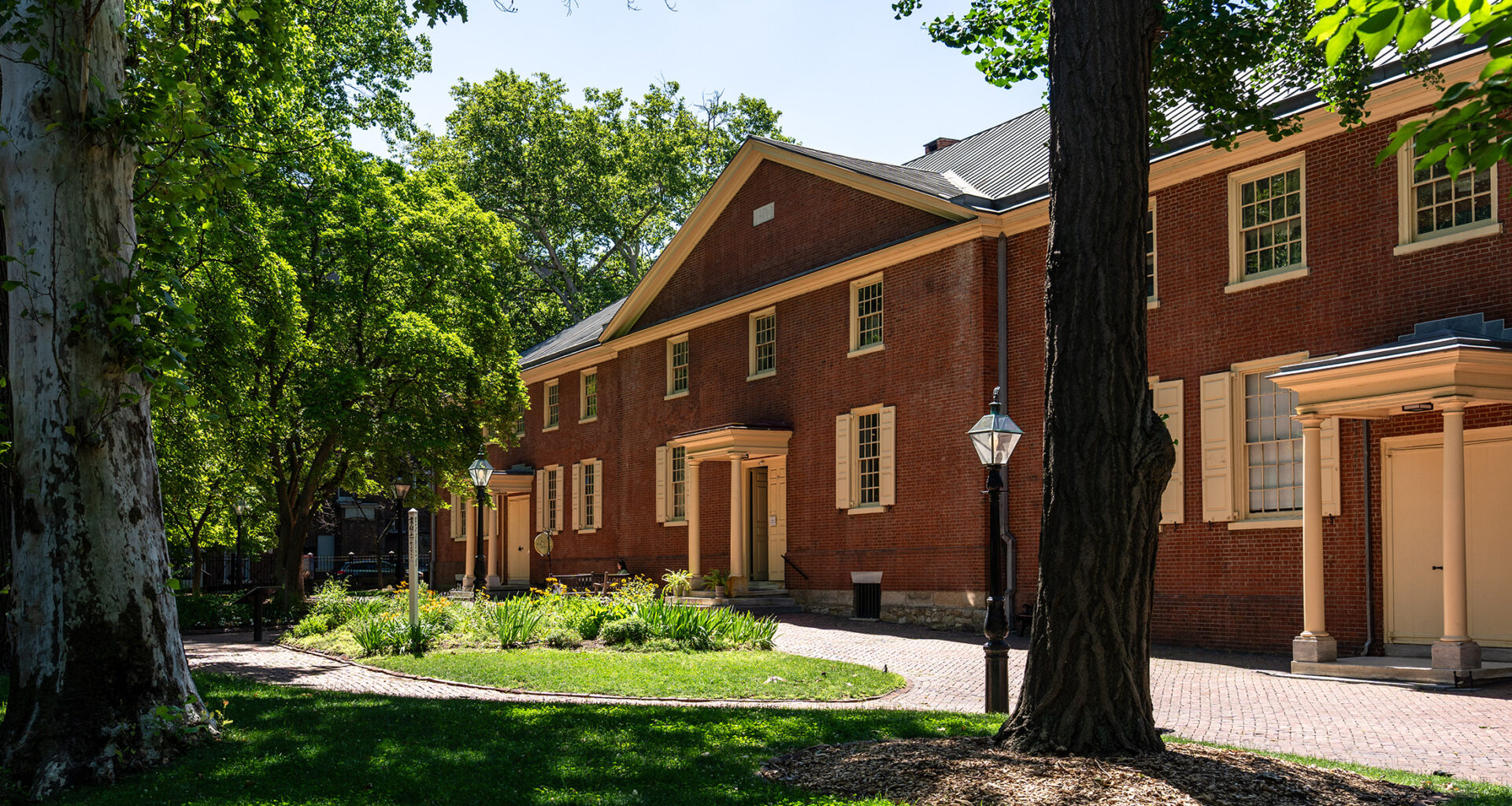
Prominent Philadelphia Quaker and master builder Owen Biddle Jr. designed and built the meeting house in 1804, mixing Georgian style with simple Quaker aesthetics. The onsite museum displays an exhibit detailing the building’s architecture and features some of Biddle’s original tools, including a square and a compass.

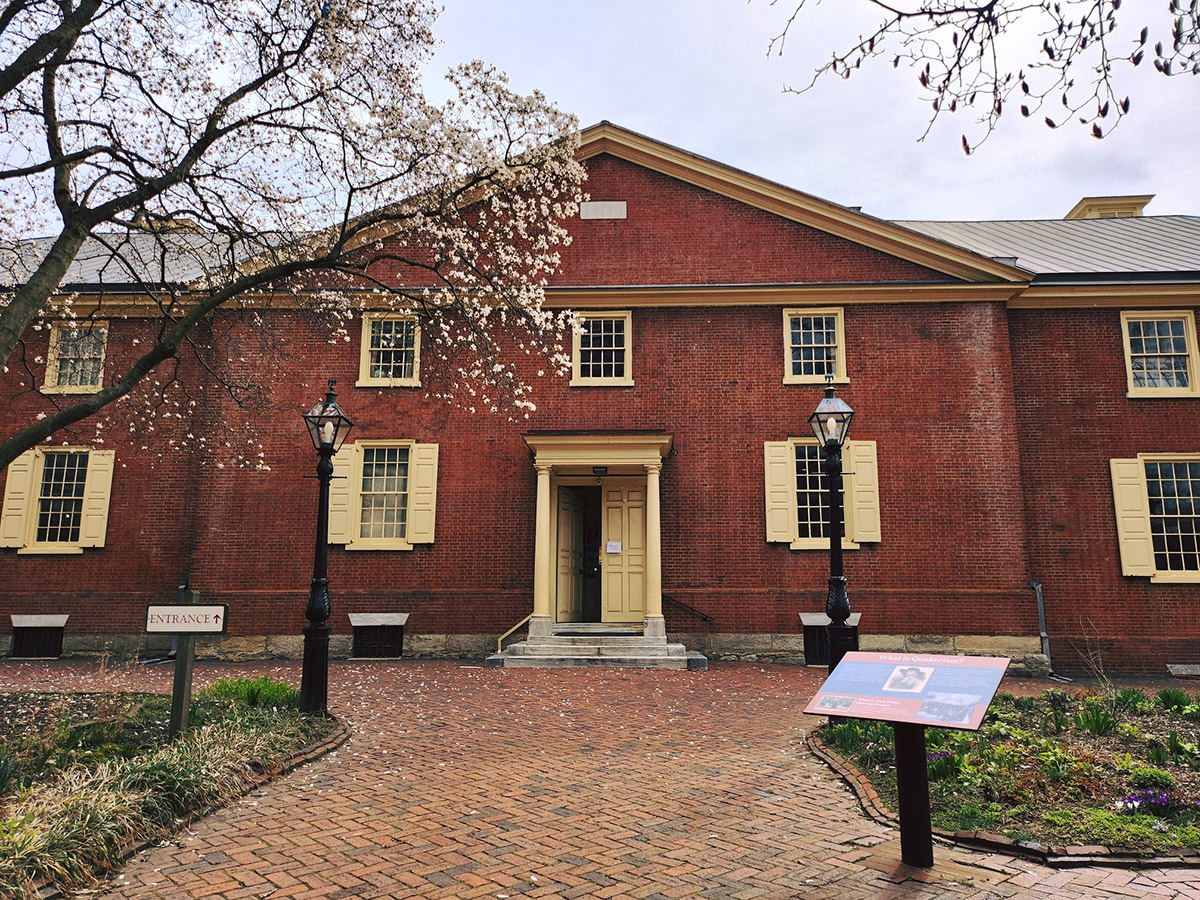
— Photo courtesy Arch Street Meeting House
Biddle began his design of the meeting house in 1803, with construction happening in stages until the three-room building was completed in 1811.
Once built, Arch Street Meeting House would become the central hub for the region’s Quaker community, serving as a vital gathering spot for Quakers advocating for equality and social justice reforms.
A historic marker on the site memorializes the Philadelphia Conference of Quakers who gathered at Arch Street in 1979 to plan the first National March on Washington for Lesbian and Gay Rights, garnering 100,000 demonstrators to march.