
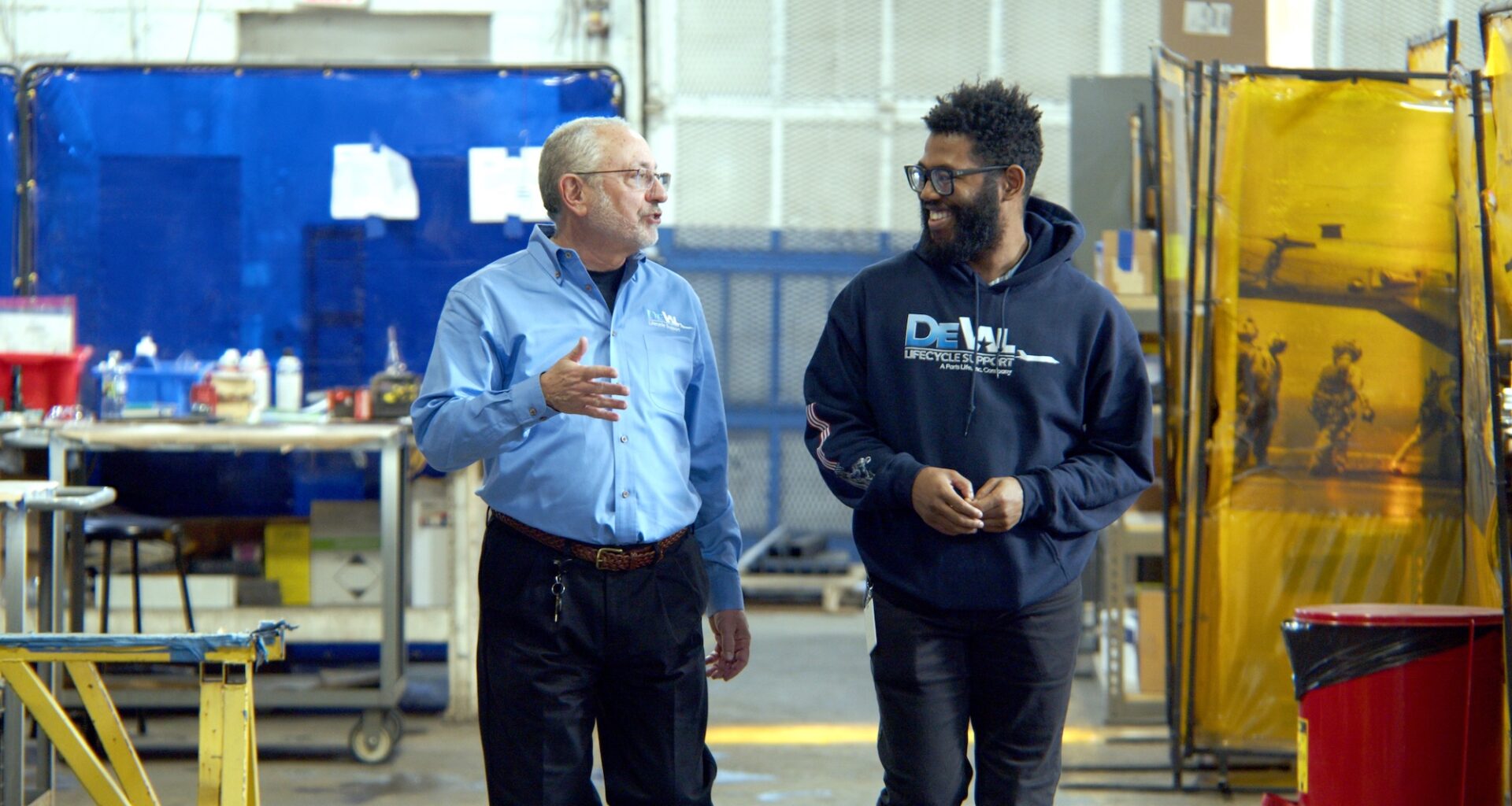
Philadelphia has a deep industrial legacy, stretching back to the Frankford Arsenal and ship construction at the Navy Yard.
Today, the region is aiming to build on that history to create a modern competitive advantage through the DVIRC “Manufacturing Moonshot” initiative, which lays out a 2030 vision for the area as a nationally recognized advanced manufacturing hub with an ambitious operating target of 10% annual growth in the state’s manufacturing economy.
To achieve this goal, regional leaders are looking to modernize the small and midsize manufacturers that form the foundation of critical local supply chains. However, these small firms frequently face significant hurdles, including management bandwidth constraints, technology implementation costs and elongated ROI timelines.
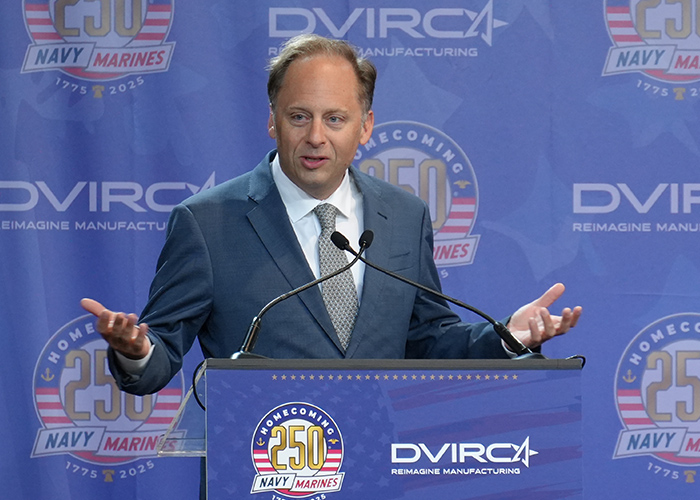 Chris Scafario. (Courtesy DVIRC)
DVIRC president and CEO Chris Scafario is the architect of the Moonshot initiative, and his new book “Strength Is Manufactured: Inside the Urgent Fight to Rebuild America’s Industrial Base” lays out the plan in detail.
In this Q&A, Scafario explains what’s at stake for the regional and national economy, how AI fits into the current industry transformation and what role the region’s tech and business community can play in the Manufacturing Moonshot’s success.
What does Manufacturing Moonshot success look like for manufacturers, workers and the regional economy?
Success in 2030 would mean Southeastern Pennsylvania has converted its industrial legacy into a modern competitive advantage.
The practical test is not whether the region talks more about manufacturing. It is whether more manufacturers are growing, more workers are entering family-sustaining technical careers and more critical supply chains are being anchored here. The operating ambition behind the Manufacturing Moonshot is sustained manufacturing growth, with a target of 10% annual growth in Pennsylvania’s manufacturing economy.
If realized, that would mean thousands of small and midsize manufacturers actively modernizing, more than 12,000 skilled professionals moving through regional talent pipelines and a Delaware Valley increasingly recognized as a place where the industries that matter to America’s future are being rebuilt.
For manufacturers, success means qualified entry into higher-value supply chains and access to the technology, talent and capital required to compete. For workers, it means clear pathways into precision, technical and advanced manufacturing roles that can support a family. For the regional economy, it means manufacturing once again functioning as strategic infrastructure, not simply as a legacy sector.
What unique assets does the Philadelphia region have that makes it the ideal launchpad for an ‘American manufacturing renaissance,’ and what is the biggest hurdle to achieving that 2030 vision?
Philadelphia’s advantage is that its industrial history is still connected to real operating assets.
This was the “Workshop of the World.” The region powered the Frankford Arsenal, built ships at the Navy Yard, and helped define American industrial capability for generations. But the case for Philadelphia is not nostalgia. It is that the region still has a rare combination of assets on the same map: a working port, world-class research universities, a deep base of small and midsize manufacturers, defense-related industrial activity and proximity to major demand in maritime, energy, life sciences and national security.
Pennsylvania remains one of the nation’s largest manufacturing states, with more than $110 billion in annual output. The question is whether the region can organize that capacity into a modern growth engine.
The biggest hurdle is execution speed at the small and midsize manufacturer level. Federal investment is moving. Prime contractors are scaling. New demand is reaching the region. But a 30-person precision manufacturer does not typically have the internal strategy, technical, workforce and capital-planning capacity to translate that demand into a qualified bid, a modernization plan or a growth strategy.
Closing that gap between national demand and shop-floor readiness is the work. It is what DVIRC was built to do, and it is what the Manufacturing Moonshot is designed to scale.
How is DVIRC ensuring that the integration of AI and advanced tech enhances and elevates the local workforce rather than displacing it?
The honest starting point is the labor math. American manufacturing is not facing a surplus of workers. It is facing a shortage of them.
For the manufacturers DVIRC serves, the immediate opportunity with AI and advanced technology is not replacing people. It is helping constrained teams produce more, improve quality, reduce downtime and compete at a higher level with the workforce they have. Technology adoption only works when it strengthens the plant, the worker and the business model at the same time.
That is how we built AiCE, the AI Center of Excellence for Manufacturers. The early use cases are practical and tied directly to plant-floor performance: visual inspection systems that catch defects earlier and more consistently; predictive maintenance tools that help technicians identify equipment risk before failure; supply-chain analytics that help planners make better decisions about materials, timing and suppliers. These tools do not eliminate the need for skilled workers. They raise the value of the worker by giving them better information, better systems and better leverage.
The workforce strategy has to move in parallel. Through the Moonshot, we are helping expand pathways into welding, electrical systems, robotics, automation and AI-enabled manufacturing. These are careers that can start in the $60,000 to $70,000 range and grow from there without requiring young people to take on significant debt.
That is what “family-sustaining careers” means in practice. The goal is to modernize work so that manufacturing careers become more skilled, more valuable and more durable over time.
What are the biggest barriers keeping small and midsized manufacturers from modernizing right now: cost, workforce, risk tolerance, awareness, access to capital or something else?
All of those barriers matter, but they do not show up equally. For most small and midsize manufacturers, the first constraint is management bandwidth.
In a 40-person company, the owner may also be the chief salesperson, the hiring manager, the quality lead and the person responsible for quoting the next job. Asking that company to design and execute a modernization strategy without outside support is not realistic. Too many well-intended programs underestimate that operating reality.
The second barrier is risk. Many manufacturers know they need to modernize, but they cannot afford a major technology investment that does not produce a clear return inside a reasonable window. Risk tolerance is often a function of cash flow, not vision.
The third barrier is capital that fits the economics of manufacturing. These firms do not need venture-style capital built around hypergrowth assumptions. They need patient, practical financing tied to equipment, process improvement, technology adoption, workforce development and measurable operating payback.
Awareness and workforce are also important, but they become much more solvable when bandwidth, risk and capital are addressed first.
The Moonshot is built around that sequence. DVIRC helps absorb the bandwidth gap by providing assessment, strategy, supplier scouting and implementation support that a small firm often cannot staff internally. AiCE helps reduce technology risk by allowing manufacturers to test AI through tightly scoped, measurable use cases before making larger commitments. And our work with state, federal and private partners is increasingly focused on aligning capital with how manufacturing growth actually happens.
How should people in the Philadelphia region understand the connection between manufacturing competitiveness and economic security and national security?
The connection is no longer abstract. It is visible in the supply chains that determine whether the country can defend itself, power itself, care for its citizens and compete economically.
In defense, the Delaware Valley supports nearly one-third of the Columbia-class submarine supply chain, a critical pillar of American sea-based deterrence. When a precision manufacturer in our region qualifies for a defense supplier program, that is both a national security outcome and a regional economic outcome. The same transaction strengthens the country and creates higher-value work locally.
That logic extends across other critical sectors. In energy, long lead times for high-capacity transformers are constraining grid expansion, data center growth, electrification and reshoring. In life sciences, excessive dependence on offshore active pharmaceutical ingredient capacity creates strategic vulnerability. In maritime, the gap between US shipbuilding capacity and national need has become one of the defining industrial challenges of the next decade.
These issues are often discussed at the national level, but they are solved locally. They are solved by capable manufacturers, trained workers, modern equipment, reliable suppliers and regions willing to organize around execution.
The supply chains that shape deterrence, health security, energy resilience and industrial competitiveness are not somewhere else. Many of them run through this region. Our opportunity is to make that role larger, more visible and more valuable to the nation.
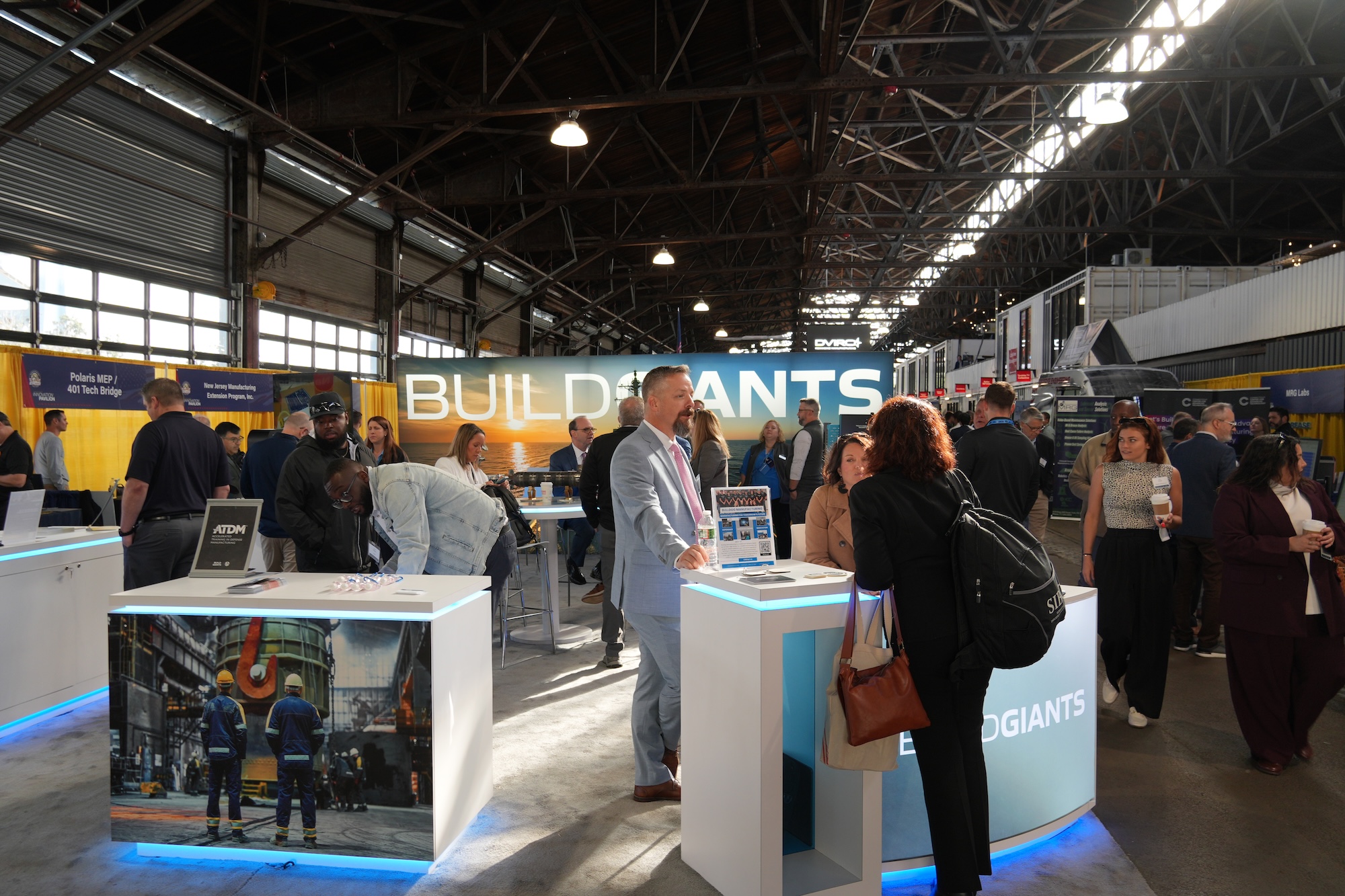 A manufacturing innovation convention at Philadelphia’s Cherry Street Pier. (Courtesy DVIRC)
What does ‘industrial modernization’ actually look like on the factory floor for a small or mid-sized manufacturer? Are we talking about AI, automation, robotics, better data systems, new workforce models or all of the above?
It is all of the above, but sequence matters.
Industrial modernization is not a technology shopping list. The strongest projects do not start with a robot, a dashboard or an AI tool. They start with a clear diagnosis of where a plant is losing throughput, margin, quality or time. Only then should a manufacturer apply the right mix of process improvement, data systems, automation, AI, robotics and workforce development.
On the factory floor, modernization often looks very practical. A connected machine explains why it stopped instead of simply stopping. A camera-based quality system catches a defect before a bad part leaves the cell. A maintenance dashboard helps one technician cover more equipment with better information. A supervisor runs a daily production meeting that identifies the real constraint and solves it. New employees become productive faster because training is structured around the way the plant actually operates.
None of this is exotic. But it is difficult to execute without the right support. That is where an MEP center like DVIRC matters: helping manufacturers move from diagnosis to implementation, and from isolated improvements to measurable competitiveness.
What kinds of AI use cases are proving most practical or valuable for manufacturers today, and where do companies tend to get stuck?
The AI use cases gaining traction are the ones tied directly to operating performance.
The first category is quality: AI-assisted visual inspection that identifies defects earlier and more consistently. The second is uptime: predictive maintenance that helps manufacturers address equipment risk before failure. The third is planning: demand, inventory and supply-chain analytics that improve decisions about what to buy, when to produce and how to respond to disruption. The fourth is administrative productivity: AI-supported workflows that reduce the burden on small front offices. We are also seeing early value in workforce tools that help match people to roles, skills and training pathways.
Where companies get stuck is usually not the algorithm. It is the operating foundation underneath it. Poor data, unclear ownership, weak change management and vague success metrics can undermine even a good technology.
That is why AiCE starts with the practical work: identifying the use case, getting the right data captured cleanly, training the people who will own the tool and defining success in operational and financial terms before scaling. A manufacturer that has kept run data on a clipboard for 30 years cannot drop an AI model on top of that process and expect transformation.
The goal is measurable adoption that improves quality, productivity, resilience and competitiveness.
Where do startup founders, technologists, entrepreneur support organizations and local economic development groups fit into this picture?
The Moonshot depends on alignment because no single organization can modernize a regional industrial base alone.
Manufacturers bring the operating problems and growth opportunities. Technologists bring tools that can improve quality, productivity, energy performance, planning, traceability and workforce readiness. Universities bring research, talent and applied technical capability. Capital providers bring the financing needed to turn modernization plans into investments. Workforce partners build the talent pipelines. Public and civic leaders help align incentives, infrastructure and demand.
The challenge is that these assets too often operate in separate lanes. Workforce dollars, technology pilots, capital programs and economic development strategies frequently move on different timelines, with different metrics and different points of entry for manufacturers. That fragmentation makes it harder for small and midsize firms to act, even when the support exists.
The regions that win will be the ones that organize these resources around the manufacturers and supply chains that matter most. That is where the Moonshot can serve as an operating platform, not just a vision. AiCE gives technologists and manufacturers a practical front door for AI adoption. Our supplier scouting and assessment work helps connect firms to real opportunities. Our Navy Yard headquarters is intended to be a convening place where industry, government, universities, capital and technology partners can move from conversation to execution.
Strength is manufactured, but it is not manufactured by companies working in isolation. It is built through aligned action across industry, technology, capital, workforce, education and government.
For startup founders, technologists, entrepreneur support organizations, and economic development groups, the invitation is clear: bring practical solutions, meet manufacturers where they are and help convert regional capability into measurable industrial growth.