
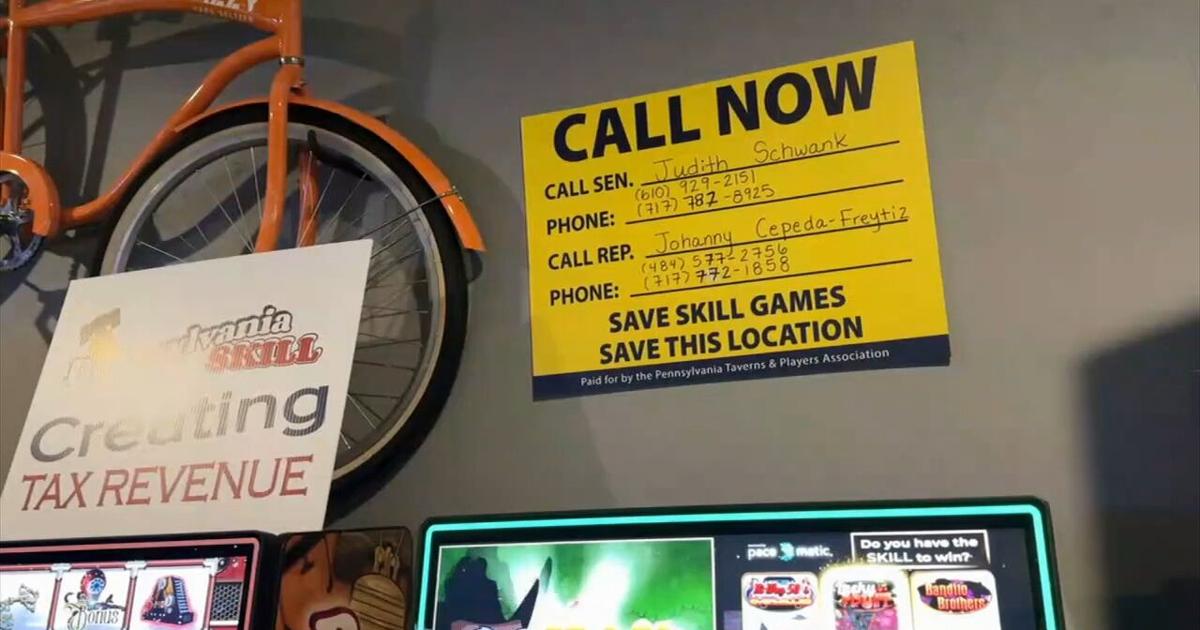
SINKING SPRING, Pa. — Dozens of people from fire companies, veterans organizations and small businesses came to the Sinking Spring Fire Co., looking for answers Thursday night.
“We want to bring them here together to educate them, to make sure that they know the speaking points so that they can share their stories with their legislators,” said Jeff Millay, chief operating officer of Miele Manufacturing.
The meeting comes just weeks after the Pennsylvania Supreme Court ruled that so-called “skill games” are illegal under current state law, saying they function more like slot machines than games of skill.
Lawmakers now have until Oct. 13 to pass new legislation before the machines would have to be shut down.
That’s why supporters of the games are urging lawmakers to pass Senate Bill 1079 and House Bill 2213, legislation that would regulate the games and establish a monthly fee for each machine instead of banning them.
“We’re saying, let us pay $500 a month to have these machines in a location, per machine,” Millay said. “If they license 50,000 machines at $500 a month… there’s the $300 million.”
At Liberty Fire Co., leaders agree.
“This extra money that we get from the skills machines helps us pay bills, helps us keep running, which in turn we can keep doing the donations and the events that we raise for certain foundations around here. We donate a lot of money to the community,” said Jesse Berger of Liberty Fire Co.
Other fire companies say they’re worried they’ll lose an important source of funding.
“It would be a travesty,” said Mike Paulson, president of Berkshire Heights Fire Co. “We rely on those funds immensely so that we can do the programs that we do… Without the money that comes in from Pa. skills, we wouldn’t be able to make the necessary repairs. We’d probably be shut down and out of business.”
State Sen. Dave Argall (R-29) says lawmakers are working on the issue.
“In regard to skill games, I know there are efforts underway to try to resolve this issue. The Supreme Court has put us all on a deadline,” Argall said.
Supporters say they’ll spend the next few months urging lawmakers to pass the legislation before the Oct. 13 deadline set by the Pennsylvania Supreme Court.