
Over the next year, Ben Franklin will be quoted even more than usual in Philadelphia as we celebrate the nation’s 250th birthday. As the city races to boost its curb appeal, we should be reminded of his classic maxim: “haste makes waste.”
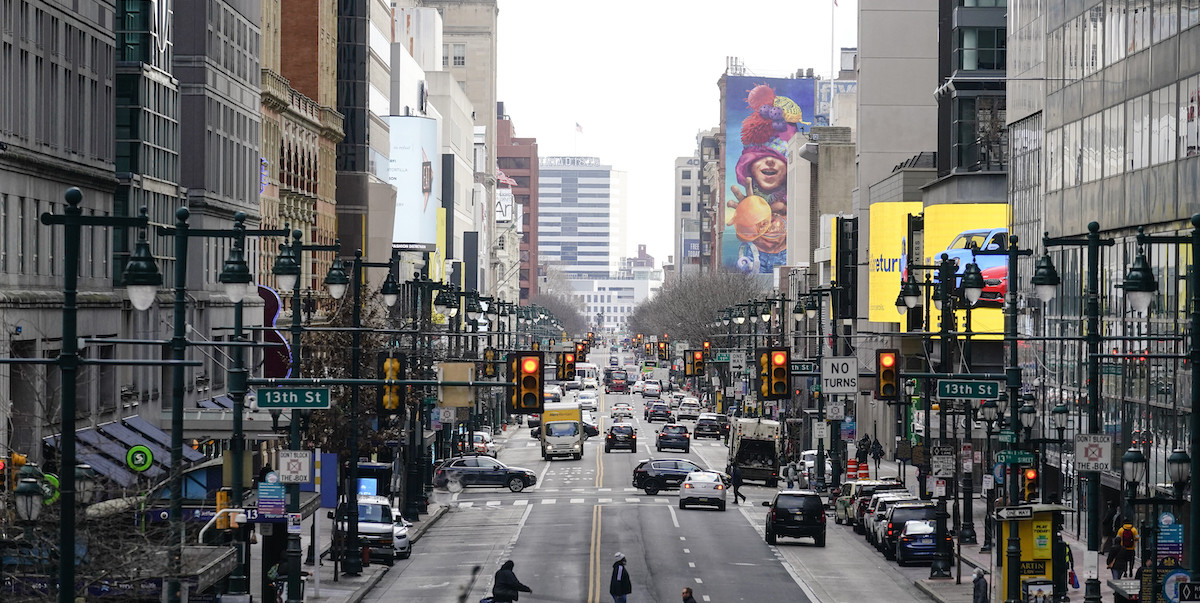
This came to my mind after I saw the announcement that a demolition firm has been hired to clear at least a block of Market Street between Independence Mall and City Hall.
Don’t get me wrong: I agree with the underlying premise that the blight in this key corridor is unacceptable. And I wish the City had taken early steps to create a plan for the revitalization of the corridor and identified areas for temporary improvements to what hopefully will be a high-traffic area over the next year. As Prema Katari Gupta, president of the Center City District, wrote a few months ago, this should be one of the great walks in urban America.
A city famous for its planning, with deep experience in the deadening effect of vacancy, shouldn’t allow clear cut demolition on its Main Street to happen without a vision for what’s next.
But how should we get there without a plan to guide us? No doubt some demolition will be required to build dense, transit-oriented, mixed-used developments worthy of this location. But it’s concerning that we’re turning to tabula rasa clearance to prep for an event only a few months away and without a process for achieving the best possible long term outcome, manage short-term tradeoffs, and include public input. Mayor Parker is convening the long-awaited Market East Advisory committee today — Monday, November 3 — charged with developing that plan.
If this is to be a process in the public interest, shouldn’t this be a topic for discussion rather than a fact on the ground?
Comcast and the Sixers should be lauded for taking ownership of these key blocks following the decision to keep the team in the sports complex, and for promising to make long-term investments in the corridor. But we should be cautious in demolishing whole blocks of the City’s Main Street without careful deliberation.
The Design Advocacy Group produced a strong, clear statement which should be given serious consideration by members of the committee. As they point out, there are already cleared sites along the corridor which could be used for next year’s interim activities. One need only look two blocks away to see the “Disney hole” to be reminded of how long large parcels can sit undeveloped, deadening entire sections of an otherwise lively downtown.
It’s likely that most of these buildings are not worthy of historic preservation, but it’s worth considering whether possible adaptive reuse of some of the buildings or their facades might be part of future development and provide a touchstone to the street’s rich retail history. The Robinson’s building facade was once on the historic register and represents the exuberance of Market Street’s mid-20th century. Its curving façade was designed as a billboard by architect Victor Gruen (the father of the shopping mall) and its glass tile skin (when restored) could be an incredible visual focal point for future development, particularly as a vintage sign for Comcast and/or the Sixers amidst the current electronic sign district. The former Rite Aid at 10th and Market is handsome as well, and could be incorporated into a much larger future development. They are important in the blocks between the former Strawbridge’s and Wanamaker’s, where much of the historic fabric has been lost to previous mass clearance.
Let’s consider hard before permanently discarding our history
The urge to improve curb appeal and create the best visitor experience next year is understandable — I feel the need to excuse the current massive parking lots when showing visitors around the city already — but we should be careful when it comes at the expense of long term planning. We are among the first planned cities in the U.S. and are blessed with Penn’s original grid and public squares, but also share the scars and deep painful experience of mass demolitions that created voids and lack of context for future generations, including at Independence Mall, in University City, and along Market Street. We know now that we should be highly selective and should take the time to consider what we permanently discard.
Is it possible to first do-no-harm and, as DAG suggests, use the Disney hole or another parking lot for pop-ups? Could some of the existing buildings be employed as pop-ups themselves with short-term facade improvements? Or could we selectively demolish some structures to create a centerpiece of activity for next year’s celebration, while mothballing those we want to keep as context?
Could some of the facades at least be saved to be incorporated into future development? These questions should be a topic for the Advisory Committee and its planning process, and could be the subject of a design workshop tapping into Philadelphians creativity and DIY spirit, as well as the architecture and planning resources of the city’s anchor institutions. Or have we once again left ourselves no time to make smart, forward-thinking choices?
We know that once these buildings are gone, they’re gone forever, and it may be a long time before they are replaced. And while I’m confident that the development that ultimately replaces them will be markedly better than what is currently there, primarily it will include dense housing and commercial offerings, how much would we all benefit if new development derived from a public plan driven by civic input that considered how to connect to the street’s retail heritage?
If demolitions proceed in the coming weeks, we know we will wait years for the street wall of new facades to return, and we should be anxious that we have no plan for the interim use beyond vague promises of activation for next year. A city famous for its planning, with deep experience in the deadening effect of vacancy, shouldn’t allow clear cut demolition on its Main Street to happen without a vision for what’s next. I’m sure we can find a way to do something wonderful for the semiquincentennial in the short term while ensuring we are best positioned for long term redevelopment once the party is over.
After all, Franklin also warned us, “Look before or you’ll find yourself behind”.
Mike Greenle is a native Philadelphian who has worked in the city’s design, planning and development sector for the last 20 years.
The Citizen welcomes guest commentary from community members who represent that it is their own work and their own opinion based on true facts that they know firsthand.
 MORE GUEST COMMENTARY FROM THE PHILADELPHIA CITIZEN