
The Pennsylvania Game Commission (PGC) explained the more than $1.7 billion impact of its state game lands on July 10 as it approved several land acquisitions totaling more than 1,600 acres.
The results of an economic study of Pennsylvania’s State Game Lands prepared by Industrial Economics, Incorporated, were unveiled during the meeting.
The PGC owns roughly 1.5 million acres of land across Pennsylvania that encompass more than 300 state game lands. That acreage is no longer on the property tax rolls that impact privately owned property.
Ken Duren, wildlife habitat management real estate division chief for the agency, spoke about how the state, with the PGC’s assistance, makes Payments in Lieu of Taxes (PILT) to municipalities and schools for game lands properties.
“We hear that us owning land reduces local property tax revenue and can hurt economic development,” he said.
In looking at millions of acres across the state where development can still happen, including in southeastern Pennsylvania, he said, “I feel that game lands, in particular, but public lands, in general, are not actually inhibiting development from happening.”
For property owned by the Game Commission, there’s a $9 per acre fee paid in lieu of property taxes. The PGC pays $3 of the cost, and the state provides the other $6 or two-thirds of the cost from revenues derived from gambling operations across the state. The amount per acre is set by the state legislature to automatically increase every five years. In 2026, counties, municipalities and schools combined received $13,859,457.09 in PILT funds.
Go Outdoors PA: Efforts in Pennsylvania are helping bats survive deadly fungus

An economic impact study of Pennsylvania’s state game lands looked at what counties, municipalities and schools would receive in property taxes versus Payments in Lieu of Taxes (PILT) the states pays on land it owns.
They looked across the state to compare how PILT payments compared to if the same undeveloped land had paid property taxes.
In the more developed areas of the state such as northwestern and eastern Pennsylvania, the PILT payments are less than what a private landowner would pay in property taxes. In most of the central part of the commonwealth, PILT pays more than the property tax rates.
More: Pennsylvania creates work group to create road crossings for wildlife
For example, in McKean County, the state pays $104,148 in PILT payments that are evenly split between the county, Norwich Township and Smethport School District. If the land stays undeveloped, Duren said the property taxes for that tract would total $79,646, about $24,502 less than PILT.
On a county level, Duren said, “In the vast majority of our counties, that difference we see between PILT and what a private landowner would have paid ends up being less than 1% positive or negative of their total property tax revenue that they collect.”
When it comes to the economic value from hunters on state game lands, the report revealed a $53 million economic impact.
“We estimated there are 700,000 hunting trips taken on state game lands every year,” he said. The study didn’t consider what recreational trips by nonhunters, like hikers, would add to the economy, but he said he hopes to have that data next year.
With the Game Commission making leases for gas, oil and timber extraction, he said there’s a $1.7 billion economic impact and 4,067 full-time jobs for Pennsylvania. Those totals include the wildlife management the PGC provides the state with its 870 employees.
Commissioner Todd Pride from Chester County asked if the data could include economic impacts from other activities on the game lands like the visitor center at the Middle Creek Wildlife Management Area in Lancaster and Lebanon counties. “That type of facility, which is also a game land, that has other uses, obviously during snow geese season, has that been looked at in any way?”
Duren said they are gathering the impact of nonhunter visitor information.
“Middle Creek is a great example. I’m sure there are more people visiting Middle Creek that aren’t hunting than there are hunters visiting it,” Duren said.

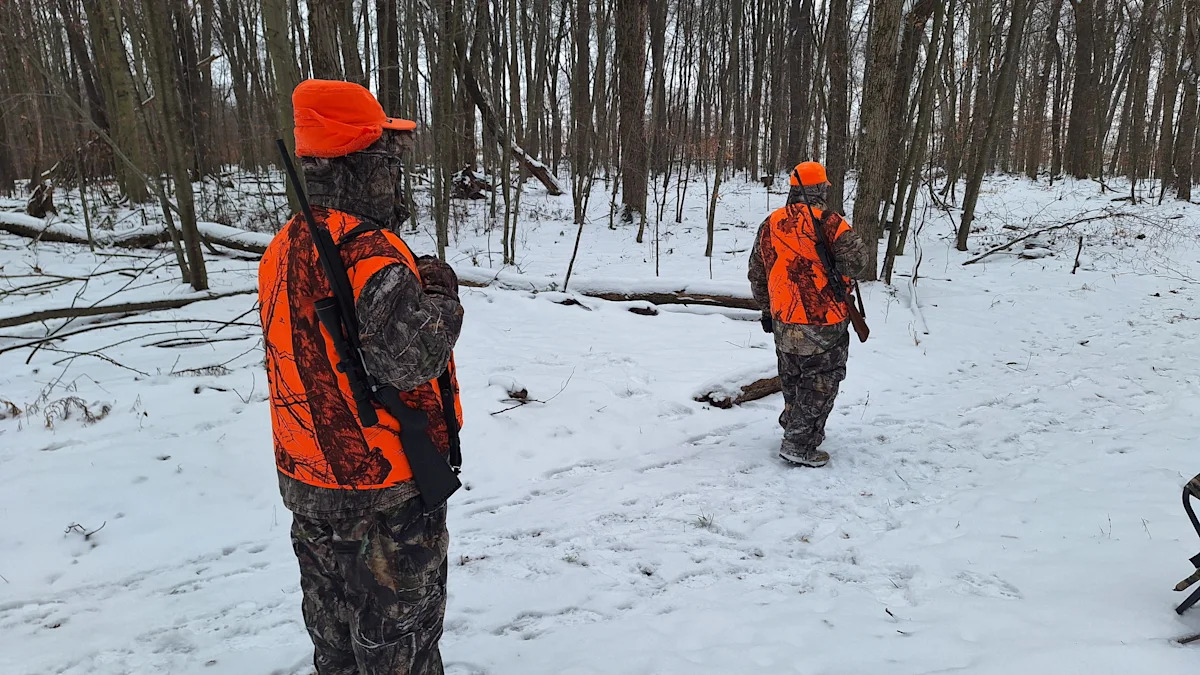
An economic impact study of state game lands in Pennsylvania revealed hunting trips to these public properties creates a $53 million impact each year. The Pennsylvania Game Commission manages more than 300 state game land properties on roughly 1.5 million acres.
Expanding state game land property
The commissioners approved several property acquisitions during the meeting.
The agency approved three parcels of land totaling 1,459 acres in three northern counties. JKLM Energy of Sewickley requested an amendment to their non-surface Use Oil and Gas Agreement from Aug. 6, 2024, in State Game Land 37 in Tioga County. The company agreed to pay a $10,367,940 bonus in three yearly installments.
In lieu of paying the final, $3,424,390.20 cash payment, the company will provide 295 acres next to State Game Land 102 in Union Township, Erie County, 954 acres adjacent to State Game Land 62 in Keating Township, McKean County, and 210 acres adjacent to State Game Land 59 in Clara Township, Potter County to the PGC. The agency reports the value of the three properties is not equal to the $3.4 million payment and the company will pay $250,000 to the PGC in addition to the land.
The agency is buying approximately 50 acres of land from Debra Mackey in Scott Township, Wayne County, adjacent to State Game Land 299 for $50,000. The agency’s staff reports the acquisition would improve boundary line maintenance and provide additional old orchard habitat.
Relief and Research International will sell about 60 acres of land in Milford Township, Susquehanna County that is adjacent to State Game Land 35. The selling price for the land, that is described to have ideal grouse and woodcock habitat, is $228,000.
Commissioner Robert Schwalm from Lehigh County thanked the staff for this property as it will provide him and other hunters easier access.
“It’s always been a task to try to access it without crossing through private property, so this is much appreciated,” he said.
The board approved buying 12.5% interest in 59 acres of land in Bell Township, Clearfield County. The property, located on both sides of Troutville Road, is an interior to State Game Land 87. Craig Knarr and the Serian Group are selling the land for $22,125. The PGC reports this parcel is a high priority grouse area. In January the commission approved acquiring 87.5% interest in this tract. This deal will give the PGC 100% ownership.
The commissioners approved an agreement with a solar company for property where the PGC doesn’t own the surface but does own the mineral rights. SR1 Captura Sage Holdco, is requesting a limited waiver of surface rights for a solar development on 27 acres of a 47.3-acre parcel in Derry Township, Westmoreland County. It is a 25-year offer where the company will pay the PGC $500 an acre totaling $13,500. The PGC will be prevented from using the surface of the land, described as the top 100 feet, during the agreement.
“To be clear to anyone listening, this is not us putting solar on game lands,” Haley Sankey, president of the board from Blair County, said.
The board approved an oil and gas agreement with Snyder Brother Inc. of Kittanning under 206 acres of State Game Lands 259 in Armstrong County. The company will access the energy resources by drilling under the state property from adjacent areas. The 10-year proposal includes a $2,500 net oil and gas acre bonus payment, an 18% royalty for all oil, gas and other liquids sold from the tract. The total bonus payment is listed as $515,500 and the deal also includes amending an existing 146-acre lease the company holds on SGL 259 to restrict any future surface impact on the parcel, except for continued access to the existing Minteer and Baker Enterprises well on this tract.
Elk hunting zones
The board also approved the new management zones for wild elk living in northcentral Pennsylvania. The 11 zones provide staff members the opportunity to closely manage the population, including where hunting should be approved or be off limits.
The agency will be issuing 155 elk licenses on July 25 during the annual Elk Expo in Benezette. The tags will include 80 for bulls and 75 for antlerless cows. The deadline to apply for a license is July 12.
Brian Whipkey is the outdoors columnist for USA TODAY Network sites in Pennsylvania. Contact him at bwhipkey@usatodayco.com and sign up for our weekly Go Outdoors PA newsletter email on this website’s homepage under your login name. Follow him on Facebook @whipkeyoutdoors.
This article originally appeared on Erie Times-News: Do state game lands hurt local tax revenue