
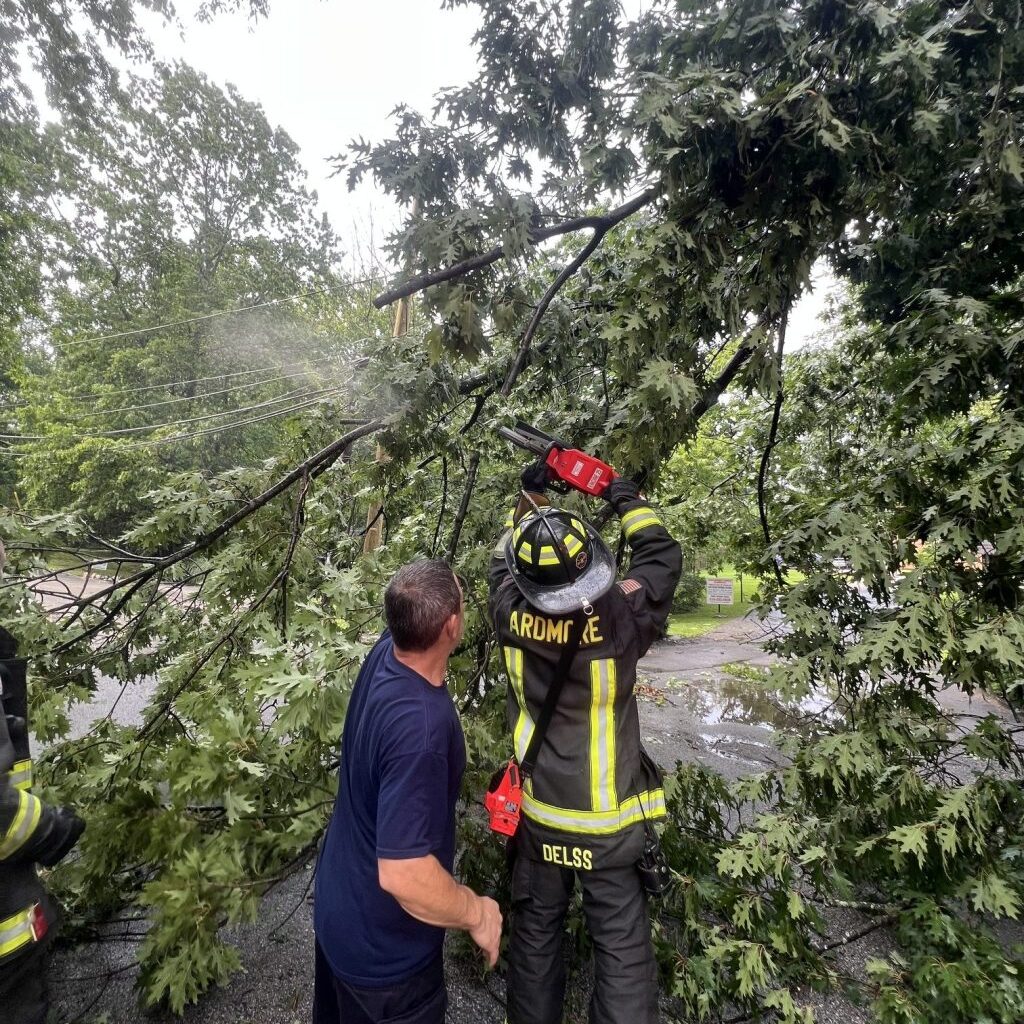
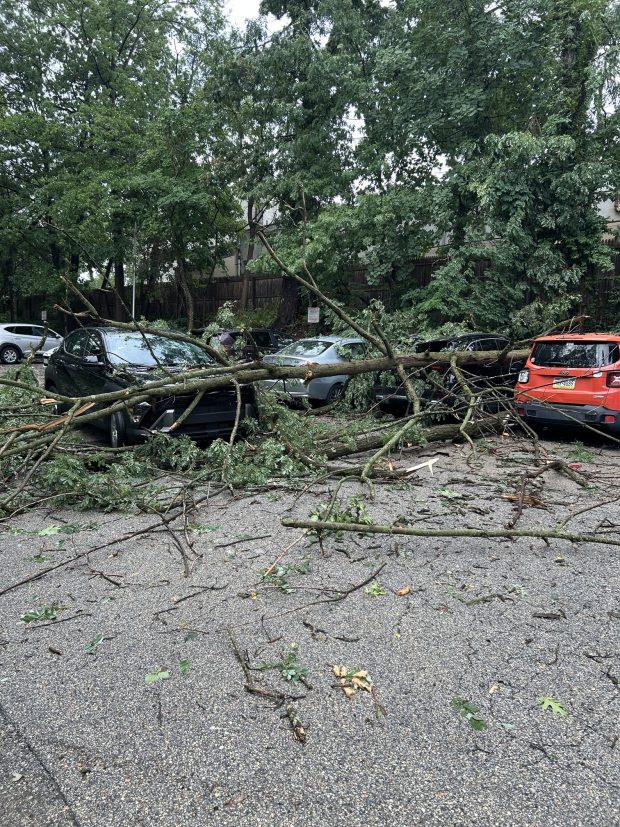
 Downed trees caused damage throughout parts of Lower Merion and Narberth Saturday. (Photos Merion Fire Company of Ardmore)LOWER MERION—Due to Saturday’s severe microburst storms, Lower Merion Township declared a state of emergency on July 11, 2026, at 4:30 p.m., which lasted until Sunday at 9 a.m.
A series of at least four severe microbursts ripped a 12-mile-long path from Lower Merion to West and South Philadelphia between 2:44 p.m. and 3:15 p.m. on Saturday, bringing destructive straight-line winds of 60 to 70 mph.
As a result of the storm, numerous trees and power lines were down, blocking roadways and causing widespread power outages in Lower Merion and Narberth.
As of Sunday, at least 55 Lower Merion Township streets were still blocked or partially blocked with downed trees. Power lines were down on roadways and on trees in some areas.
Saturday, the storm knocked out power to nearly 7,500 customers in Lower Merion, and by Sunday, only about 3,900 remained without power.
The storm also knocked down wires onto the roof of the Wynnewood Train Station, caused a fire, and prompted a response from all Lower Merion fire companies. Responding crews had to use chainsaws to help make paths to calls.

Downed wires from Saturday’s storm caused a fire in the roof area at the Wynnewood Train Station. All Lower Merion Fire companies responded. (Photos Merion Fire Company of Ardmore)

Downed wires from Saturday’s storm caused a fire in the roof area at the Wynnewood Train Station. All Lower Merion Fire companies responded. (Photos Merion Fire Company of Ardmore)

Downed wires from Saturday’s storm caused a fire in the roof area at the Wynnewood Train Station. All Lower Merion Fire companies responded. (Photos Merion Fire Company of Ardmore)

Members of the Merion Fire Company of Ardmore had to make their own path to get to a call Saturday after the storm blocked many roads in the township. (Photos Merion Fire Company of Ardmore)
Show Caption
1 of 4
Downed wires from Saturday’s storm caused a fire in the roof area at the Wynnewood Train Station. All Lower Merion Fire companies responded. (Photos Merion Fire Company of Ardmore)
Due to the wind and rainstorm, Lower Merion is also temporarily suspending its new gas-powered leaf blower ban through Saturday, July 18.
“Residents and their contractors may use gas-powered leaf blowers to continue cleanup and remove storm debris,” Lower Merion officials wrote in an announcement to the community.
Township crews continue to work to clear storm debris and trees from roadways. Township officials are in constant contact with PECO as they continue power restoration from this devastating storm.
The township had also announced that Lower Merion firehouses were being made available on Sunday as cooling stations and for charging devices for residents without power.
Narberth borough officials also said the town experienced severe flooding, downed trees, and hazardous travel conditions due to the storms. Some roadways may be impassable, and residents are urged to use caution if travel is necessary.
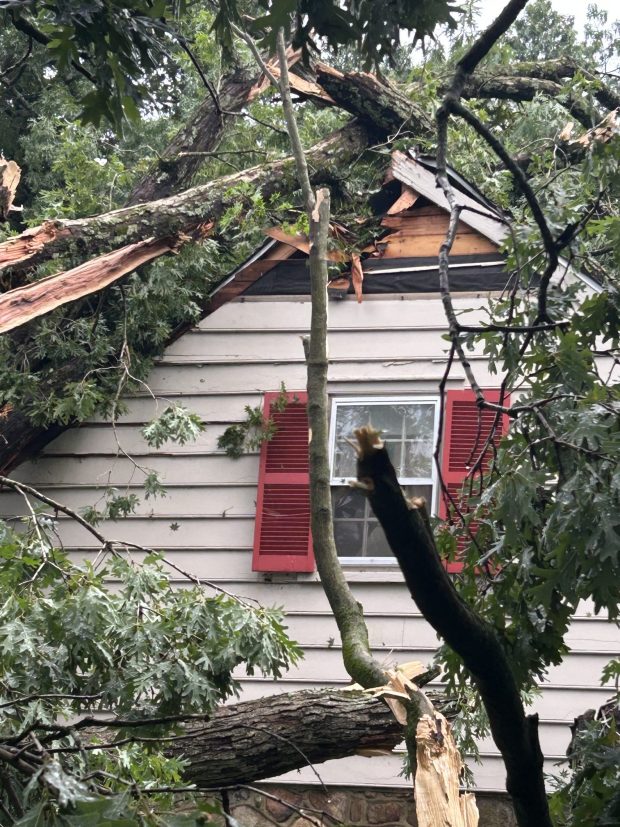 Downed trees caused damage throughout parts of Lower Merion and Narberth Saturday. (Photos Merion Fire Company of Ardmore)
“If traveling, please be alert for road closure signs and traffic advisories. Never drive through flooded roadways or around barricades. Stay away from downed utility wires, and report any hazardous conditions to the appropriate authorities,” borough officials said in a note to the community.
Narberth officials added that “Borough emergency personnel and our Public Works Department are actively monitoring conditions and responding to incidents. We also encourage residents to check on neighbors, as many are without power.”