
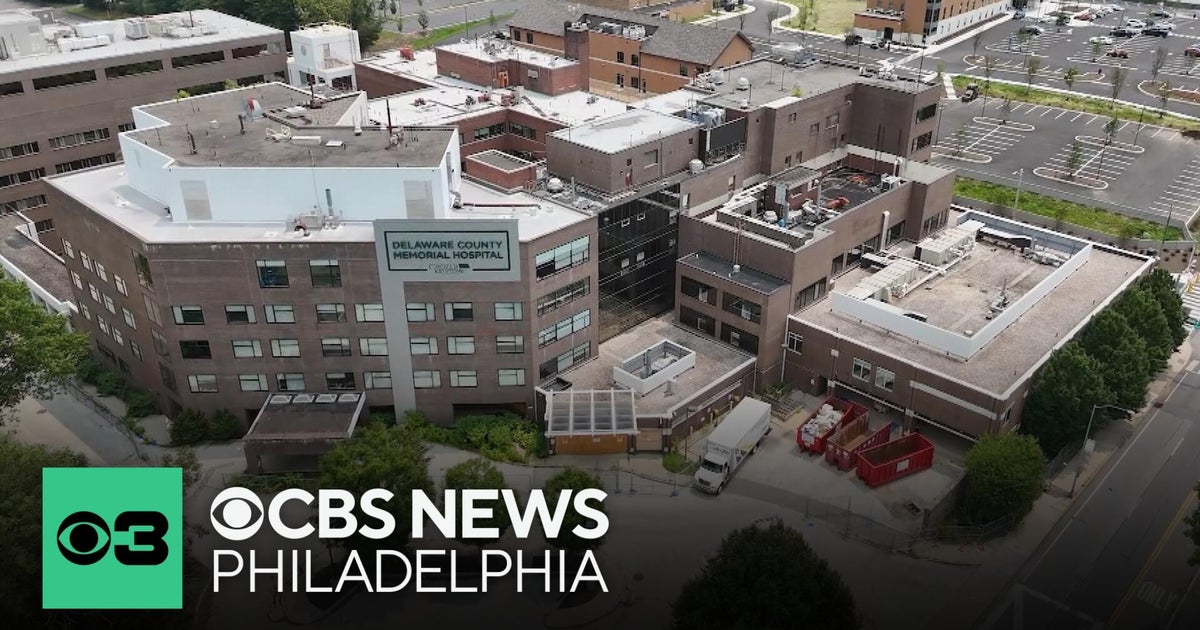
The sprawling campus of the former Delaware County Memorial Hospital, which has sat abandoned since its controversial closure in late 2022, is slated for total demolition. In its place, the Upper Darby School District will construct a state-of-the-art career and technical education center, fundamentally altering the trajectory of vocational training in the region.
The ambitious redevelopment project aims to directly address the critical shortage of skilled trades professionals by expanding the curriculum of the adjacent Upper Darby High School. By replacing the decaying medical infrastructure with specialized learning environments, the district seeks to bridge the gap between secondary education and lucrative industrial careers. This policy shift mirrors global educational reforms, such as Kenya’s aggressive implementation of the Competency-Based Curriculum, which similarly prioritizes practical, market-aligned skills over purely theoretical academia to combat systemic youth unemployment.
Strategic Acquisition and Financial maneuvering
The transformation was made possible through a highly strategic real estate acquisition. The Upper Darby School District successfully purchased the defunct hospital property from Prospect Medical Holdings during federal bankruptcy proceedings. The final acquisition price was a mere USD 600,000 (approximately KES 78 million), representing an extraordinary discount for a substantial commercial parcel in a densely populated suburban corridor.
Superintendent Daniel McGarry revealed that the district’s architectural consultants initially explored the feasibility of retrofitting the existing hospital structure for educational purposes. However, structural analyses concluded that the building’s fundamental design was incompatible with modern pedagogical requirements.
The narrow corridors, restrictive ceiling heights, and specialized medical infrastructure presented insurmountable logistical barriers. The engineering constraints dictated that complete demolition and purpose-built reconstruction was the only fiscally responsible methodology to accommodate the projected enrollment capacity.
Curriculum Design and Market Alignment
The finalized architectural renderings envision a modern, expansive facility capable of serving approximately 1,000 students annually. The curriculum is meticulously designed in consultation with regional industrial leaders to ensure absolute alignment with current labor market demands. The facility will house specialized laboratories and workshops that traditional high school campuses cannot support.
Advanced Manufacturing: State-of-the-art welding and precision machining workshops designed to industry certification standards.
Climate Control Systems: Dedicated laboratories for Heating, Ventilation, and Air Conditioning (HVAC) installation and maintenance.
Healthcare Technologies: Simulated clinical environments for nursing assistants and allied health professionals.
STEM Integration: Advanced robotics and computer science modules focusing on industrial automation.
The core objective is to provide students with direct pathways to high-paying employment immediately upon graduation, bypassing the escalating costs and accumulating debt associated with traditional four-year university degree programs.
Community Impact and Urban Renewal
The demolition of the hospital removes a massive, decaying structure that had rapidly become a target for vandalism and a prominent neighborhood eyesore. Cleanup and abatement crews have already commenced the arduous process of clearing hazardous materials from the site, with heavy demolition equipment scheduled to arrive in the autumn months.
The project represents a substantial injection of capital into the local economy, generating immediate construction employment and long-term educational infrastructure. Community response has been overwhelmingly positive, reflecting a broader societal recognition of the inherent value of vocational and technical education.
By transforming a symbol of corporate bankruptcy and healthcare failure into an engine of educational empowerment, the Upper Darby School District is establishing a national precedent for municipal revitalization.
Global Parallels in Vocational Training
The pivot toward intensive, localized technical education is not an isolated phenomenon. Governments worldwide are recognizing that theoretical education models are failing to produce the specialized workforce required by modern economies. In East Africa, the aggressive expansion of Technical and Vocational Education and Training institutions is central to national economic development blueprints.
The establishment of specialized training hubs, whether in suburban Pennsylvania or on the outskirts of Nairobi, is critical to attracting foreign direct investment. Corporations require a guaranteed pipeline of competent technicians to maintain operations, and regions that fail to provide this workforce will inevitably suffer industrial stagnation.
The ultimate success of the Upper Darby initiative will be measured not by the aesthetic appeal of the new architecture, but by the employment statistics and median incomes of its future graduates.