
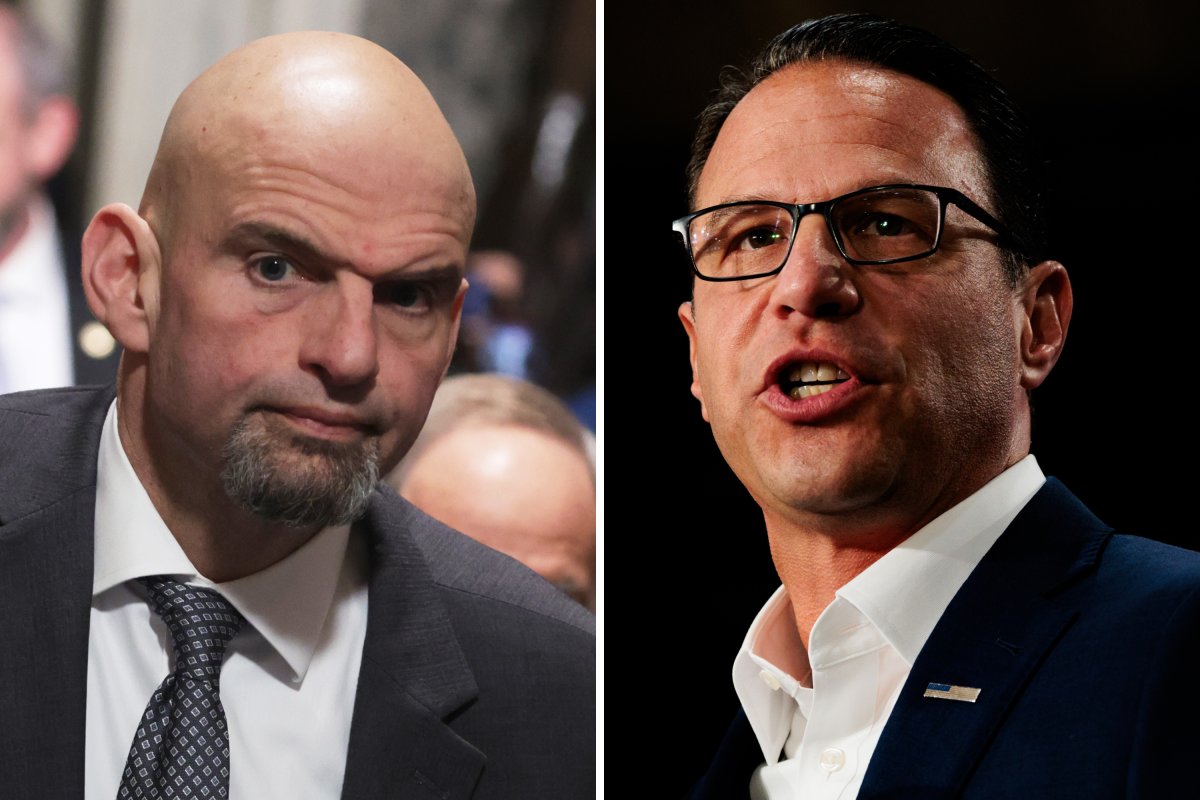
A new Quinnipiac University poll found that Democratic Governor Josh Shapiro’s lead in Pennsylvania’s gubernatorial race has narrowed, while Senator John Fetterman’s approval rating among Democrats dropped to a new low.
Pennsylvania is a critical battleground state, about evenly divided between Democrats and Republicans, and has backed candidates of both major parties in recent elections. In 2024, it chose President Donald Trump by nearly 2 percentage points, a shift from 2020, when it backed former President Joe Biden by just over a single point.
Shapiro is up for reelection this year, and his bid will be a major test for Democrats’ efforts to rebuild their brand in the state, once viewed as being more solid for their party. The new poll showed Shapiro leading Republican candidate Stacy Garrity by 13 points, a narrowing of an earlier poll in which he held an 18-point lead.
Read More on News
The poll could be even more alarming for fellow Democrat Fetterman, whose popularity among his base has reached a new low—fewer than one in five Democrats give him positive marks for his job performance, and a majority said they would like for him to leave the party.
The poll surveyed 895 registered voters from July 9 to July 13 and had a margin of error of plus or minus 4.3 percentage points.
Newsweek reached out to Shapiro and Fetterman’s teams for comment via email.
Josh Shapiro Maintains Lead in Tightening Race
Fifty-three percent of Pennsylvanians plan to vote for Shapiro in the gubernatorial race, according to the Quinnipiac University poll, while 40 percent planned to cast their ballots for Garrity. That means Shapiro is still favored, but the survey suggests the race has grown closer since February, when the pollster found Shapiro’s support at 55 percent and Garrity’s at 37 percent.
It’s the weakest public poll for Shapiro of the election cycle, while Garrity has seen her support increase among Republican voters from February, growing from 82 percent to 87 percent. Shapiro retains a lead with 96 percent of Democrats and 58 percent of independents.
Shapiro’s approval rating stood at 56 percent in July and February, but the share of voters who disapprove of him rose from 29 percent to 34 percent in the new survey.
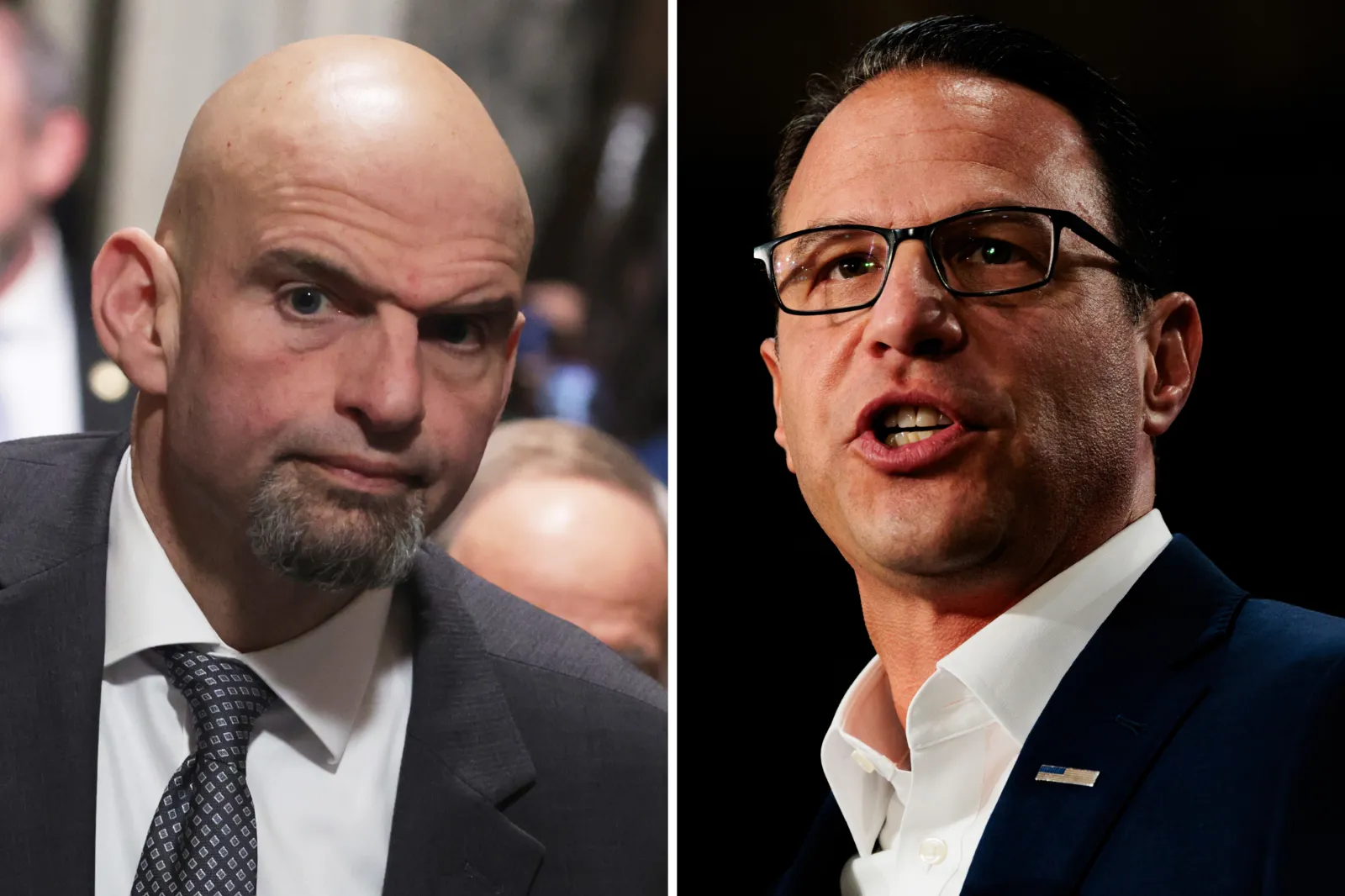
The poll results suggest that Shapiro may be benefiting from voters being less familiar with Garrity, who serves as Pennsylvania treasurer. Fifty-eight percent of respondents said they had not heard enough about her to form an opinion, compared to only 14 percent for Shapiro.
A spokesperson for Garrity pointed to a policy of not commenting on polls when reached by Newsweek.
Shapiro remains favored to win reelection, with other polls giving him an even larger lead—a Franklin & Marshall College poll, which surveyed 546 registered voters from June 8 to June 14, showed him with 50 percent compared to Garrity’s 28 percent. Forecasters also give Shapiro an advantage—his race is rated Likely Democratic by Sabato’s Crystal Ball and Solid Democratic by Cook Political Report.
John Fetterman’s Popularity Among Democrats Hits New Low
While the poll may be a bit worrying for Shapiro, it may raise even larger red flags for Fetterman, who is not up for reelection in 2026 but could face a contentious primary in 2028 from Democrats frustrated with his tenure. Fetterman’s staunch support for Israel, willingness to vote for several Trump nominees and his fierce criticism of the Democratic Party’s progressive wing has drawn calls for him to face a challenge.
The poll signals he could be substantially vulnerable, as only 19 percent of Democrats approve of his job performance, while 69 percent disapprove of him.
Overall, however, he does remain above water with 48 percent approval and 41 percent disapproval. He is bolstered by a strong standing among Republicans—77 percent of whom approve of the Democratic senator and only 12 percent disapprove. Among independents, his approval stood at 44 percent and disapproval at 48 percent.
Most Democrats—57 percent—said they would like to see Fetterman leave the party.
Despite speculation that he could become an independent or even a Republican with his more moderate streak, Fetterman has said he would not do so, pointing to his support for LGBTQ+ and reproductive rights as issues squarely aligning him with Democrats.
He told The New York Times in May that he has “no plans” to switch parties.
“I remain strongly pro-choice, pro-weed, pro-LGBT, pro-SNAP, pro-labor and even pro-rib-eye over bio slop. I refuse to cave on my conscience because Pennsylvania deserves someone who is honest and can work across the aisle,” he said.
Fetterman most recently faced criticism from some Democrats over a joint fundraising committee he formed with Republican Senator Dave McCormick, also of Pennsylvania.
Representative Chris Deluzio, a Democrat who represents a House district near Pittsburgh, said on the MeidasTouch network’s show On Sunday with Jack Cocchiarella that the committee is “crazy stuff.”
“We have battleground races in Pennsylvania that we are trying to flip, and now we’ve got John Fetterman helping the Republicans to raise money to beat Democrats,” he said.
Fetterman told The Washington Examiner on Wednesday that the fundraising effort is “nothing sinister.”
“It’s pretty much—people have joint interest in the things that we happen to agree on, if we both represent Pennsylvania,” he said.
Fetterman has not said whether he plans to seek reelection in 2028.
How Pennsylvania Shifted to Become a Key Battleground State
Democrats had a decades-long winning streak in Pennsylvania, capturing the state in every presidential contest from 1992 to 2012. Former President Barack Obama won it by about 10 points in 2008 and by more than 5 points in 2012, but Trump flipped it for Republicans in 2016 by less than a single percentage point.
It flipped back to Democrats in 2020, with Biden winning 50 percent of all votes, but Trump won 50.4 percent in 2024.
The state became more competitive as Trump did well among the state’s rural white voters compared to past presidential nominees. Other states in the Great Lakes region like Michigan, Ohio and Wisconsin saw similar shifts from 2012 to 2016.
Democrats have struggled to win back that voting bloc in more recent cycles but have gained ground in the suburbs outside Philadelphia, a critical boost for their efforts at keeping the state competitive.
Fetterman and Shapiro were elected to their current posts in 2022, Fetterman by about 5 points and Shapiro by nearly 15 points, despite the election taking place during a Democratic midterm that was expected to favor Republicans. Democrats, however, had a fairly strong showing in Pennsylvania. Before that, Shapiro served as attorney general and Fetterman as lieutenant governor.
Republicans went on to have a better year in 2024. In addition to Trump’s victory, then-Democratic Senator Bob Casey lost reelection to Republican Dave McCormick in one of the closest races of the year.
Contact Newsweek editors on this story: Gabe Whisnant and Edward T. Cummins.