
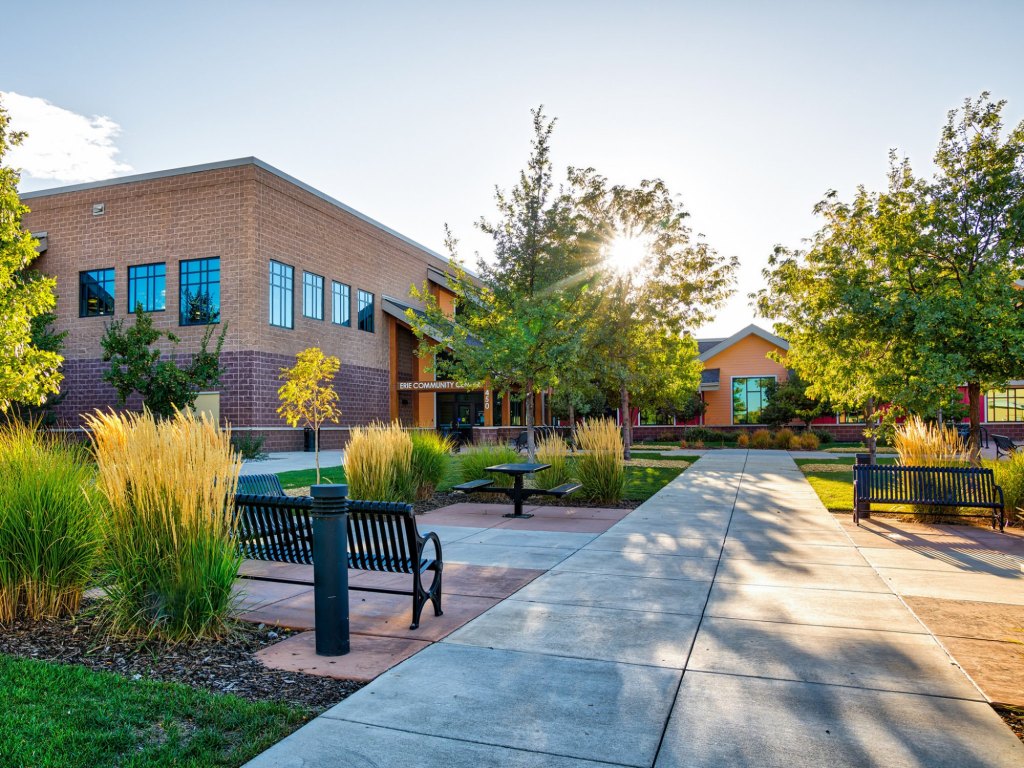
Erie officials are lining up two local ballot measures for the November election: A sales tax to fund the expansion and renovation of the Erie Community Center, and a lodging tax for short-term rentals and stays in the town.
The Town Council on Tuesday heard staff recommend ballot language for both items. Council members unanimously cleared staff to move forward with drafting two ordinances to send the ballot measures to voters. The council could vote on those ordinances in early August.
With the three seats on the Town Council up for grabs, the potential local measures, and several county and state items also on the table, Erie voters could have a long ballot in front of them come November.
Sales tax for the Erie Community Center
An Erie Community Center tax could allow the town to debt finance the center’s expansion and renovation project.
The Town Council on Tuesday supported moving forward with ballot language that outlines a 0.5% sales and use tax increase to pay off an estimated debt issuance of about $32.5 million over 20 years for the project.
Council members also agreed with town staff’s recommendation that the tax would remain in effect after the debt is retired. The revenue would then support ongoing operations, maintenance and recreation facility projects at the community center.
Luke Bolinger, Erie’s director of parks and recreation, told the council Tuesday that continuing the tax even after the debt is repaid would help keep the center in good shape.
“It’s always great to fund the shiny new thing, but how do you keep that shiny new thing shiny, and in good working order, and put good people inside of it to make sure that it operates and serves the community,” Bolinger said.
The Erie Community Center, which opened in 2008, in its current form is often “packed,” Bolinger added.
The town evaluated both sales tax and property tax options through a community survey conducted in March. From over 800 responses, 76% supported renovating and expanding the community center. Sixty-nine percent indicated they were very or somewhat likely to support a 0.5% sales tax increase, compared with 46% supporting a 1.653-mill property tax increase.
Erie residents have still been paying property taxes tied to the Erie Community Center Construction Bond, and a sales tax would be “a shift in the way that we would be funding it in the future,” said Erie Mayor Andrew Moore.
“Even going down the property tax route was a nonstarter for myself,” Moore said.
The town is continuing to advance the design portion of the community center to allow construction to begin if voters approve a ballot measure. Construction documents are progressing, according to Erie staff, and the town is conducting a competitive process to select a qualified contractor.
An Erie lodging tax
With an eye toward next year’s Sundance Film Festival in Boulder, Erie could also ask voters to establish a new 3.5% local lodging tax.
The potential tax would impact visitors at any future hotels and at short-term rentals — stays of less than 30 days at a time — in the town. Erie does not currently have a hotel, but a plan for new development in the Town Center area off Erie Parkway and County Line Road has included space intended for one.
Gabi Rae, Erie’s director of communications and community engagement, said on Tuesday that there has “already been a lot of conversation about what (Sundance) might do to overnight stays in the region, with a lot of areas already reporting sellouts of short-term rentals and some hotels.”
“Erie is one of the few municipalities in the area that does not yet have a lodging tax,” she added.
Short-term rentals are a topic left unaddressed by the town’s municipal code. Technically, “it is illegal to have short-term rentals in Erie simply because the Code does not reference them at all,” Rae told the Camera in an email on Thursday.
“They shouldn’t exist. But the Town is not enforcing this issue,” Rae said, adding that about $44,000 in sales tax is remitted to the town each year from short-term rental stays.
Erie’s Planning & Development Department is working on an ordinance to regulate short-term rentals, and was to be completing community engagement beginning later this summer. According to Rae, a Sept. 1 study session with the Town Council is “penciled in” to present recommendations and get feedback.
“The goal is indeed getting something approved by Jan. 1 to officially begin whatever the ordinance states,” Rae said.
Town staff estimates that the recommended 3.5% lodging tax could generate about $90,000 annually “under existing market conditions.”