
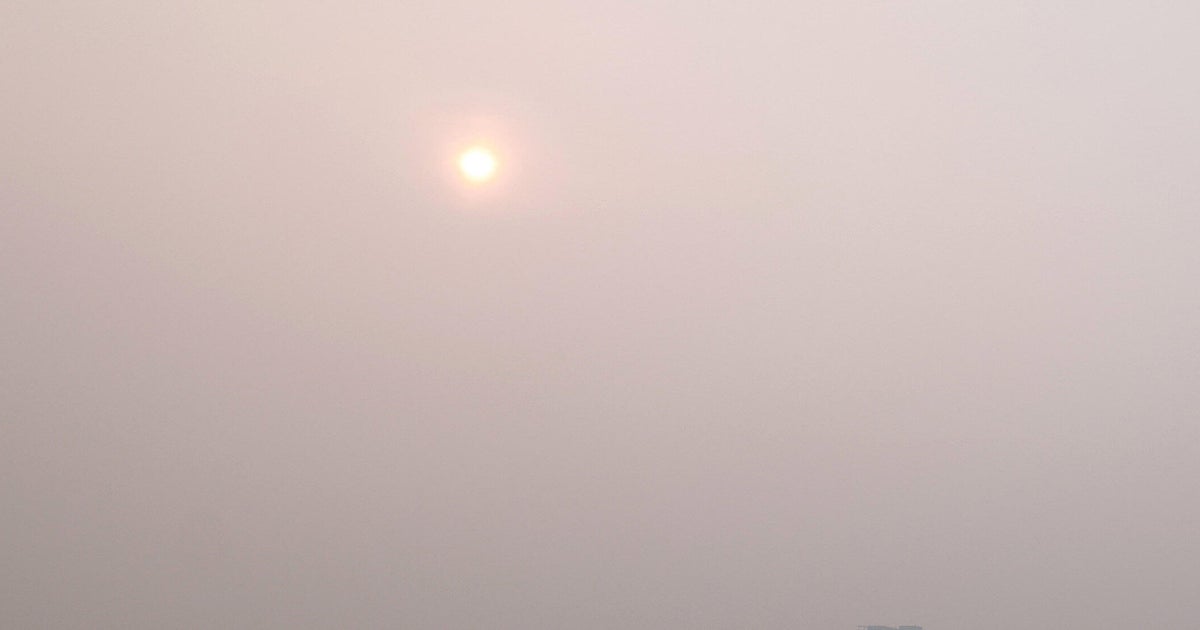
Pennsylvania is under a statewide Code Purple air quality alert on Friday because of smoke from the wildfires in Canada and Minnesota.
But what does that mean?
What is Code Purple air quality?
The Pennsylvania Department of Environmental Protection issues a Code Purple when the air quality is considered “very unhealthy” for everyone. It means sensitive groups like children, the elderly and those with respiratory problems should avoid all physical activity outdoors. Everyone else should avoid doing anything strenuous, like exercise or yardwork.
Public health researchers have found that every two hours in the purple air quality range is the same as smoking about one cigarette.
If you do have to go outside, wearing a mask can help filter out the fine particles, which are what cause the haze.
Explaining the AQI
The color purple comes from the U.S. Environmental Protection Agency’s Air Quality Index, or AQI, which provides standardized colors to forecast and report daily air quality.
At the bottom of the scale, green is good and yellow is moderate. Orange is when pollution levels start to become unhealthy for sensitive groups of people.
By red, the air quality is unhealthy for everybody. Purple is a step up, making it very unhealthy for everybody.
The Pennsylvania Department of Environmental Protection said some areas on Friday could see the most severe measurement of air quality, or a Code Maroon. That means the air is hazardous, and it’s recommended everyone stay inside.
Public health officials encourage people to stay up to date with their current air quality by checking airnow.gov.