
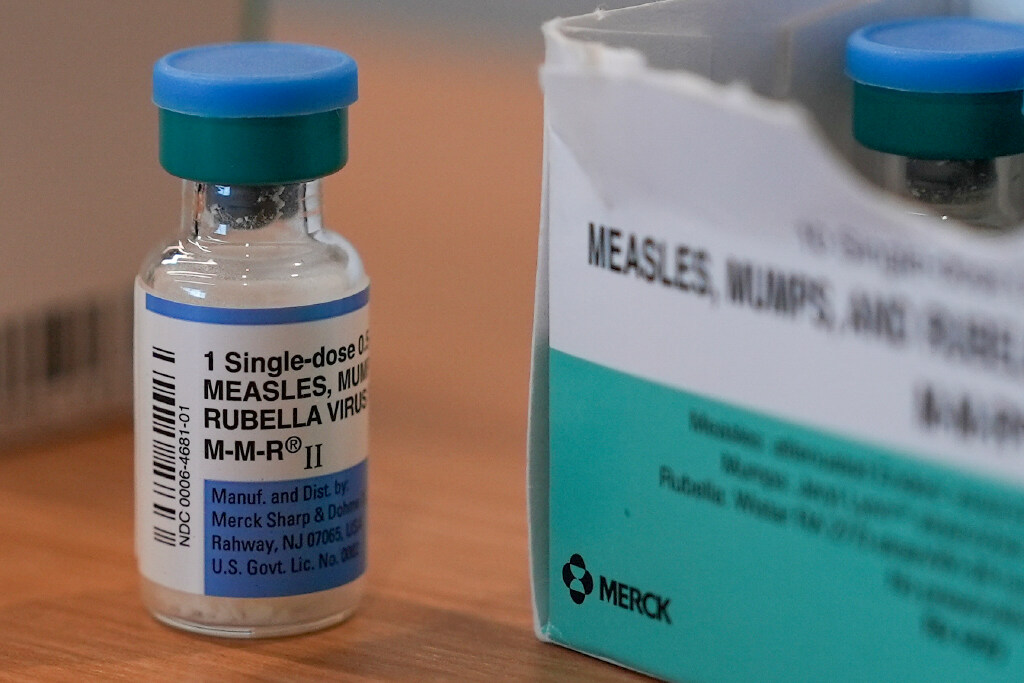
The Pennsylvania Department of Health has launched an online dashboard with information about measles cases, including details on county, age and hospitalizations.
“This new measles dashboard is part of the Shapiro Administration’s commitment to boost public access to information and provide transparency in our work to protect public health,” Dr. Debra Bogen, secretary of health, said in the announcement. “We continue working tirelessly to contain the spread of this highly contagious virus among people who are not vaccinated.
“So far this year, we provided more than three times as many measles, mumps and rubella (MMR) vaccinations in Lancaster County than we did in all of 2025. Through our public health outreach, we are building trust and making connections with people and seeing increased confidence in the MMR vaccine’s ability to protect Pennsylvanians and their community.”
The dashboard will be updated Monday, Wednesday and Friday afternoons. In addition to the number of cases per county, the dashboard includes demographic data, hospitalization rates and vaccination status of the cases.
According to the dashboard, there have been 111 measles cases reported statewide so far this year, with Lancaster County having the most with 68.
Lebanon County has recorded 20 cases.
Chester County has recorded seven cases, and Berks and Montgomery each have three cases.
The department continues to host pop-up measles vaccine clinics, providing more than 600 doses to Lancaster County residents since cases were first identified there in late April, officials said. In comparison, department staff provided 179 measles vaccinations in the county in 2025.
Department-operated state health centers this year have administered more than 1,500 doses of the MMR vaccine to residents.
To ensure that infants, who are particularly vulnerable to measles, are protected from the virus, DOH issued guidance in late June to health care providers enabling them to vaccinate infants as young as 6 months old. This early MMR vaccine is safe and provides moderate protection when measles is spreading, officials said.
Anyone who is not protected against measles is at risk for infection, they said.
Vaccine information, access
Two doses of the MMR vaccine is the best protection against the measles virus, as it is 97% effective at preventing a person from ever contracting it, officials said.
The vaccine has long-proven effectiveness over several decades. Since the vaccine was introduced in the early 1960s, cases and deaths from measles in the U.S. decreased more than 97% compared to the pre-vaccine era.
Because measles has been essentially eliminated in the U.S. since 2000, most health care providers have not treated a patient with the disease, officials sad. To ensure providers have information they need, DOH issued multiple Health Alert Network messages outlining the signs and symptoms of measles and reminding clinicians to encourage patients to stay up to date on their vaccinations.
The department also hosted in-person and live, virtual medical briefings for more than 1,000 doctors, nurses and other health care providers to help them identify and treat patients with measles.
About measles
Measles is a highly contagious virus that spreads to other people when a person who has measles breathes, coughs or sneezes, officials said. The virus remains in the air and on surfaces for up to two hours even after the person with measles leaves the area.
Symptoms to watch for include fever, cough, runny nose, and red, watery eyes (conjunctivitis), followed by a rash that starts on the head and spreads downward, they said. Symptoms can start seven to 21 days after exposure. Measles can cause serious health complications, including hospitalization or death.
When department officials are alerted to a new measles case, local public health staff conduct contact tracing to identify contacts and places exposure may have occurred and implement necessary public health action, including public notification, to prevent further spread, officials said. The contact tracing team works to reach everyone who might have been exposed and to ensure people with measles are isolating while contagious.
If you think you have been exposed to measles and are experiencing symptoms, contact your health care provider or call the department’s toll-free hotline at 877-PA-HEALTH (877-724-3258).
More information on measles is available at pa.gov/measles.
School vaccination rates
The department currently provides school vaccination data at the county and state level. In August, school-level vaccination information will be available online so families have additional information to make personal health and educational decisions.