
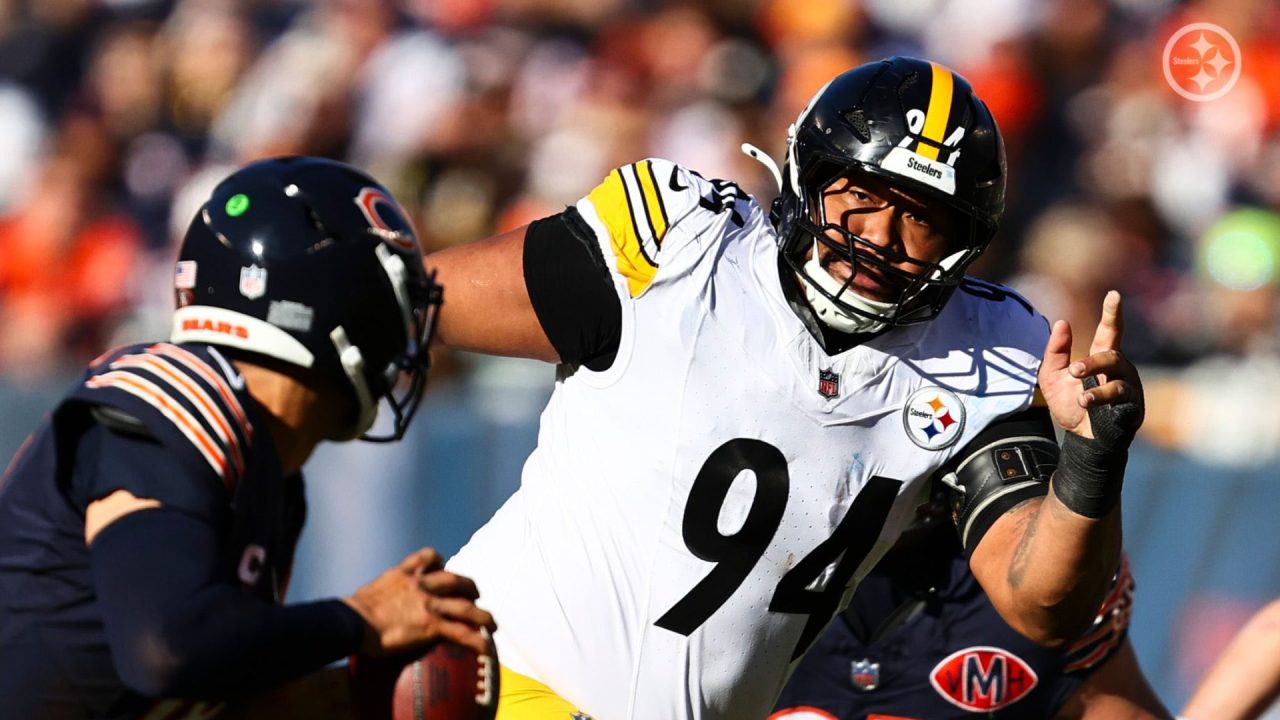
Steel City Underground presents post-game takeaways in our Steelers Offseason Recall series, revisiting key moments from the 2025 season and how they shaped the year that followed.
The Pittsburgh Steelers entered Soldier Field hoping to maintain control of the AFC North race. Instead, they left Chicago with a frustrating 31-28 loss that exposed many of the same problems that had followed them throughout the season.
Playing without injured starting quarterback Aaron Rodgers, Mason Rudolph helped Pittsburgh build a 21-17 halftime lead. T.J. Watt and Nick Herbig combined for one of the defense’s biggest plays of the year, while the offense controlled possession, gained more yards and finished every red-zone opportunity with a touchdown.
However, Pittsburgh’s offense disappeared during the third quarter, the defense surrendered another 30-point performance and the Steelers failed to finish their final opportunity.
Aaron Rodgers ruled out before kickoff
Rodgers entered the weekend as a game-time decision because of a wrist injury suffered during Pittsburgh’s Week 11 victory over the Cincinnati Bengals. The Steelers officially ruled him out only hours before kickoff, giving Rudolph his first start of the season.
Curiously, Rodgers was not listed among Pittsburgh’s inactive players and was not designated as the emergency third quarterback. Despite being technically active, he remained on the sideline and did not take a snap.
Rudolph completed 24 of 31 passes for 171 yards, one touchdown and one interception. He did not provide many explosive plays through the air, but he generally operated the offense efficiently and kept the Steelers within striking distance.
“I felt ready today,” Rudolph told reporters following the game. Head coach Mike Tomlin praised his backup quarterback’s composure, particularly during Pittsburgh’s late comeback attempt.
“He made plays for us, particularly in the fourth quarter,” Tomlin said. “But as a collective, him included, we didn’t do enough to win.”
Watt and Herbig provide an early spark
Pittsburgh’s defense delivered one of the game’s defining moments during the first half. With Bears quarterback Caleb Williams backed into his own end zone, Watt came around the edge and knocked the football loose. Herbig recovered the fumble for a touchdown, giving the Steelers a critical defensive score.
The play represented the formula Pittsburgh needed against Chicago: pressure Williams, create mistakes and turn those opportunities into points.
For a time, it appeared the defense might take control of the afternoon. The Steelers carried a 21-17 advantage into halftime and received the second-half kickoff with a chance to extend their lead.
Instead, the game quickly turned in Chicago’s favor.
Steelers win several statistical battles
The final statistics made the loss even more difficult to explain. Pittsburgh controlled the football for 33 minutes and nine seconds compared to Chicago’s 26 minutes and 51 seconds. The Steelers ran 69 offensive plays to the Bears’ 61 and outgained Chicago 345-328.
They also produced 22 first downs compared to 19 for the Bears and finished a perfect 3-for-3 in the red zone.
Those numbers would typically point toward a Pittsburgh victory. However, the Steelers went only 1-for-3 on fourth down and committed two turnovers. Chicago took advantage of those mistakes, while Pittsburgh repeatedly failed to convert its possession advantage into additional points.
Third-quarter offense disappears
The Steelers received the ball to begin the second half with a four-point lead and an opportunity to take control of the game: they did the opposite.
Pittsburgh’s first third-quarter possession lasted six plays and gained only 11 yards. The next series ended after three plays and seven yards. On the following possession, Bears defensive end Montez Sweat strip-sacked Rudolph, producing a fumble that helped Chicago continue its comeback.
In total, the Steelers ran 12 plays for only 12 yards during the third quarter. They punted twice, lost a fumble and failed to score.
The collapse was especially surprising considering how efficiently Pittsburgh had moved the football during the first half. The offense had controlled the clock and finished drives, but completely lost its rhythm after halftime.
Defense allows 30 points again
While Pittsburgh’s offense stalled, its defense could not stop the Bears from taking control. Williams recovered from the early strip-sack to complete 19 of 35 passes for 239 yards and three touchdowns. Chicago scored 17 unanswered points across the third and early fourth quarters, turning Pittsburgh’s halftime lead into a 31-21 deficit.
The Bears became the fifth opponent to score at least 30 points against the Steelers during the 2025 season.
Pittsburgh had previously allowed 35 points to the Green Bay Packers, 33 to the Cincinnati Bengals, 32 to the New York Jets and 31 to the Seattle Seahawks.
By comparison, the Steelers had surrendered more than 30 points only twice during the entire 2024 regular season. The performance continued a troubling trend for defensive coordinator Teryl Austin‘s unit. At the time, Pittsburgh ranked 28th in total yards allowed, 20th in points allowed and last in the NFL in passing yards surrendered.
The Steelers often appeared to recognize what Chicago was preparing to do, but recognition did not translate into stops. Missed assignments, poor reactions and inconsistent tackling allowed the Bears to maintain their momentum.
Rudolph leads a late comeback attempt
Despite trailing by 10 points, Pittsburgh did not go away quietly.
Rudolph directed a 17-play fourth-quarter drive that covered 63 yards and consumed more than nine minutes. He finished the possession with a 3-yard touchdown pass to tight end Pat Freiermuth, cutting Chicago’s lead to 31-28 with 6:27 remaining.
The drive displayed the patience and control Pittsburgh’s offense had lacked throughout the third quarter. However, the Steelers had used a significant amount of time and still needed their defense to produce another stop.
Tomlin’s late punt pays off, but only temporarily
Pittsburgh received the football again with 4:37 remaining and a chance to tie or win the game. Rudolph appeared to scramble for a 22-yard gain and a first down, but an illegal formation penalty erased the play. An incomplete pass on the following snap left the Steelers facing fourth-and-9.
Rather than keep the offense on the field, Tomlin elected to punt.
The decision was immediately questioned, especially after Corliss Waitman‘s punt traveled only 33 yards. Pittsburgh’s defense had struggled to stop Chicago throughout the second half, making it a major gamble to voluntarily give the football back to Williams.
However, the decision briefly worked. The Steelers forced a three-and-out and gave Rudolph one final opportunity with less than a minute remaining.
Final opportunity falls short
Pittsburgh moved the football near midfield and faced fourth-and-6 from the Chicago 47-yard line. With the season’s division race tightening, the Steelers needed one more completion to continue the drive and potentially move into field-goal range.
Rudolph’s pass never reached its target. Bears defensive back Jaquan Brisker knocked the ball down at the line of scrimmage, ending the comeback attempt and sealing Chicago’s victory.
It was a fitting conclusion to an afternoon filled with missed opportunities. Pittsburgh had led at halftime, controlled possession, gained more yards, scored on defense and converted every red-zone appearance. None of it was enough to overcome two turnovers, a disastrous third quarter and another uneven defensive performance.
What the loss meant for Pittsburgh
The defeat dropped the Steelers to 6-5 and left them tied with the Baltimore Ravens atop the AFC North, but the loss in Chicago offered glimpses of a winning formula. Rudolph provided a steady performance, Watt and Herbig created a game-changing defensive play and the offense showed it could sustain long drives.
However, those moments were overshadowed by the Steelers’ inability to play a complete game. Their offense vanished for an entire quarter, their defense surrendered at least 30 points for the fifth time and their final drive ended only a few yards short of a potential tying field goal.
It was not merely another loss. It was another warning that unless Pittsburgh eliminated its self-inflicted mistakes and found greater consistency on defense, close calls and missed opportunities could ultimately define the 2025 season.