
SCRANTON — Students at Scranton Preparatory School are learning to change the world by coming up with their own business plans.
For the past two weeks, they have developed and pitched their plans for different business ventures as part of the Entrepreneurs For Good program, which aims to prepare students to become successful entrepreneurs while maintaining the school’s Jesuit values of building community, serving God by serving others and valuing each person’s uniqueness. During the program, students develop socially impactful organizations and full business plans. It also includes pitching their ideas.
On Thursday afternoon, students presented ideas for a service that connects people with medical experts and the community to answer their medical questions, an AI platform that helps small businesses automate tasks and track goals, and a program that helps teenagers unplug from their smartphones.
In addition, the 18 student participants learned about business ethics and were given mock business scenarios in which they had to decide what course of action to take.
Students who participated this year said they found the experience insightful.
“I just wanted to learn more about entrepreneurship and business and I learned so much more than I ever would have expected,” said rising junior Avah Arnold, of Dunmore.
Fellow rising junior Carson Jones, of Scranton, said he learned the inner workings of running a business by participating, while rising junior Grace Hamill, of Kingston, learned about how to present a concept and budget her time.
In addition to learning the ins and outs of finance and business statements, Avah said she also learned about making a good first impression — including shaking someone’s hand and making eye contact.
Many students said participating helped them hone their skills in public speaking, and some said they noticed an improvement in their skills.
“I’ve definitely become so much a better speaker,” Avah said. “At the beginning, I was a nervous wreck. I was just standing there so scared. It’s unusual for people to learn stuff about it at such a young age. I’m so happy that I got the opportunity to do that.”

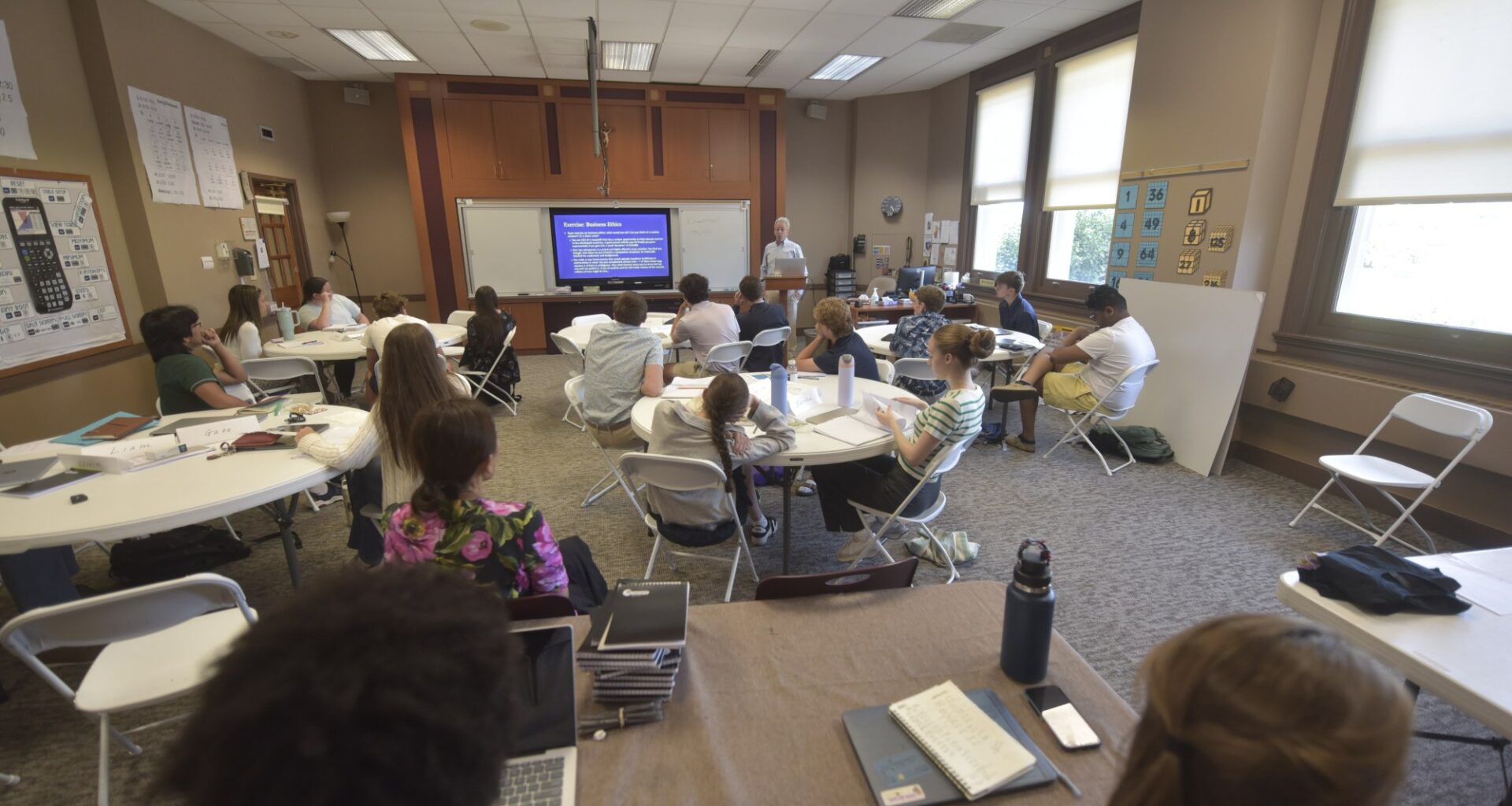
Robert C. Sprung talks to students as part of the Entrepreneurs for Good program at Scranton Prep on Thursday, June 23, 2026. (CHAD SEBRING/STAFF PHOTO)

P.J. Burke delivers a presentation at Entrepreneurs for Good program, in which students develop socially impactful organizations along with business plans at Scranton Prep on Thursday June 23, 2026. (CHAD SEBRING/STAFF PHOTO)

A students listens to a discussion at Scranton Preparatory School as part of the Entrepreneurs for Good program, in which students develop socially impactful organizations along with business plans on Thursday, June 23, 2026. (CHAD SEBRING/STAFF PHOTO)
Show Caption
1 of 3
Robert C. Sprung talks to students as part of the Entrepreneurs for Good program at Scranton Prep on Thursday, June 23, 2026. (CHAD SEBRING/STAFF PHOTO)
Robert Sprung, a 1980 Scranton Prep graduate and a Harvard and Cambridge-educated entrepreneur, developed the program and brought it to the school last year after implementing it at Phillips Academy Andover in Massachusetts for three years. It is now in its fifth year.
This year, Sprung was assisted by three students who participated in the program last year.
The program, he said, is designed around the idea that entrepreneurship should be cultivated at an early age. Young people, Sprung said, bring a certain passion and energy to entrepreneurship and aren’t encumbered by preexisting notions and frameworks.
He said is impressed by the business plans that students presented and believes they are viable and can make a difference in the world.
“We’ve only been together since a week ago Monday, so in that period of time, the thing we stress above all else is the essence of entrepreneurship is having a drive or a passion to fill a real need in society, a need that society either has today or society may not realize it, but they will have the need tomorrow,” Sprung said. “This class is based very much on what society needs or things that can really help society and then meeting that need. It’s not just a semantic difference. It’s really fundamental.”
He hopes students internalize the lessons they have learned in the program and apply them.
“It doesn’t necessarily mean that they’re going to start a business immediately, but we’re teaching them basic self-sufficiency, independent thought, critical thinking, focusing on practical solutions that are implementable,” Sprung said. “It doesn’t necessarily mean you have to start a business, but you can apply this thinking in your daily life, in your community, in your family.”
Olivia Meola, a rising junior also from Scranton, found the program to be a good experience.
“You learn a lot,” she said. “You get used to public speaking. You learn a lot of finances and stuff that could help you in your life outside of school when you grow up, so it’s a really fun experience.”
The program’s final day is Friday.