
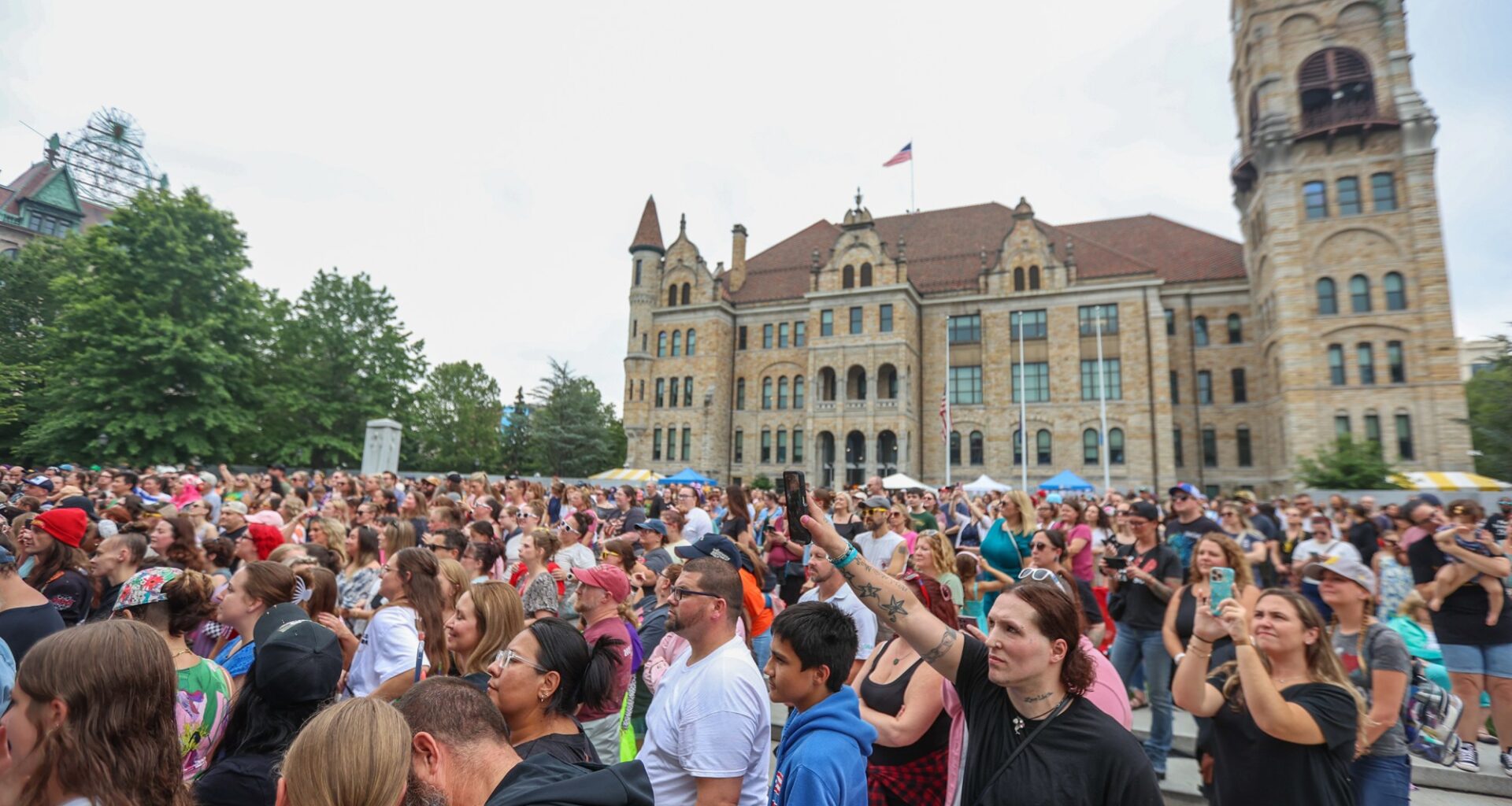
From a logistics standpoint, just about everything that possibly could have worked against the FIFA World Cup Fan Zone in downtown Scranton this month wound up making news.
There was a heat wave, complete with heavy cloudbursts and even some nearby lightning strikes that cleared Courthouse Square during the event’s first weekend on July 4 and 5. Wildfire smoke became a weeklong issue that lingered into last weekend’s return of the party for the tournament’s third-place game and championship match. Then, a water main broke a block and a half away from the action, necessitating a weekend-long repair effort; a smattering of nearby businesses hoping to benefit from increased crowds at the Fan Zone unfortunately had to close Sunday because of it.
In short, parts of this turned out to rank anywhere from frustrating on the mild end, to a real bummer for some counting on everything going perfectly.
What is important for Scranton, and all communities around the region, to understand is that so much of this also did go right. So much of this showed the potential we have to be an entertainment destination. So much of it was actually a lot of fun for a lot of people who embraced the celebratory atmosphere around a city that seems on the cusp of something bigger.
It would be easy for skeptics — and we have our fair share around here — to point to largely unavoidable issues as reasons why midsized cities like the ones that dot Northeast Pennsylvania shouldn’t take big swings in the pursuit of hosting significant events. However, that approach ignores a key fact that other regions have overcome on the road to growth.
Avoiding immediate logistical issues isn’t the measure of a city’s vitality; Overcoming them is.
This is why Scranton and other area communities looking to follow some of the risks Scranton and Wilkes-Barre assumed this summer in pursuit of events like the World Cup Fan Zone and the America250PA Commonwealth Concert Series should not treat operational bumps as signs of resistance to future efforts. They should treat them, instead, as the necessary price to build dynamic downtowns.
We must accept that the expectation of immediate gratification is, in the pursuit of true progress, a trap.
There seemed to be two prevailing schools of thought in the aftermath of the Fan Zone, which wrapped up Sunday.
Tom Borthwick, co-owner of Electric City Ciderworks on Linden Street, raved about the possibilities for a Scranton that looked “vibrant” during the event. He estimated that 80% of customers who walked through his business’ doors — they were allowed to stay open despite the water main break — were first-timers, instilling hope that they’ll be repeat visitors in the future.
Businesses forced to close because of the water issues didn’t have as rosy a view. One suggested Scranton “is just not a soccer town” and that officials’ attendance estimates were slightly higher than what the event wound up providing.
Due to the list of unfortunate issues that arose creating an obstacle course on the path to perfect conditions for the event, there is probably some truth to both viewpoints. However, officials and others in the area must understand that evaluating the viability of hosting major events purely by what they bring everyone in the near term misses a bigger picture.
To build the region into an event destination, community leaders must broaden horizons, and recognize the benefits of patience.
Cultures aren’t built in hours. It takes years to construct them. They thrive on small initial successes and survive when it seems like the world is telling them they aren’t wanted. The habits of visitors are established over long-term efforts, and the benefits of that to area businesses and residents hardly ever come with overwhelming impressiveness in the moment.
In other words, we all have to buy in, and buckle in.
Scranton might be more of a soccer town than the weather and the infrastructure issue may have allowed the area to show. But perhaps the path to making our region a player in the entertainment game can best be summarized in terms of a more-established sport in the area.
Revitalizing communities doesn’t come with home runs. It is a series of bloop hits and sacrifice bunts, some stolen bases and groundballs that advance runners into scoring position. Success comes modestly, in the form of people visiting a cidery for the first time, or families whose first thoughts to fill a weekend turn to a visit to the downtown. The real home runs come in the form of confidence to bid on hosting even larger regional gatherings.
The takeaway from the events our area has hosted this summer isn’t that the inherent risks don’t lead to real issues. It’s that we’re persistent enough to overcome them in pursuit of the worthwhile goal of showing off our region.