
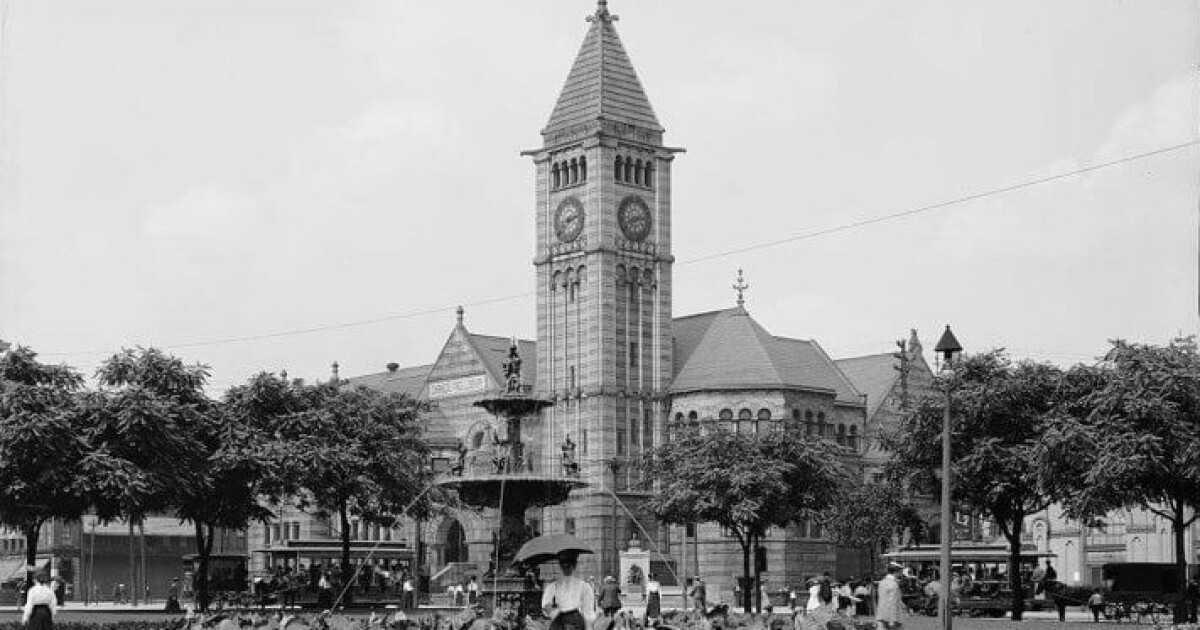
Long-time Pittsburghers can recall when what’s now the New Hazlett Theater housed Pittsburgh Public Theater, from the mid-1970s until nearly the millennium. A new documentary honors that history and much more — reaching both back to the landmark North Side building’s Victorian origins as a Carnegie Library and music hall, and forward to its present as a different kind of vibrant performing-arts venue.
“Making Space: The Story of The New Hazlett Theater” is a brisk, 12-minute WQED Multimedia film that premieres with a free public screening on Thursday, July 30, and streaming on digital platforms July 31.
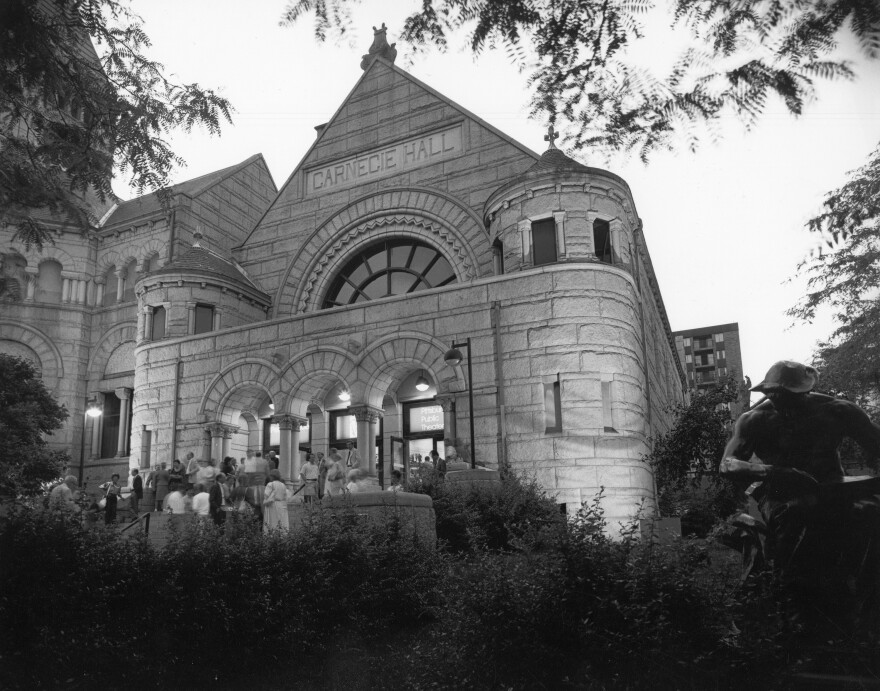
The New Hazlett Theater as it appears today.
The short was produced by WQED digital content manager Emily Brunner, who once worked briefly for the New Hazlett.
Brunner grew up in northern Virginia and has lived in Pittsburgh since she studied theater at Carnegie Mellon University. She was originally drawn to the New Hazlett by its current incarnation as a nonprofit organization that produces and hosts a range of performances, from theater to dance and music.
“I know they do amazing things, and I feel that people don’t know about them,” Brunner said.
But she quickly learned that during its nearly 140 years, the massive granite structure at 6 Allegheny Square East has lived many lives.
“This is a space that kept reinventing itself,” she said.
A history of repurposing
In 1886, industrialist and burgeoning philanthropist Andrew Carnegie commissioned construction of his first library in the U.S. in old Allegheny City, where the Scottish immigrant had lived during his impoverished youth. The same building included the very first Carnegie Music Hall; both opened a few years later. (Braddock’s Carnegie Library opened first but was commissioned later.)
As shown in “Making Space,” the music hall was home to a huge pipe organ and hosted a wide variety of events, including early 20th-century gatherings of the Jehovah’s Witnesses, whose founders lived nearby.
While the library continued to function, the city-owned music hall fell into disuse. But demolition was staved off, and in the 1970s the building was home to two new theater companies: City Theatre and the Pittsburgh Public.
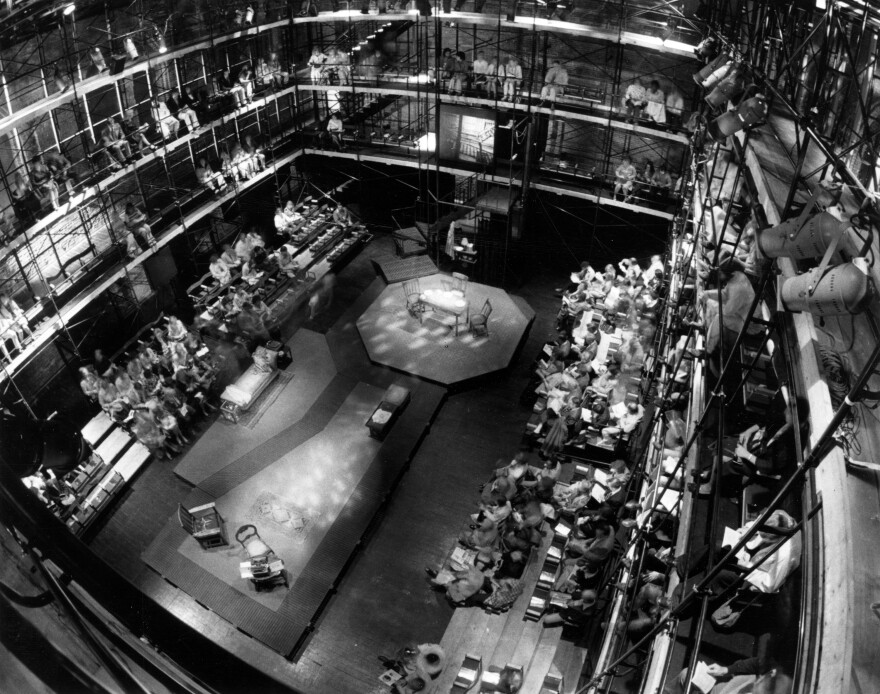
Pittsburgh Public Theater Records, Archives & Special Collections, University of Pittsburgh Library System
During its time as home to the Pittsburgh Public Theater, the Hazlett had unique tiered seating.
Chief on-screen sources in the film include Fred Noel, the Public’s former longtime stage manager, and Rob Zellers, its former longtime director of education. The Public was among the city’s first resident professional companies to produce its own shows, rather than hosting touring productions. The film notes its founders and early leaders, as well as the unique, three-story-tall scaffolding that provided seating in the space.
The Public eventually became sole tenant of the theater, which in 1980 was renamed the Hazlett Theater in honor of philanthropist Theodore L. Hazlett Jr.
In 2000, the troupe left the North Side for Downtown and the purpose-built O’Reilly Theater, where the seating and stage area, the film notes, were modeled after the Hazlett’s.
The old building, still city-owned, needed extensive repairs. It sat vacant for several years while a coalition of arts groups including The Andy Warhol Museum and the Children’s Museum worked to renovate and revive it. The renamed New Hazlett opened in 2004 with an eponymous resident nonprofit.
The Carnegie Library’s fate was even more dramatic. In 2006, it had to close after it was struck by lightning.
The latest incarnation
A new Carnegie Library was later built a few blocks away, on Federal Street; in 2019, the old library space was reborn as the Children’s Museum’s Museum Lab.
The New Hazlett, meanwhile, forged an identity both as a rental venue for local and touring performers and troupes and as home to the unique, subscription-driven Community Supported Art (CSA) series, in which the theater gave selected emerging artists each season funding, technical assistance and rehearsal and performance space to stage new work.
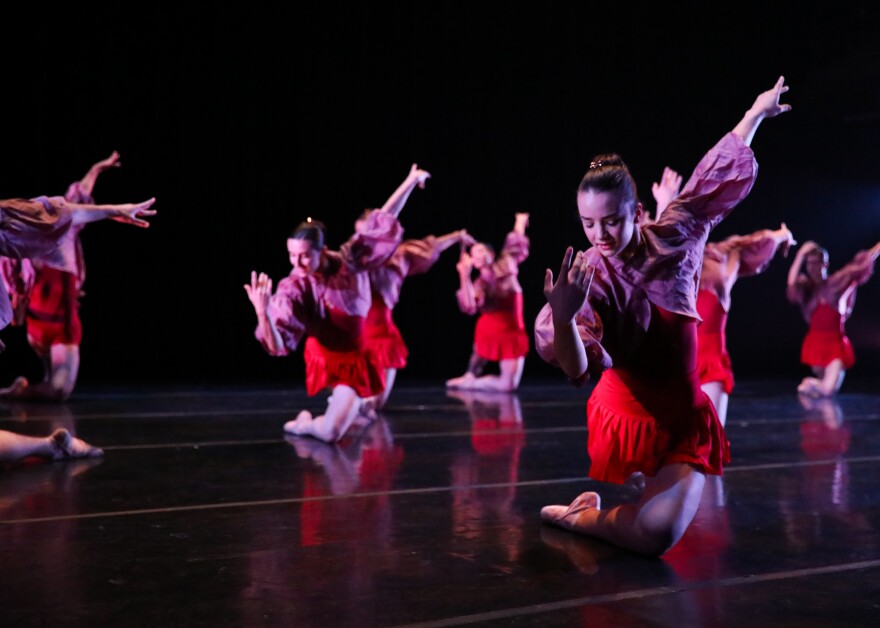
Rachel Harman
/
Texture Contemporary Ballet
Texture Contemporary Ballet is one of four performance troupes now in residence at the New Hazlett.
“It’s where ideas get put together. And there’s very few spaces like that anymore,” said Brunner.
The New Hazlett is also home to four resident companies: Prime Stage Theater, Texture Contemporary Ballet, Front Porch Theatricals and Kente Arts Alliance.
Brunner continues to marvel at all of the theater’s identities.
“It’s essentially a blank stage, it’s a blank canvas,” she said. “I’ve seen so many cool things there, and each time the space transforms, and I think that’s kind of the thing I love the most about that place.”
The July 30 event includes live music. “Making Space” will screen on both YouTube and WQED+. It will be broadcast on WQED TV at 11:45 p.m. Monday, Aug. 3.