
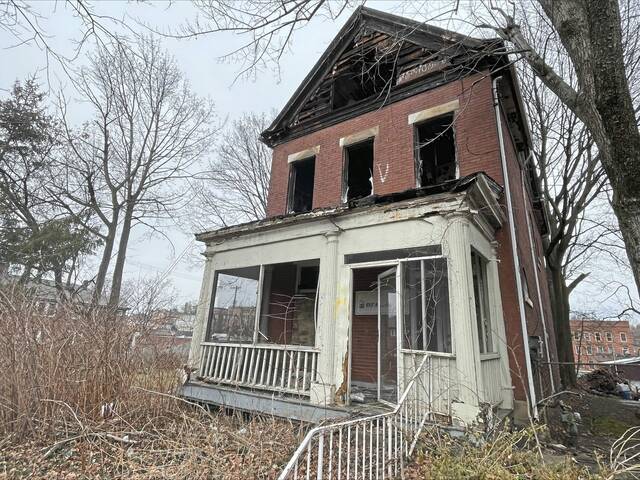
More than 95 housing and infrastructure projects across Allegheny County will receive repairs and improvements through $11.5 million in combined federal and county funding.
The money will support housing and infrastructure upgrades aimed at eliminating long-standing blight in more than 30 municipalities. Projects will focus on improving public spaces and addressing deteriorating properties.
Allegheny County Executive Sara Innamorato on Monday announced the list of projects selected for funding through the federally funded Community Development Block Grant (CDBG) Program and the county’s Act 152 Blight Removal Program.
The program’s $9.5 million will support 74 projects that invest in affordable housing, infrastructure improvements and economic development, while the Act 152 Program’s $2.09 million will support 22 projects that will demolish 91 blighted structures.
“Behind every one of these 96 projects are real people, families looking for a safe and affordable place to live, neighbors who deserve streets and sidewalks they can count on and residents who have watched blighted properties sit next door for far too long,” Innamorato said in a statement.
The program is funded by the U.S. Department of Housing and Urban Development and supports community development projects that benefit low- and moderate-income residents.
Established in 2021, the Act 152 Blight Removal Program dedicates $15 from every county deed transfer to a demolition fund that helps combat blight. The program provides financial assistance to demolish unsafe structures, prepare sites for redevelopment and support multiphase planning efforts in high-need communities.
Since its inception, the Act 152 Blight Removal Program has helped remove more than 220 structures and awarded more than $10 million for blight remediation projects, according to county officials.
Some of the communities with multiple awarded projects include Braddock, Millvale, Crescent, Harrison, North Fayette, East Deer, Dravosburg, Coraopolis and Clairton, according to county economic development paperwork.
Allegheny County Economic Development Director Lauren Connelly said the financial investments are designed to give the communities the resources they need to move their priorities forward.
“Every community’s needs are different, and these programs provide the flexibility to make meaningful improvements that also extends the reach of their own local funding and leveraged investments, while strengthening neighborhoods for the future,” Connelly said.