
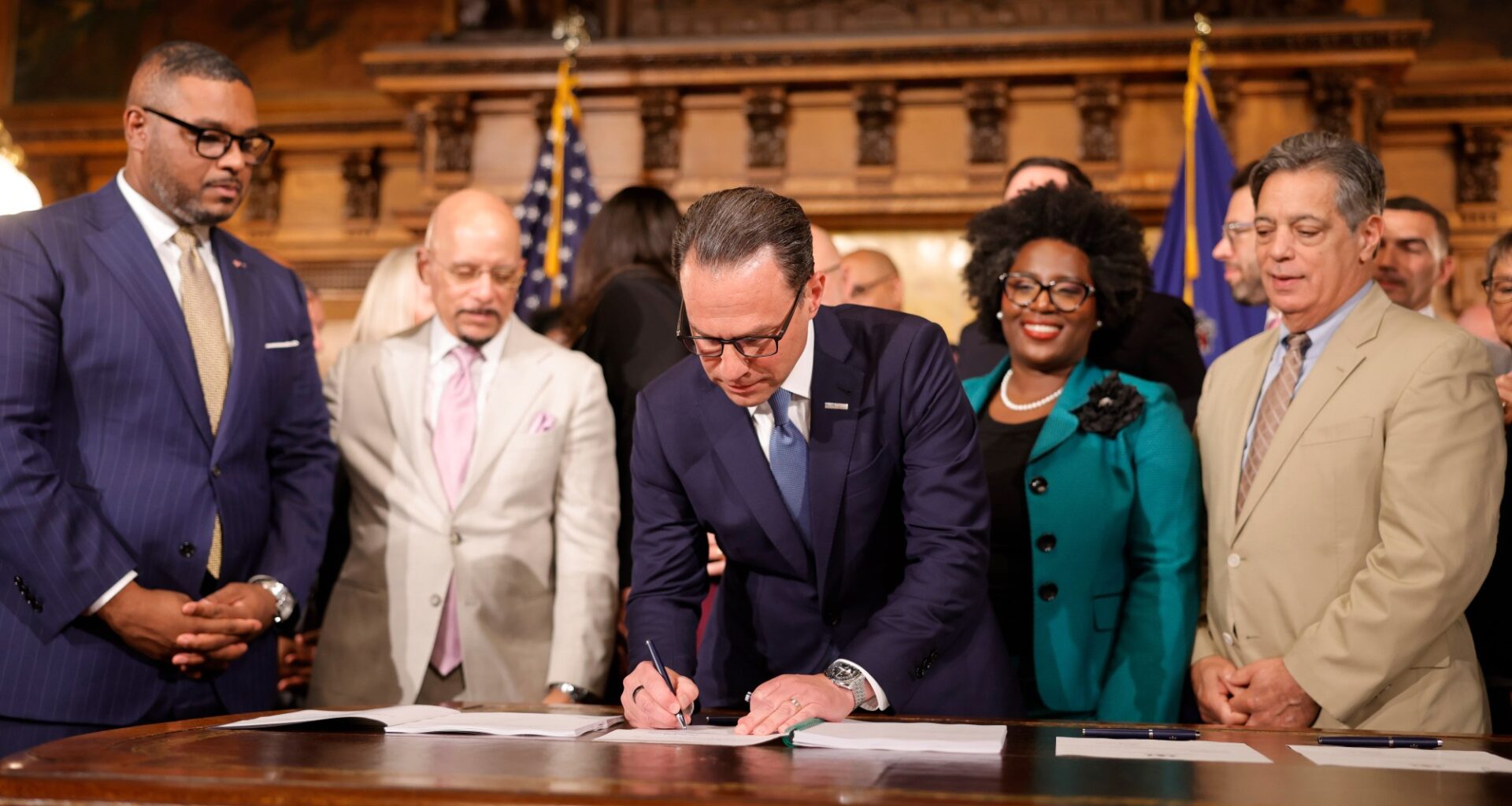
Commend members of Pennsylvania’s General Assembly and Gov. Josh Shapiro for passing a $50.8 billion state budget earlier this month and avoiding yet another stalemate that lasts deep into the calendar year and negatively affects institutions and workers that rely on state funding.
But putting off consideration of important state budget initiatives that are always promised but never addressed is tantamount to a silent tax increase on Pennsylvanians.
The state government’s reluctance to address revenue-generating policies and issues such as affordable housing, minimum wage reform and reshaping statewide mass transit continues to be a frustrating reality.
Even a comparatively quicker budget passage doesn’t change that reality. Kicking those cans down the road is not a tribute to bipartisan compromise or fiscal responsibility. It simply creates the illusion of both. It also likely increases future financial burdens that ultimately will be necessary to fix problems bubbling at the surface now.
Despite promises from Shapiro and many in the Legislature, on both sides of the aisle, to focus on meaningful ways to increase revenue, the budget does not address significant methods of doing that. It does not set a framework for taxing skill games. It does not legalize and tax adult-use cannabis. It does not even take away a sales tax exemption for qualifying data centers, a surprise because advocates on both sides of the aisle, and in both chambers, seemed to support it.
This is not to suggest that the budget doesn’t address key issues. Kicking a whopping $900 million worth of new investments into education, with an additional $565 million toward the state’s court-mandated obligation to historically underfunded schools, guarantees a quarter of the state budget is rightly earmarked toward bettering the future of our children.
But strengthening that investment in future budgets requires a preparedness this one doesn’t afford.
Removing Shapiro’s proposed housing bond initiatives, for example, means Pennsylvania will not address one of the top issues affecting anyone who wants to live and work in the commonwealth. The lack of affordable places for families to live only serves to drive down long-term investment in the state. It also leads to heavier financial loads that must be assumed by social service agencies at the county level, not to mention increased public safety budgets locally.
The state’s reluctance to back necessary, aggressive housing initiatives in this and recent budgets will only lead to more local tax hikes to fund those services down the road, and struggles to expand tax bases consistently cast more of the burden onto homeowners.
Failing to provide consistent funding for mass transit also trickles down to taxpayers’ wallets. When services on buses or trains are scaled back, or not offered due to lack of funding, it drives more commuters to roads and highways. That accelerates wear and tear and increases the costs needed for road repairs.
While Shapiro advocated for, and the House passed, legislation to raise the minimum wage in the state, lawmakers kept the current rate chained to the federal $7.25 floor. That is inadequate and short-sighted, considering it falls short of the rates in every bordering state, by a significant margin in most cases.
That creates more hidden costs. It forces full-time workers who don’t earn a living wage to rely on state and federal subsidies and it increases the likelihood that residents in border counties will opt to work and spend in New York, New Jersey or Maryland, weakening the earning potential of Pennsylvania’s sales tax.
In short, money spent now to address these issues can lead to money generated later. Continually delaying investments that must be made on those issues in Pennsylvania — decisions nearby states already have managed to work through their legislatures — eventually will create higher expenses with which we must reckon.
The time to focus on the 2027-28 budget will be here soon enough. But with this one passed, we encourage lawmakers to begin — during upcoming legislative sessions — preparations on the next budget, which will need to take some hulking swings in these vital areas.
Stop treating mass transit, housing and wage reform as chips at the bargaining table. Focus on tapping into those obvious revenue streams badly needed for a state still spending more than it is generating. Pennsylvanians have been waiting for all of it, for far too long.