
From Philly and the Pa. suburbs to South Jersey and Delaware, what would you like WHYY News to cover? Let us know!
Pennsylvania officials are taking aggressive measures to keep the New World screwworm fly out of the state.
There are not yet any known local cases of the flesh-eating pests, which typically attack livestock, but an active quarantine order is now in place that limits the movement and importation of farm animals and household pets like dogs and cats into the state from areas with active cases.
The parasitic fly feeds off of living tissue and grows in the open wounds of warm-blooded mammals and birds. It has reappeared in the United States about 60 years after it was declared eradicated nationwide.
New cases of New World screwworm were reported in Texas and New Mexico last month. Infections have occurred mostly among cows, goats, sheep and other livestock, according to federal surveillance data.
“This does have the potential to be very devastating to our livestock industries,” said Dr. Erin Luley, Pennsylvania assistant state veterinarian. “That’s why we want to be proactive.”
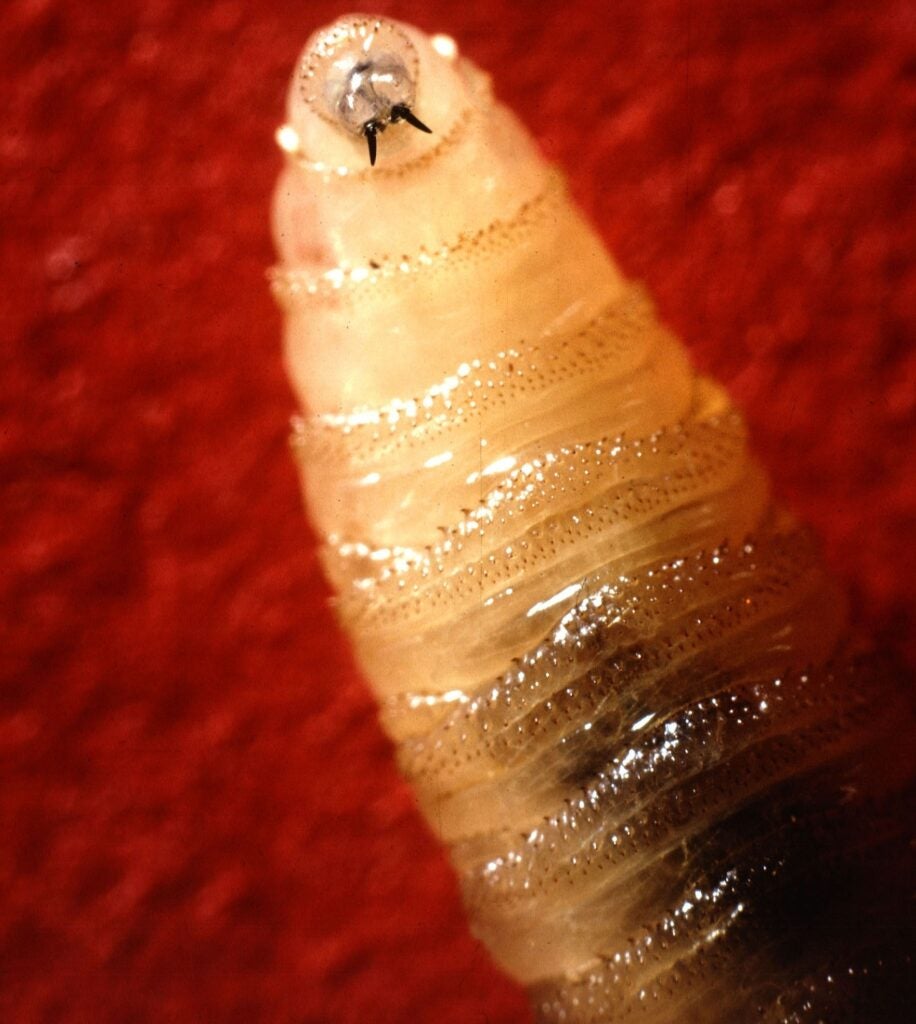 A close-up of a New World screwworm maggot (USDA)
What is the New World screwworm fly?
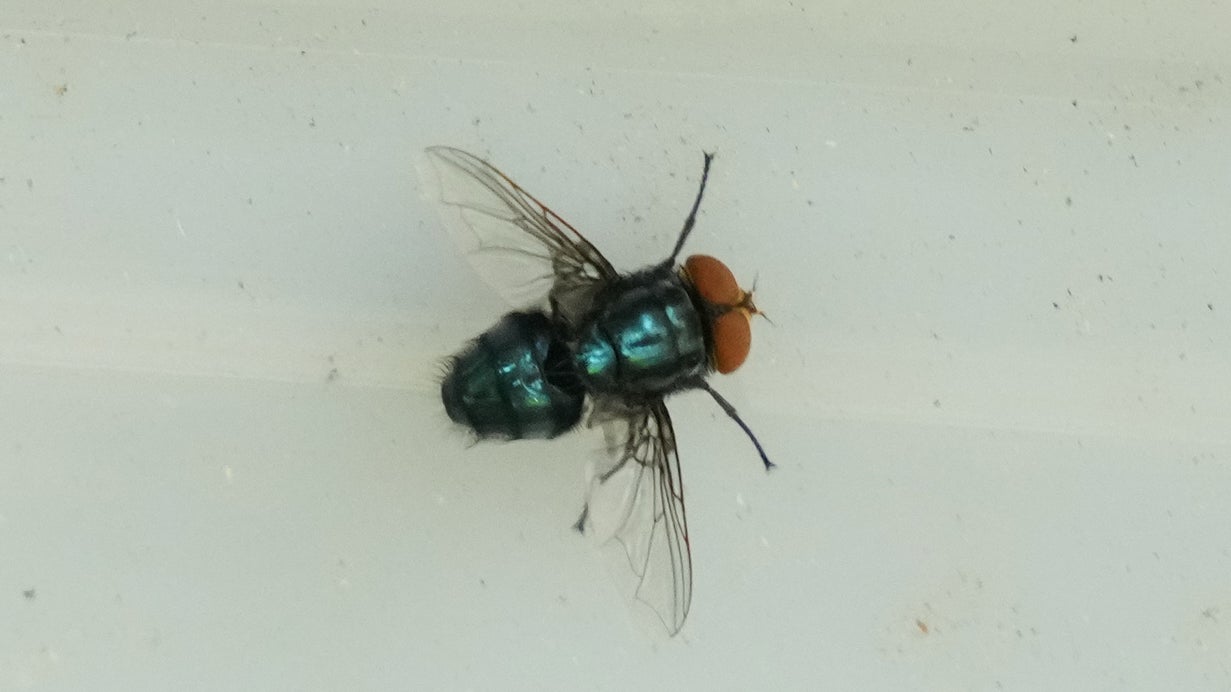
New World screwworm flies are similar in size to common house flies. They have orange eyes, a metallic blue or green body and three dark stripes on their backs, according to the U.S. Department of Agriculture.
They’re attracted to open wounds on animals, even small ones like the injection site of an ear tag on a farm animal, Luley said. An exposed umbilicus, or the area on a newborn animal that was connected to an umbilical cord, can also attract the pests.
The flies lay eggs in the open wounds. The resulting maggots “screw” into and eat their hosts’ tissue as they grow, harming the animals. The maggots then drop off and burrow into ground soil, where they transform into adult flies.
But screwworm injuries can be successfully treated, Luley said. Infections don’t spread from direct animal-to-animal contact, so it’s possible for veterinarians and other experts to help animals heal and contain cases, even if there’s an infestation in a large herd.
As of Tuesday, there have been 42 total cases in the U.S. since June 3, federal data shows.