
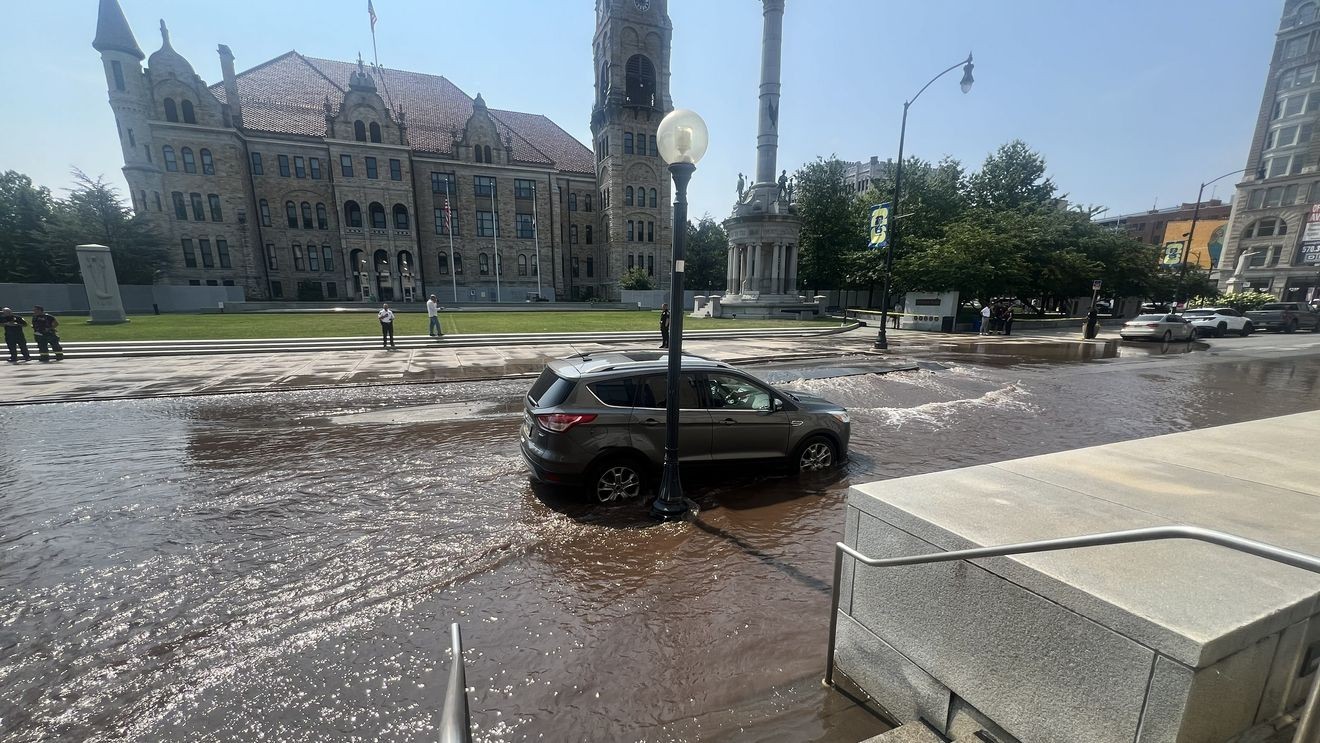
SCRANTON, LACKAWANNA CO. (WOLF) — Pennsylvania American Water is defending its infrastructure investment strategy following two major water main breaks in downtown Scranton and a call from Mayor Paige Cognetti for accelerated replacement of aging pipes.
In a statement Tuesday, the utility said it shares the city’s goal of reducing service disruptions and providing safe, reliable drinking water but noted that replacing water mains is based on engineering analyses that consider multiple factors, not just the age of the pipe.
The company said the water mains involved in the recent breaks were already included in its replacement planning process and that the incidents will be evaluated as it determines future priorities.
Pennsylvania American Water also highlighted its investment in Scranton’s water system, noting it operates about 300 miles of water main within the city, including roughly 49 miles — about 16% — that were installed before 1900.
The utility said it replaces between five and 10 miles of water main annually in Scranton, investing between $8 million and $10 million each year. It also said its replacement rate over the past five years has averaged about 2%, exceeding both the national average of 0.8% and the industry-recommended rate of 1.3%.
According to the company, water main breaks across its system have declined by more than 50% since 2009.
Pennsylvania American Water also detailed its response to the recent outages, saying crews worked around the clock to restore service, distributed more than 100,000 bottles of water and deployed three large water tankers while repairs were underway.
The statement comes after Cognetti called for faster infrastructure improvements following two water main failures in less than two weeks that disrupted water service and prompted a boil water advisory for thousands of customers.
The utility acknowledged the inconvenience caused by the outages and said it remains committed to investing in the system to improve reliability while continuing to work with local leaders on future infrastructure projects.