
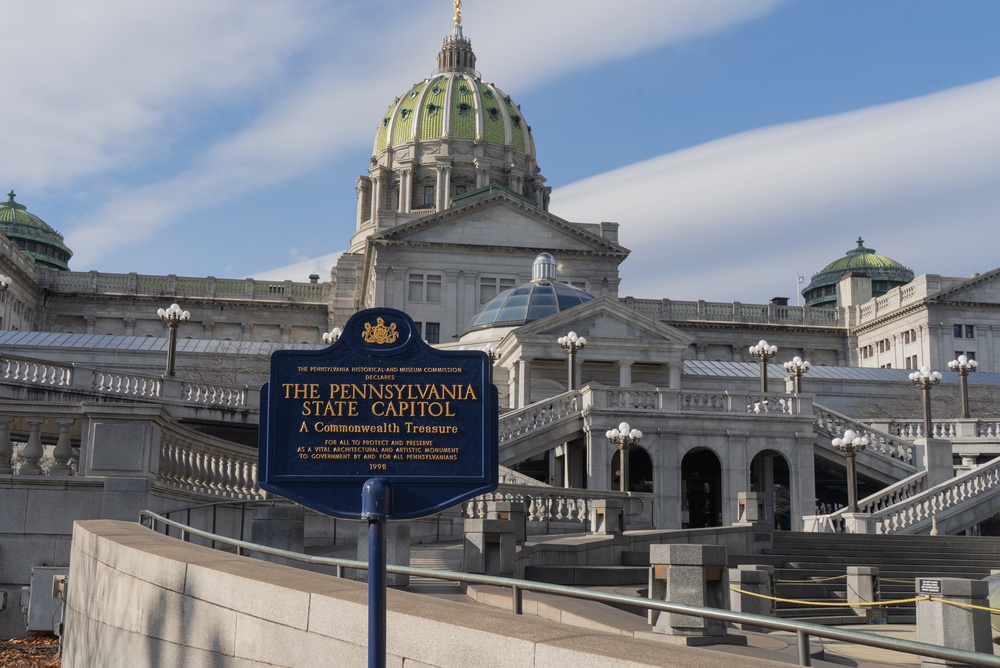
The Commonwealth of Pennsylvania now — officially — has a budget. And unlike last year, it was only 13 days late.
By Denise Clay-Murray
On Sunday, the Commonwealth of Pennsylvania passed its Fiscal Year 2027 budget.
The $50.8 billion plan cuts about $3 billion from the $53 billion plan proposed by Gov. Josh Shapiro back in February and leaves the Commonwealth’s rainy-day fund intact. And while it gives $136 million more to the School District of Philadelphia, it doesn’t address a bunch of things folks were hoping it would like consistent funding for mass transit, an increase in the minimum wage, and funding for affordable housing.
In a statement issued after the budget was signed into law, Shapiro praised the bipartisan effort to pass a spending plan.
“From day one, my administration has been laser-focused on delivering results for the people of Pennsylvania — and what we’re doing is working,” he said. “In a divided legislature, we’ve proven time and again that Democrats and Republicans can come together to get stuff done for the good people of Pennsylvania — cutting taxes, investing in education and workforce development, and keeping the economy growing. By listening to Pennsylvanians and working together, we’re solving problems and building on the last three years of real progress.”
Now, whether or not you think this budget is good depends on your perspective. If you were hoping that the School District of Philadelphia would get more money from the state, it’s good. If you were hoping for dedicated funding for mass transit, not so much.
But what we should all be a little annoyed about is the fact that it was, as it has been for the last five years, late.
The fiscal year for the Commonwealth, just like it is for the city, begins on July 1. What this means is that after July 1, the state, technically, has no money to work with. That means that state workers could go without pay, and people who rely on such services as SNAP and Medicaid may have problems getting what they need.
Last year, the budget wasn’t passed until November, which led to school districts, daycare centers and non-profits serving seniors to have to take out loans to make ends meet. While the principle got reimbursed when the Commonwealth fulfilled its obligations, the entities impacted were still on the hook for the interest on these loans.
And the people in need of those services had to wait.
Meanwhile, and this is kind of significant to me, the people who had the job of getting the budget didn’t have to wait for their paychecks. They didn’t this year as we approached 13 days, nor did they have to wait as the Commonwealth got far too close to Thanksgiving without a budget.
Why am I bringing this up?
Because there are commonalities between putting together a newspaper and putting together a budget, the fact that the Commonwealth hasn’t met its deadline in five years is a problem.
A missed deadline causes problems. If a story is late, it gets edited late. If it’s edited late, that means it gets to the copy desk late. If it gets to the copy desk late, then it’s laid out late. If it’s laid out late, it gets to the printer late…
And unlike the days where newspapers had their own printing presses, this can cost a newspaper money because printers have a late fee…and sometimes its substantial.
Under the City Charter, if Philadelphia’s City Council doesn’t have a budget in place by the end of the previous fiscal year, the paychecks stop. That means that if there’s no budget, folks have to figure out how they’re going to pay for that trip to Aruba.
It might be time to try that with our friends in Harrisburg. Just saying…
Disclaimer: The views, thoughts, and opinions expressed in the article belong solely to the author, and not necessarily to the author’s employer, The Philadelphia Sunday SUN, the author’s organization, committee or other group or individual.