
But in the quiet of Pennsylvania Dutch homes, Braucherei lived. Elders passed the practice down to their descendants or other trusted people in the community through a strictly oral tradition to preserve the secrecy of their most sacred rituals—often passing from a man to woman or vice versa to preserve gender equality among practitioners.
(The simple edible pleasures of Pennsylvania Dutch country.)
By the time Miller’s great-grandson Robert Lusch-Schreiwer was growing up in the 1970s, he didn’t think twice when his grandfather attempted to heal him after a fall by chanting a simple rhyme in Pennsylvania Dutch language three times. It was just part of daily life, alongside the modern medicine practiced by his father, a doctor, and mother, a nurse.
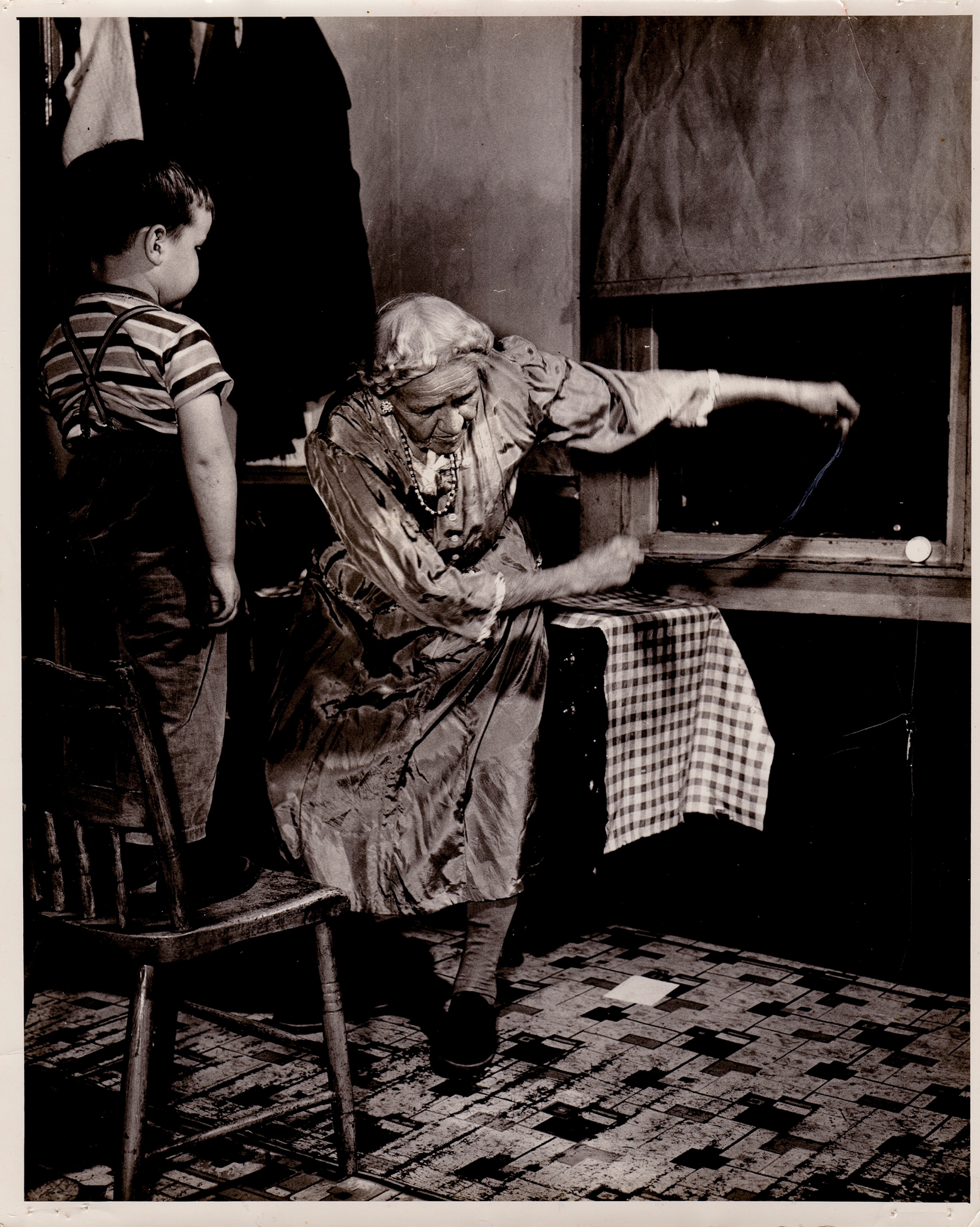 Sophia Bailer demonstrates the powwow ritual for curing the skin infection erysipelas, or St. Anthony’s fire, in 1950. She transfers the illness to a red woolen string by drawing it along the child’s body then sweeping the string away from the body three times, while commanding the infection to depart: “Wildfeier, Wildfeier, Flieh, Flieh, Flieh! Der rote Fadem jagt dich hie, hie hie!” (“Erysipelas, Erysipelas, Fly, fly, fly! The red string chases you away, away, away!”)
Don Yoder Collection, Pennsylvania German Cultural Heritage Center, Kutztown University
Schreiwer thinks Miller would be shocked that not only is her great-grandson now a Braucher himself, but he is also one of the forerunners of a resurgence of interest in Braucherei. He has trained dozens of young practitioners and even wrote a book about it. Groups, now sometimes called guilds, are now growing across the country, fueled by Zoom trainings and even Instagram Reels, marking a significant break from the mostly furtive trainings of the past. Brauchers have even reclaimed the word “powwowing” once flung at their ancestors as a slur.
And Braucherei is not just a passing hobby or interest, says Heather Greene, an editor at the publisher of spiritual books, Llewellyn, which acquired Schreiwer’s most recent, Heathen Traditions of the Pennsylvania Dutch. Schreiwer, along with other modern practitioners and teachers, are “reviving [Braucherei] to a viable modern practice that people can use today.”