
August 4, 2026 | 6:00 AM
Asia Tabb

Asia Tabb is the Host and Producer for WITF’s The Spark.
She began her start in radio when she joined legendary radio/ host producer, Doc Christian. She worked closely with Doc for her role on “The Gospel Express, on WHOV 88.1 FM and was a host for “Unrestricted Praise” at Praise FM.
Previously she was an anchor in Shreveport, Louisiana at KTAL/KMSS. Asia also worked as a Multi-Media Journalist at WHP-TV here in Harrisburg, PA.
Asia got her break into news at KTVO in Ottumwa, Ia. While the 2020 caucuses were gearing up. Asia followed many candidates through their campaign trail from Senator Cory Booker, Congresswoman Tulsi Gabbard, and 46th President of the United States Joe Biden.
Asia was born and raised in Norfolk, Va. She graduated from Old Dominion University in 2018 with a major in Communications.
Asia is extremely friendly so don’t be afraid to say hi if you see her out and about.
(Kimberly Paynter/WHYY)
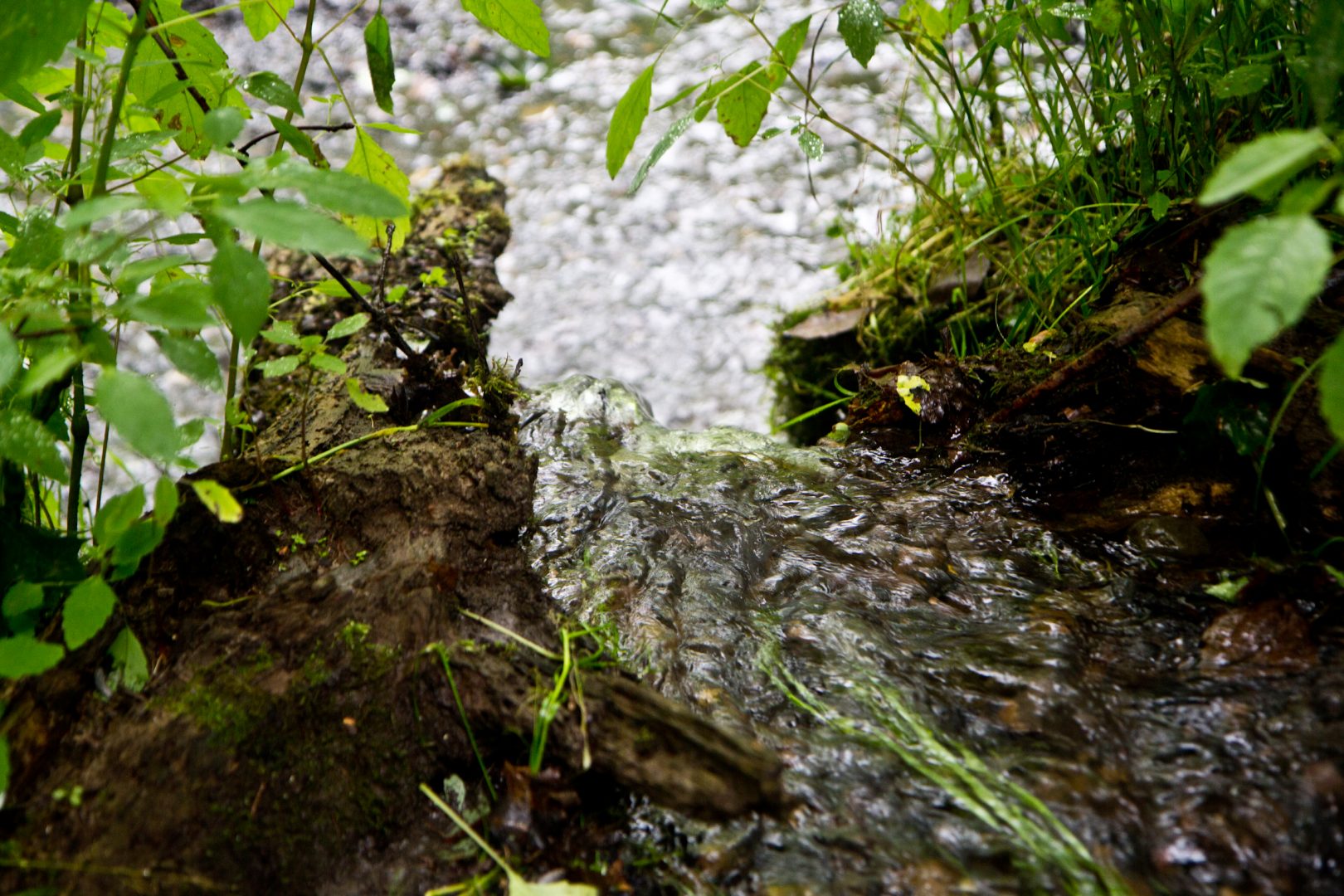
Tank Creek is one of the streams classified by DEP as exception value, the highest water quality designation in the state. It feeds into the Delaware River. (Kimberly Paynter/WHYY)
aired; August 3, 2026
How healthy are Pennsylvania’s rivers, streams and lakes? That’s the question the Pennsylvania Department of Environmental Protection (DEP) seeks to answer every two years through its Integrated Water Quality Report.
On The Spark, Jill Whitcomb, DEP deputy secretary for water programs, and Dustin Shull, assessment section chief with the Bureau of Clean Water, explained how the report helps Pennsylvanians better understand the condition of the waterways they fish in, swim in and rely on for drinking water. “This report really tells Pennsylvanians how healthy their streams are,” Whitcomb said. “The water that’s flowing in their backyard, the water they might go out to go fishing in, or the water they drink from—how healthy that is—that’s really the point of this entire report.”
The report evaluates approximately 85,000 miles of streams across the Commonwealth, measuring water quality for several designated uses, including aquatic life, recreation and public water supply. Scientists collect and analyze millions of data points, ranging from water chemistry and bacteria levels to fish populations and aquatic insects. “We have millions of data points that go into our 85,000 stream miles in Pennsylvania,” Shull said. “It’s a letter to Pennsylvanians talking about the quality of our rivers and streams.”
One of the report’s key findings is that a waterway can be considered healthy for one use while impaired for another. For example, a stream may be safe for swimming but not support a healthy fish or insect population. “A particular stream actually might be okay for people to walk in or to swim in… and that’s how one use could be impaired but another one could be supporting,” Shull explained.
This year’s report also includes encouraging news. Whitcomb said more data than ever before was submitted by partners across the state, and several waterways have improved enough to be removed from Pennsylvania’s impaired waters list. “Every time we see more restored streams, or streams that have impairments that are delisted, that’s a good thing,” Whitcomb said. “We have some success stories… including Presque Isle Bay in Erie and streams within the Chesapeake Bay watershed that are seeing incremental improvements.”
For the first time, the 2026 report also separates Pennsylvania’s “special protection” streams into their own assessment category, giving residents a clearer picture of the health of some of the Commonwealth’s highest-quality waterways.
Listen to the podcast to hear the conversation.
Listen to The Spark on your favorite platform