
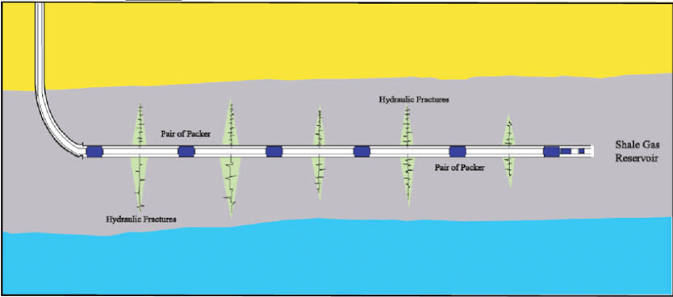
Months into Erie’s mineral-rights debate, residents still have not seen two documents central to the controversy: an analysis showing what it would mean to drill around municipal minerals and a parcel-by-parcel inventory of the mineral rights Erie considered, claimed or disputed.
For months, citizens have been presented with two competing narratives. Supporters of the agreement argued that the Draco Pad project would move forward no matter what Erie did. Opponents argued that municipal ownership created leverage that the town may have surrendered too quickly. Both positions have to contend with the fact that the public has never seen the technical analysis necessary to fully evaluate either claim.
At the center of the debate is a deceptively simple phrase: “going around.” During public meetings, consultants and town officials mentioned that Senate Bill 24-185 prevented operators from force pooling municipal minerals and could require those interests to be “avoided.”
At the June 2 study session, Environmental Services Director David Frank told council members that the issue remained unsettled.
“What avoided means is sort of an open question that has not been addressed because this is the first time the state’s dealt with the repercussions of passing this law,” Frank said. “I have spoken with engineers at the state and they don’t have a firm answer to this question.”
State law says companies cannot force local governments to give up their mineral rights, but it’s unknown what would actually happen if a company drilled through those minerals anyway. Because the law is relatively new and officials have repeatedly described its application as untested, neither the town nor state regulators have publicly explained how it would be enforced in practice.
ECMC spokesperson John Brown later echoed that uncertainty in an email to Yellow Scene. “The law does not establish a single prescribed distance or engineering method for avoiding those minerals,” Brown wrote, adding that compliance depends on factors including geology, mineral ownership, well paths and design. He said operators must ultimately demonstrate through technical filings that they have the legal authority to develop the minerals targeted by their wells.
Frank nevertheless offered possibilities. “It could be that the overall direction of those laterals changes to avoid physically contacting those areas,” he said. “It’s also possible that they may drill right through our mineral rights and simply not perforate and frack those sections of the casing.” Those options mean that SM Energy could adjust the path for drilling so that the path of the drills avoids the mineral rights, but they could also drill right through and simply not open the pipes through that area to avoid collecting the minerals they don’t own.
In theory, SM Energy could reroute the wells, drill through those areas without perforating the casing, or continue with the existing plan if regulators determine state law allows it.
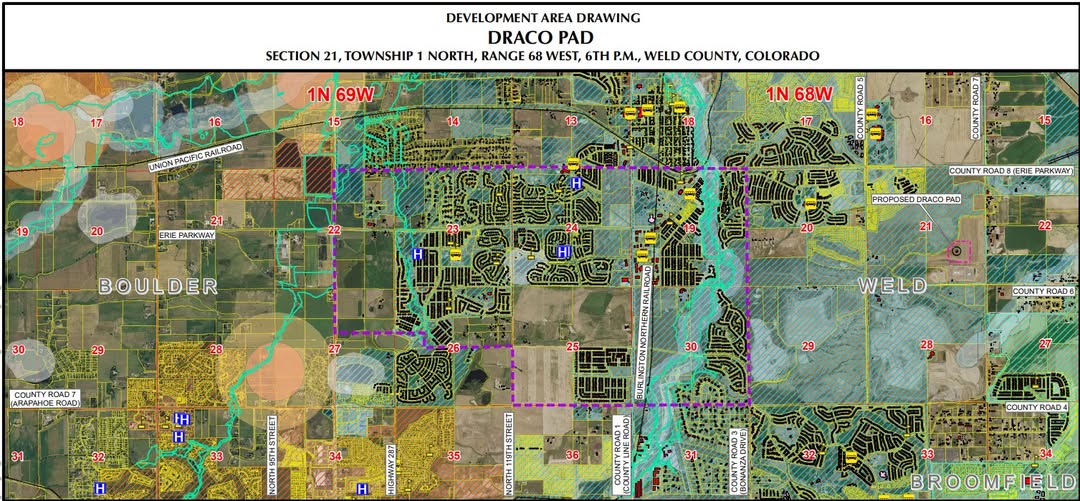
Draco Project Map via Mayor Andrew Moore Facebook account
During the same June 2 meeting, the town attorney acknowledged that there were “two places in which we don’t know if we own or if we have already leased out those mineral rights.” Councilmember Dan Hoback pressed staff on whether the highlighted mineral areas included parks or open space. Frank replied, “Not with a capital O and a capital S.” When Hoback pressed further, Frank conceded: “Are some of these areas undeveloped? Absolutely.”
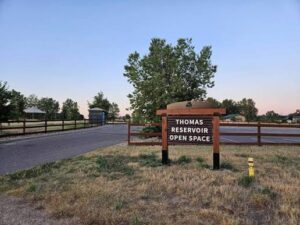 The uncertainty extends beyond the rules governing the drilling area. It also reaches the question of what Erie actually owned. The maps released by the town separate leased minerals from unleased minerals, but they do not show roads, rights-of-way, disputed parcels or areas where the town could potentially claim mineral rights. As a result, residents still do not have a complete picture of which underground resources Erie controls.
Supporters of the agreement argue that opponents are overstating the importance of those missing minerals. Opponents argue that the town never fully established the extent of its holdings before negotiating. Both sides are making claims about leverage, but the public has never been given the information necessary to independently evaluate them.
Those comments stand in tension with the certainty often heard elsewhere. At the June 16 special meeting, Mayor Andrew Moore made a point that he has repeated multiple times in the past months. “Draco is happening. That’s not a political statement. That’s reality.” Minutes later, however, Moore acknowledged the limits of what the town knew: “What we might have influence on is the spacing,” which is the term for the area an operation will take up as well as the space between the pipes being drilled. Later still, he conceded, “We don’t know.”
The uncertainty matters because the town itself repeatedly emphasized the leverage created by municipal ownership. A slide presented during the June 2 meeting stated that Erie’s unleased minerals “MUST be avoided unless leased or voluntarily pooled.” Frank argued that the inability to force pool municipal interests shifted leverage to local governments. “If our terms are not reached, if the negotiations are unsuccessful, then our minerals cannot be forcibly pooled and therefore must be avoided.” Avoiding town minerals would mean drilling under fewer homes in Erie.
Yet months later, the public still has not seen an engineering study, an alternate well plan, a cost estimate or a revised lateral layout demonstrating how avoidance would work. The public has been asked to weigh competing arguments about inevitability and leverage without access to the information that would allow them to independently test either proposition.
Brown said regulators themselves do not yet possess many of the technical details residents have sought. Because no permits to drill have been submitted, ECMC “does not yet have the detailed well plans needed to confirm the proposed trajectory, perforated interval, completion design or other technical specifications.”
The absence of that evidence became more striking after Extraction Oil & Gas filed an amended application in July (before the referendum petition) reducing the drilling unit by roughly 240 acres. Brown said the change was unrelated to Erie’s minerals and instead stemmed from the removal of Boulder County interests and a private landowner seeking royalties. Even so, residents still lack the parcel-level inventory and engineering analysis needed to determine what leverage Erie’s holdings actually created.
Frank himself acknowledged the uncertainty surrounding the numbers. During the June 2 study session, he estimated that Erie’s roughly 103 acres of unleased minerals represented about 2.7% of the original 3,931.8-acre drilling unit. However, he said avoiding those interests could require excluding nearly 300 acres—approximately 8% of the project area. No public analysis explains how those estimates were calculated or what they would mean for the layout of the project.
The missing analysis leaves another question unanswered: if Erie’s minerals really could have affected nearly 8% of the project area, what was that leverage actually worth?
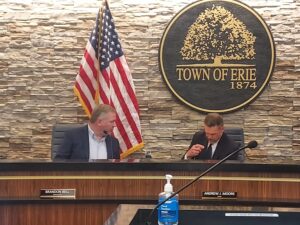 Mayor Andrew Moore defended the agreement in written responses to Yellow Scene, describing the disputed minerals as “very small and inconsequential to the overall agreement.” He pointed to the land transfer, future revenue sharing and accelerated plugging of older wells as evidence that the deal’s value extends beyond royalties. The town, however, has not publicly released the analysis underlying its conclusion.
The Draco project has been discussed in terms of more than $1 billion in potential oil and gas production, while town officials have valued Erie’s compensation at between roughly $23 million and $40 million. But those numbers combine cash the town will receive immediately with benefits that depend on future production and energy prices.
The agreement guarantees Erie $4.5 million in cash and about 158 acres of land that town officials say is worth roughly $13.6 million. SM Energy also agreed to plug and abandon 17 older wells left behind by Crestone, a predecessor of Extraction Oil & Gas, a cost the town estimates could exceed $4 million.
Because much of the deal’s value depends on future production, another question has hovered over the debate: how badly Erie needed the money. The town’s 2026 budget projects roughly $347 million in revenue and points to long-term financial pressures tied to growth rather than an immediate fiscal emergency. That raises another question: if the town needed to sell its mineral rights, how much difference would the guaranteed $4.5 million payment actually make?
The public record does not establish that municipal ownership would have killed the project, forced a complete redesign or guaranteed a better deal. But it also does not support the idea that Draco’s path was fixed from the beginning. Officials repeatedly described avoidance as an open question, state engineers reportedly lacked firm answers, and the operator ultimately amended its application while negotiations with Erie continued.
Even the town’s share of future oil and gas revenue comes with an important catch. Under the agreement, Erie does not immediately receive its 3 percent share of production from the Draco wells. Instead, SM Energy gets paid first and must recover 200% the cost of drilling and completing each well before the town begins receiving any of that money. The contract does not estimate how long that process will take. Depending on the cost and productivity of each well, it could be years before Erie sees any revenue from oil and gas production, and some wells may generate far less money for the town than expected.
Residents are not simply debating whether the deal was good or bad. They are debating a set of assumptions – that Draco was inevitable, that Erie’s leverage was limited and that the agreement represented the town’s best option – without access to the analysis that led officials to those conclusions.
For the town, there are essentially three paths forward. Town leaders could pause implementation of the agreement until voters have their say in the referendum. They could repeal or amend the ordinance approving the deal before the election takes place. Or they could attempt to move forward with the agreement despite the pending vote. That final option could create significant legal and political uncertainty if voters ultimately reject the deal after parts of it have already been carried out. Residents reached the signature threshold for the petition in 17 days, which moved the issue one step closer to a public vote in November. Earlier this summer, more than 100 Erie residents asked the Colorado Attorney General’s Office to review the town’s handling of the mineral-rights negotiations, a request first reported by Yellow Scene Magazine, which could be a factor in upcoming decisions.
The referendum has transformed those unanswered questions from a policy debate into an immediate practical problem: both the town and SM Energy must now decide how to proceed while voters weigh the agreement. The problem is that voters are being asked to weigh those options without the engineering studies, mineral inventory and financial analysis that shaped the original negotiations. Meanwhile; misinformation has been circulating on social media. The Daily Camera disputed claims posted on Facebook by Planning Commissioner Chair Andrew Sawutch.
As Erie voters prepare to decide the future of the agreement, the central questions remain remarkably basic. What would “going around” actually look like? Which municipal minerals did Erie claim, and which did it leave behind? How much of Draco changed in response to those interests? Months into one of the most consequential political and economic fights in recent town history, residents are still being asked to make a decision without seeing the evidence that could answer those questions.
Yellow Scene’s 2026 Summer Support Drive is underway with a goal of 1,000 Sustaining Supporters by summer’s end.
For 26 years, we have remained fiercely independent, free from sponsored content and outside editorial influence.
Reader-driven support keeps local journalism unbossed, unbought, and our journalists fed. Become a sustaining supporter for $8/month and get Yellow Scene delivered to your home.
Join the Summer Support Drive and keep local journalism strong.