
Like most older adults, Slatington resident Suzann Rosenberg, 79, takes several prescription medications. She didn’t question why her doctors prescribed the drugs until a few years ago, when she forgot to renew one of her prescriptions and discovered that she had been experiencing serious side effects.
“It turned out to be medication-induced dementia,” said Rosenberg, who was a Marine. “Within a week of not taking it, the difference in my whole outlook on life was unbelievable.”
Prescription medication complications, caused by both mistake and misuse, are on the rise in Pennsylvania, and are one of the reasons nearly 600 residents aged 55 and older died from an overdose in 2024 — about 18% of overdoses statewide — according to the Pennsylvania Department of Health.
While some issues common in older populations such as grief and loneliness can contribute to substance abuse, researchers say factors such as changes in metabolism, chronic physical health conditions and confusion also can lead to dangerous medication mix-ups.
A new state program to address medication-related problems is being rolled out in four counties with the highest rates of senior drug overdoses, including Lehigh County.
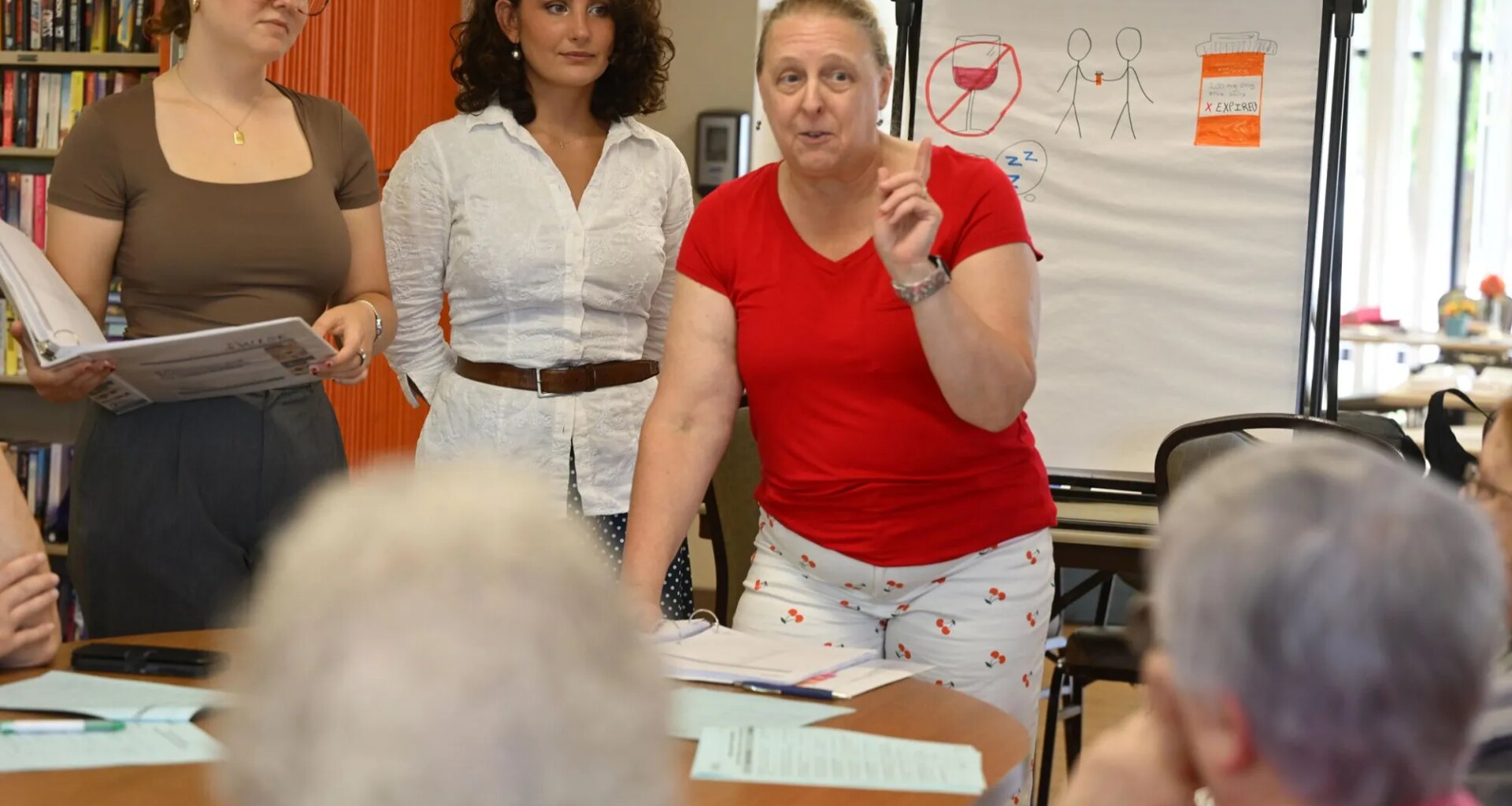
Funded through the $2 billion opioid settlement fund, the Wellness Initiative for Senior Education — WISE — takes a holistic approach to education. Using techniques such as role playing, counselors lead seniors through exercises designed to help them recognize and address problems before they get out of hand.
On a recent Thursday morning at the Slatington Senior Community Center, where the program debuted last month, participants were engaged in a lively discussion about diversity, taking turns acting out the parts of people of different ages and cultures reading questions from cue cards.
Some of the activities, including one where the seniors pretended to be announcing their wedding engagement to a much younger relative, caused the group to erupt in laughter.
“This is very interactive, very exciting, very new each time we have a class,” said Stacy Creyer, the senior center’s manager. “Some of the classes we have here are educational, but can be monotonous. This one, we’re having fun with it. It leads you to want more.”
The six-part course empowers seniors to be more active in their healthcare so that they understand what medications they are taking and why. Learning about diversity can help them have better conversations with healthcare professionals of different ages and cultures, said Anne Milne, health and wellness coordinator at Lehigh County’s Office of Aging and Adult Services, which oversees the program.
“It actually walks them through conversations with their doctors, and gives them almost like a script for how to ask questions. It gives them the confidence and awareness that they can take control,” Milne said.
Diane Stettler, 79, takes six medications. She uses a pill organizer to keep them straight, but knows that mistakes can happen. She said she was looking forward to the discussions about medication in upcoming classes.
“Sometimes, you wonder if you took your pills,” she said.
Cathy Brown, 72, has been coming to the Slatington Senior Community Center for programs for at least five years, and takes medication for chronic obstructive pulmonary disease. While she hasn’t had any problems managing her prescriptions, she thought the program was worthwhile.
“It’s something we should think about, especially as we get older,” Brown said.
Approximately 80% of Americans over the age of 65 take prescription medications, and about 750 of them are hospitalized daily due to serious side effects, according to the nonprofit Lown Institute, which studies medication overload and polypharmacy in older adults.
Over the last decade, older people sought medical treatment more than 35 million times for adverse drug events, and there were more than 2 million hospital admissions, according to the institute.
Pennsylvania is graying. By 2030, 3.8 million residents — 1 in 3 — will be age 60 or older. In 2023, Gov. Josh Shapiro’s administration launched Aging Our Way, a 10-year strategic plan to prepare for the shift in demographics. Adopting WISE, which has been operating in other states since 1996, is part of that plan, Aging Secretary Jason Kavulich said.
“We heard directly from older adults, caregivers and direct care workers about an issue that doesn’t get talked about: behavioral health and substance use challenges among older adults. We heard clearly from older adults that they need more accessible prevention, education and community-based supports tailored to their unique needs,” Kavulich said.
There were about 70,700 seniors in Lehigh County at the time of the 2024 census, though the county still has more younger residents than many counties. Lehigh County had 84,151 children, or 1.2 children for every senior citizen living in its borders in 2024. That’s the third highest ratio in the state after Philadelphia and Delaware counties. Northampton County had 59,961 children and 68,503 seniors, or 0.88 children for every senior citizen.
The WISE program’s focus on healthy aging and making positive lifestyle choices, instead of just facts about medication misuse and addiction, sets it apart from similar programs targeted to older adults, Milne said.
“What I like about this program is that it’s not specifically about drugs and alcohol. It’s taking the whole person into consideration, not just asking if there’s addiction. It’s giving them a new way of thinking and approaching things,” she said.
About 100 older adults are expected to enroll in WISE during the pilot period. In addition to Lehigh, it’s being offered in Berks, Chester and Lawrence counties.