
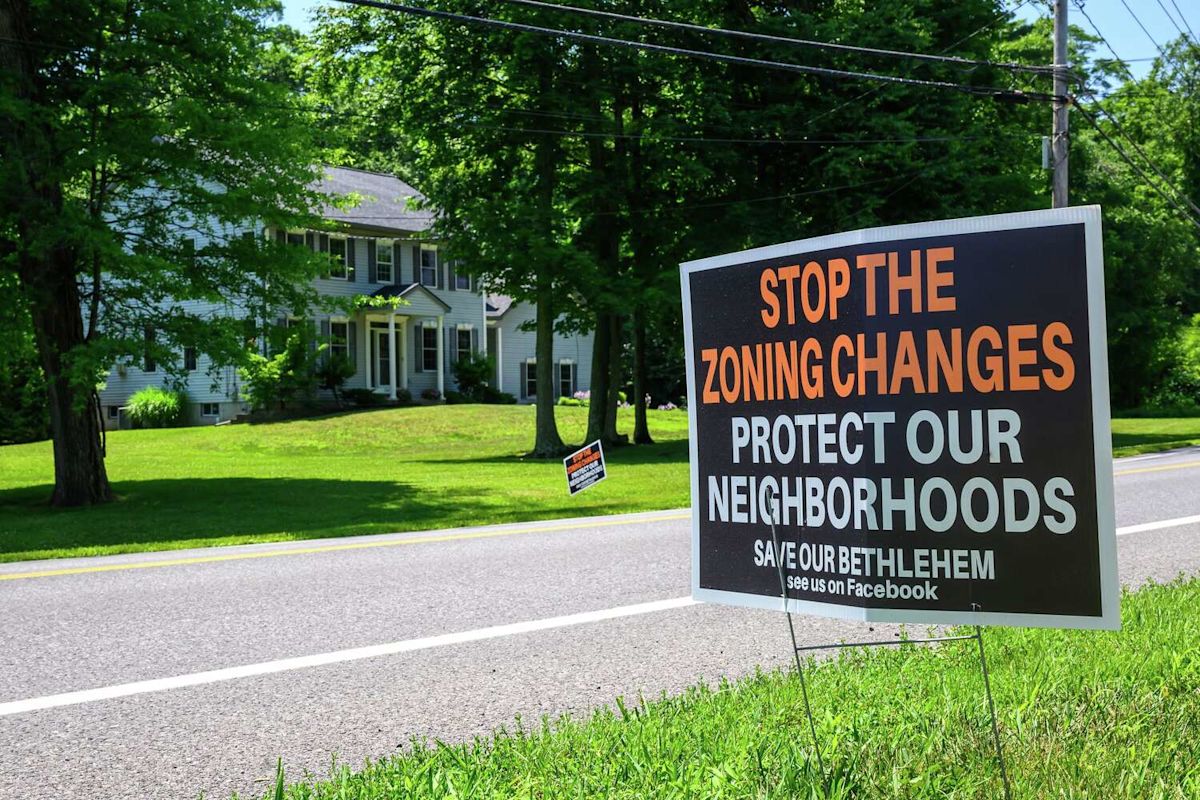
I’m starting this column with a quote from a recent meeting in Bethlehem, uttered as the town debated changing its zoning laws to allow for more housing.
“To bring in all these people and varied income levels – if we wanted that we’d live in Latham, or Cohoes or Colonie,” a woman said in May. “But we chose Delmar and Bethlehem and paid a lot of money to live here, and you’re just going to change our lives and I don’t think that’s fair. Unless you want to write me a check.”
Now, I’m not going to suggest her sentiment represents everyone who opposed the zoning changes, which were put on hold last month after what seemed to be overwhelming opposition. Nor am I going to suggest that such feelings are unique to Bethlehem; you could, no doubt, find people in Colonie, Guilderland or even Cohoes who feel similarly.
But I will assert that the woman – God bless her honesty – was expressing an opinion heard wherever you find neighborhoods of single-family homes, particularly expensive ones. It’s the opinion of people who want to lock the gates to their communities and freeze them in time.
I get the sentiment, somewhat. I can appreciate why people who like where they live want control over their town’s destiny, despite what nosy columnists, planners and governors think. I understand the pain of seeing fields paved for another cookie-cutter housing development. Bethlehem is lovely, and of course, people want to keep it that way.
But the widespread aversion to building more housing, particularly apartments, has severe consequences. First and foremost, it leads to home prices that benefit the home-owning haves and crush renters and people for whom home-ownership is a dream.
Anyone want to guess Bethlehem’s median home price in June?
It’s $522,000, according to the Greater Capital Association of Realtors, up 27% from the same month a year earlier. For the first six months of the year overall, the town’s median price was $440,000, up nearly 10%.
Those stats prove that change is inevitable, even if Bethlehem refuses new zoning laws. At the current construction pace, the town will morph into an enclave that only the most affluent can afford, a place of fancy shops and million-dollar homes. It will lose much of its middle-class character.
The proposed zoning changes were designed to prevent that.
In much of Bethlehem, they would have given areas where only single-family homes are allowed a “low-density residential” designation, accommodating small apartment buildings. Proponents said the shift would make the town more welcoming, particularly for apartments, while avoiding the runaway sprawl seen in other towns. (As the Times Union’s Patrick Tine reported, Clifton Park was often cited as an example to avoid.)
I won’t claim the changes were perfect or were communicated flawlessly. There’s undoubtedly room for more community input and tweaks here and there to reduce traffic impacts, for example, or maintain the quality of life in existing neighborhoods.
But much of the opposition came from residents who said they just didn’t want housing, especially apartments, built on farmland near their homes, people who said the zoning changes would ruin the countrified character of their part of town. Sorry, but I think it’s fair to call that NIMBYism.
Hypocrisy is inherent to the argument, of course, since nearly all of us live in homes that erased nature, changed the character of a neighborhood, and added to congestion. Preventing new construction, then, means preventing the opportunity once granted to us. Selfish? How could it not be?
Speaking of hypocrisy, who is more hypocritical: Liberals who tout inclusivity, yet want zoning to keep income diversity out of their enclave? Or conservatives who tout property rights and less government, yet want zoning to regulate what can be built in their neighborhood?
Maybe it’s a tie.
Of course, Bethlehem has more Democrats than Republicans, which makes it notable that the town raised Cain over the pro-housing vision pushed by Gov. Kathy Hochul, who believes – correctly – that restrictive zoning is causing an affordability crisis. The Democrat wants more density in towns like Bethlehem.
Whether that will happen is an open question. In a statement announcing the pause of the rezoning plan, Bethlehem Town Board members said they will spend the summer reviewing its key elements and will revisit the topic in the fall. They’ll also have recommendations that “respond to some of the themes” heard at public meetings.
I’m glad they didn’t say all of the themes.
Subscribe
There’s more to Albany with the Times Union. Subscribe today for just 25¢.
This article originally published at Churchill: Bethlehem will change, even if some residents don’t like it.