
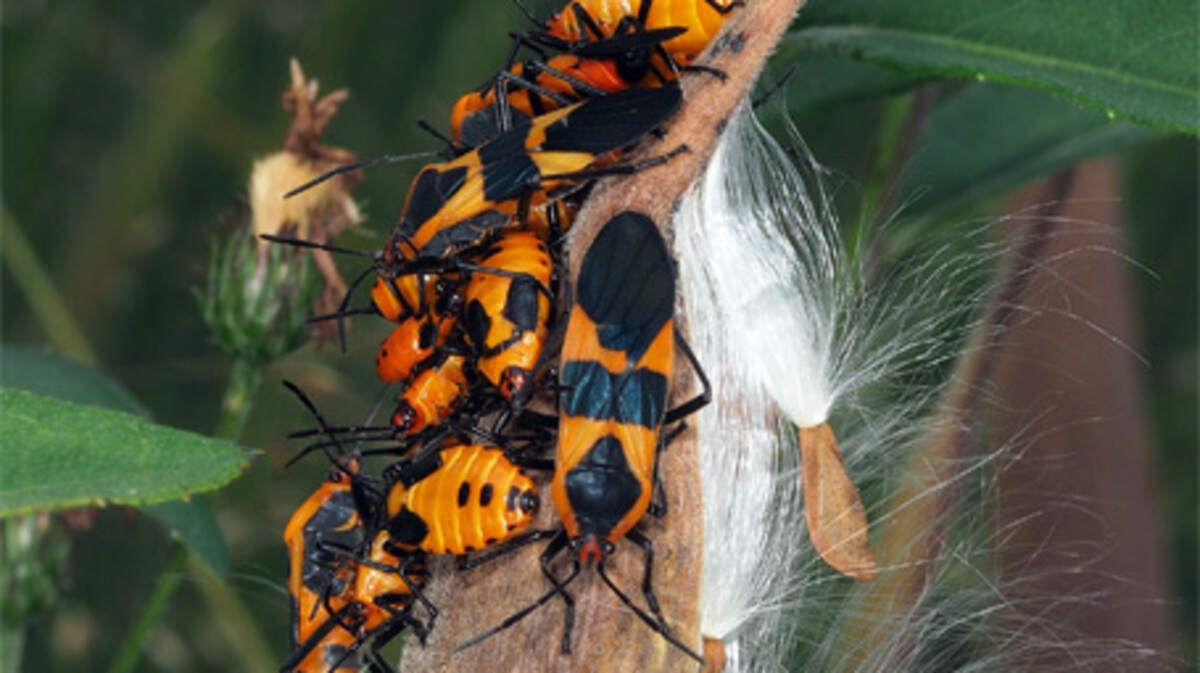
Large milkweed bugs do little damage to plants.
Photo provided
Milkweeds have become an increasingly popular garden plant in the last several years. As the sole host plant, or food source, for the caterpillars of the beloved monarch butterfly, milkweeds (Asclepias spp) are essential to support the increasingly vulnerable monarch population.
Of the 11 species of milkweed that are native to Pennsylvania, the most common choices for home gardeners are common milkweed (Asclepias syriaca), rose milkweed (Asclepias incarnata) and butterfly milkweed (Asclepias tuberosa). All contain toxic compounds called cardiac glycosides, which deter most insects and mammals from feeding on them. But milkweeds aren’t exclusively for monarchs — several other insects can appear on Asclepias at this time of year. The good news is, most of them are native to PA and have been feeding on milkweed, right alongside monarchs, for a very long time.
Two such visitors are the large milkweed bug (Oncopeltus fasciatus) and the small milkweed bug. (The designation “large” is relative, as this little insect is only about 3/4 of an inch long!) Both are strikingly colored in orange/red and black, and feed exclusively on the sap and seeds of plants in the milkweed family. Although they’ll feed on any part of the plant, their preference is for the seeds, and large gatherings of all life stages can be seen in late summer and early fall.
Like monarchs, both large and small milkweed bugs sequester cardiac glycosides in their bodies, rendering them distinctly distasteful to most predators. Also like monarchs, large milkweed bugs don’t enjoy our chilly winter temperatures, and head south to overwinter in warmer climes. They’ll return as the mercury rises in the spring.
Generally, milkweed bugs do little real damage to milkweeds, so instead of worrying about them, gardeners can simply enjoy observing their vivid colors.
The larvae of the milkweed tussock moth (Euchaetes egle) will also feed on milkweeds. The newly hatched caterpillars are pale and hairless, with black heads. As they grow, later instars are covered in tufts of black, white and orange hairs. (Does this color combination sound familiar?) As youngsters, they feed in groups (gregariously) between the veins of the leaf, leaving a skeletonized leaf behind them; but as they grow, they wander off to feed solo, eventually transforming into a moth with gray wings and an orange abdomen.
The one exception that gardeners should look out for is the oleander aphid (Aphis nerii). Native to the Mediterranean, oleander aphids are bright yellow with black legs, and as the name suggests, their primary host plant is oleander — which is in the same plant family as milkweed. Since the females reproduce without mating (parthenogenesis) and give birth to live clones of themselves (they don’t lay eggs), populations can grow very quickly.
Like other aphids, they’re often found in clusters on new growth, and have straw-like mouthparts designed to suck sap from plants. Excessive feeding can cause plants to be stunted or deformed. Additionally, the aphids produce honeydew, which can lead to the development of sooty mold.
Gardeners sometimes contact our hotline in distress, wondering what to do about these offenders. Before undertaking any control measures, however, one should consider the size of the infestation. Small populations may be best managed by hand-picking. If the population is large, blasting the aphids with a strong spray of water is often all that needs to be done. (But this also carries the risk of removing small monarch caterpillars as well.) As with other aphids, natural enemies like lady beetles, lacewings and parasitoid wasps are the best friends a gardener can have, safely and effectively controlling pests and keeping a healthy, balanced habitat. Avoiding pesticide use whenever possible and providing plenty of habitat for these garden helpers may be the best control option of all.
If you’d like to learn more about the best way to provide habitat for migrating monarchs, head to Monarch Joint Venture, monarchjointventure.org, for the latest news in monarch conservation.
In the garden this month
Consistent moisture is critical during the heat of summer. Ensure your plants receive adequate water, especially during dry spells or heat waves.Keep garden beds clear of weeds to reduce competition for water and nutrients.Continue to remove spent flowers from perennials to encourage tidiness and, in some cases, a potential second flush of blooms.Divide bearded iris now if it’s getting crowded or if blooms have diminished.August is a prime time to start seeds or set out transplants for fall harvests: By mid-month, you can plant veggies like beets and kohlrabi, brassicas like broccoli and cabbage, and greens. (Because August can be hot and dry, newly sown seeds or young transplants will thank you for providing plenty of water and perhaps even temporary shade if conditions are challenging.
Lisa Schneider has been a Master Gardener volunteer since moving to PA in 2017. Have a home gardening question? Email CentreMG@psu.edu