
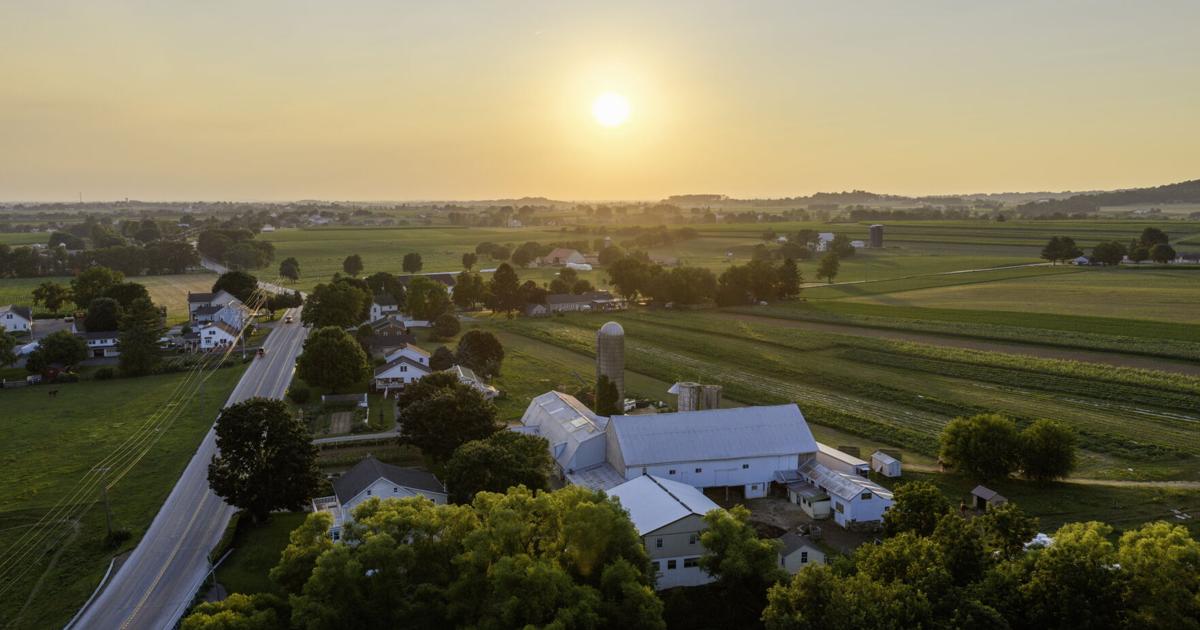
In the spirit of Ag Progress Days’ namesake, leaders from across Pennsylvania’s agriculture sector answered questions about ag innovation and what they see in the industry.
Their answers are below, grouped by question. Answers are edited for Associated Press style and grammar only.
What’s one leading example of progress in agriculture?
Natural Resources Conservation Service State Conservationist Denise Coleman: The farming community’s focus on soil health and how soils can improve water quality, increase yields and address climate resiliency is a leading example of agricultural progress.
There has been a longstanding focus on addressing soil erosion on Pennsylvania farms, but farmers’ renewed interest in soils and the microorganisms that reside within our soils are key to unlocking so many mysteries of how to better improve our farm production and conservation efforts.
Pennsylvania Grange President Matt Espenshade: Precision agriculture is becoming the standard operating procedure. Whether that is utilizing drones to monitor weeds and field conditions to robotic feeding and milking in the dairy industry, focused attention allows specific actions to be taken when needed.
PennAg Industries President Chris Herr: Agriculture has always been progressive. It’s why each American farmer today feeds not only their family but also 168 other families.
In the past 15 years, I’ve noticed one thing repeatedly — agriculture’s willingness to tell its story, provide consumers with the food they want and raise it the way they prefer.
With Pennsylvania’s location in America, agriculture has embraced a certain number of practices that our urban and suburban neighbors have asked for. Our farms have become more sustainable, adapting to more conservation practices, and our relationship with animals has become more humane.
Pennsylvania agriculture, including its agribusiness sector, is a world leader in environmental stewardship and animal welfare because it’s what American consumers have asked for.
Farm Bureau President Tommy Nagle: Technology is rapidly evolving. The GPS capabilities for sprayers, planters and harvesters have increased productivity immensely.
The amount of data that we can collect helps with the decisions that we’re making and helps increase profitability.
Penn State College of Agriculture Dean Troy Ott: One of the most important examples of progress in agriculture is the way today’s farmers combine tradition with innovation.
Family farms deploying precision agriculture, improved seed genetics, better soil and nutrient management, robotics and data-driven decision-making tools are helping grow food more efficiently, use inputs more responsibly and improve resilience in the face of weather and market uncertainty. This has yielded the most affordable, nutritious, abundant and safest food supply in the history of humanity.
That progress is not just about technology; it is also an ethic of innovation, stewardship of the land and collaboration among farmers, researchers, Extension educators and agribusiness to solve real problems in the field.
Pennsylvania Secretary of Agriculture Russell Redding: I have had the privilege of traveling statewide to listen to and see the needs, strengths and growth opportunities. A hallmark of our work is translating what we see and hear to actions and investments that can make the biggest difference.
The Ag Innovation Grant Program and the Pennsylvania Farm Bill are two examples of state investments that grow our economic output, workforce and infrastructure while leveraging millions of dollars in investments.
Center for Dairy Excellence Executive Director Jayne Sebright: Last January, we hosted a Farmer Ingenuity Contest, and it was exciting to read over the submissions we received.
Innovation on the farm doesn’t have to be investing in some new technology. It can be adapting to a new approach that increases your efficiency, like a new prepping procedure, or integrating a new protocol that leads to improved reproduction and herd health, like blood testing pregnancies.
That innovative mindset you see playing out on farm after farm — whether it means investing in a new technology or just a new way of doing things — is what will continue to spur progress in our agriculture industry.
What are the biggest challenges the industry faces right now?
Coleman: One of the biggest challenges the industry faces is the lack of students who want to study and work in agriculture.
Agriculture is an exciting field of work. I hope we can get this new generation of students and young people interested in studying agriculture and in working in the field.
Agricultural careers are so varied and impact so many things, including, but not limited to, ensuring a stable food supply for our nation and the world, preventing chronic diseases through the production of healthy whole foods and securing a healthy environment for future generations.
The opportunities within the agricultural field are vast, and I hope this new generation of Americans explore agriculture’s career opportunities.
Espenshade: Profitability. Input costs continue to rise among almost every part of production.
Fertilizer costs saw an unprecedented spike in spring 2026, and that will impact margins throughout the year. Coupled with crippling drought, it has placed farms across the country in financial uncertainty.
Herr: From my time in the capitol, Pennsylvania has been the beneficiary of tremendous political leadership that has invited agriculture to the table, listened to our story and been a champion for us throughout my career — from Sam Morris to Sam Hayes, Roger Madigan, Noah Wenger, John Barley, Judy Schwank, Elder Vogel, Steve Crawford and Kerry Golden, just to name a few.
I think as an industry, we sometimes take for granted one of our most accomplished cabinet secretaries in the history of the commonwealth, Russell Redding, who has advised and kept numerous governors focused on agriculture.
I believe one of Pennsylvania’s biggest challenges will be maintaining that level of political leadership as we face inevitable retirements in Harrisburg.
Nagle: The biggest challenges farmers face every day are just the uncertainties in agriculture — from cost to regulations to accessibility of capital and balancing what the markets are going to do. I think that is a real big challenge that all farmers are facing regardless of commodity.
Ott: Agriculture (and especially agriculture in Pennsylvania) is facing rising input costs, high land values, labor shortages, volatile markets, extreme weather, invasive pests and the need to keep farms profitable while meeting growing expectations around environmental sustainability and animal welfare. Producers are also navigating rapidly changing technology and policy environments.
The challenge is not only to adapt to short-term challenges but to do so in a way that keeps farms profitable, stewards our natural resources and facilitates the generational transition of farm ownership that is so essential to supporting thriving agricultural enterprises and our rural communities.
Redding: Without question, our biggest challenges include erratic and unpredictable costs of business inputs from equipment to fertilizer and fuel; extreme and unpredictable weather; growing processing and farm labor shortages; and, finally, the significant cost of implementing new technologies that can help address each of these challenges.
Sebright: In the past five years, farmers have seen all input costs increase, from land prices to interest and labor and now energy. Navigating this dynamic of increasing prices with volatility in the marketplace continues to be the biggest challenge our farms face.
It will take creative solutions and collaborations across both the private and public sector to bolster support for these farms as they navigate this challenge and focus on building sustainable operations for the future.
Why do you choose to work in agriculture?
Coleman: I work for USDA’s Natural Resources Conservation Service. Our motto is to “Keep Working Lands in Working Hands.”
Over 70% of our nation’s lands are privately owned. By helping Pennsylvania’s farmers and forestry landowners, I can conserve and protect the soil, water and wildlife habitat that Americans value.
Espenshade: As a seventh-generation dairy farmer, it is an honor and privilege to work in an industry where less than 2% of the population feeds the world.
Our farm has been in our family since 1867, and I am reminded of it every day as I work the same land as generations before me.
There is a seasonality of our work that cannot be matched, and it’s a blessing to share that heritage with my family and others.
Herr: As the son of a vocational ag teacher who grew up on a small farm in eastern Lancaster County, I didn’t have much choice.
But all jokes aside, I was fortunate to have mentors and family who cared deeply about agriculture, which deepened my respect and passion for becoming an advocate for the industry.
It’s a role that’s a pleasure for my staff and me to serve in today for all our members at PennAg in Harrisburg and beyond.
Nagle: It’s a very humbling profession, and it’s more of a lifestyle than a career. It’s a career you can raise a family in, teach values and appreciate hard work.
You can easily see the fruits of your labor in agriculture.
Ott: While my family did not own a farm, I grew up working on farms (hog, dairy, horse, crops) and with a love of the outdoors and animals. I am both envious of the farming lifestyle and clear-eyed about the hard work and challenges of farming the land and raising animals.
I went to college because I wanted to be a veterinarian but, while at Penn State, learned about research and options for graduate school. I learned that there were animal scientists whose work supported agriculture.
I quickly realized this is how I could best pursue my passion and support agriculture, one of the most meaningful, innovative and service-driven fields in the world.
Agriculture feeds families, supports communities, stewards natural resources and strengthens our economy. And it does so through the hard work, resilience and creativity of people who are constantly adapting and improving.
I am proud to be part of Penn State — an institution that for nearly 170 years has served agriculture by discovering new knowledge, solving problems, preparing the next generation of ag leaders and helping producers meet the challenges of today and tomorrow.
Redding: Having your vocation match your avocation is a privilege I’ve never taken for granted. I have had the privilege of both working in a field that touches everyone’s life and of living in Pennsylvania, where you can see progress and agricultural abundance reflected in the quality of life and beauty in every direction you look.
At the same time, every day I see need in our communities and places we as public servants and ag producers can make a difference. I will never forget words I heard during urban agriculture week last month: “Once you see the need, you can’t turn away.”
Sebright: I grew up in dairy and want to see my grandchildren have the same opportunities I did to learn values and skills on the farm that are much harder to learn in other settings.
Learning to connect with nature, to work hard for what you want, to face challenges with a solution-based mindset and to be adaptable when things don’t go your way are all things I learned on the farm.
I believe that milk and dairy products are among the most nutritious foods out there and that our farm families are the backbone of our communities.
It is challenging sometimes, but I wouldn’t want to work in any other industry besides agriculture.

Streaming Content From Ag Progress Days
Interested in seeing more from Ag Progress Days? Click over to PCN for coverage of this year’s event, including informational sessions, town halls and interviews. Click here for more.