
What kind of adaptive fitness equipment is available?
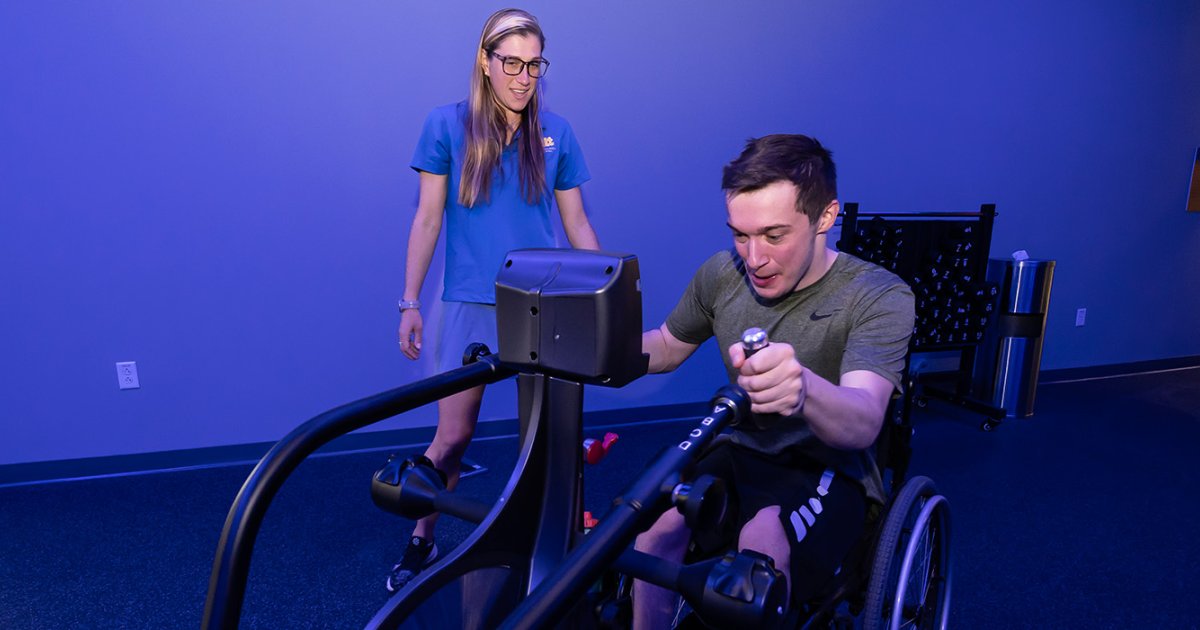
Some of our exercise machines are adjustable so people without use of all their extremities may operate them; we also offer exercise machines with specialized handgrips and movable seats, allowing people in wheelchairs to use the equipment without transferring out of their chair. There are also wheelchair-accessible lockers located throughout the RWC.
The spinning studio and esports lounge feature adaptive equipment, too. Students can take a spinning class using our hand-operated bike, and students can play esports using a single-handed controller.
The Aquatic Center has both a chairlift with an attached remote and a ramp to access the pool. A water wheelchair is also available to students.
Even our climbing wall has adaptive harnesses available for wheelchair users. And for students with color blindness, climbing wall staff can lay a route of high-contrast, colored handholds, so climbers can distinguish between them when scaling the wall.
How can students use adaptive exercise equipment?
The first step for any student interested in getting to know the RWC is to stop at the member services desk for a tour. We also offer specialized tours to address unique situations; for instance, last spring we conducted a tour for students with visual impairments so they could get comfortable with the space and establish a routine navigating the building.
There are also staffers on each floor, identified by their gold or blue polo shirts, who are trained in how to use and adjust the exercise equipment to fit a student’s needs. The instructors leading fitness classes are trained in offering adaptations and modifications, including how to use the hand bike in the spinning studio.
Students interested in using the adaptive harness for the climbing wall can participate in adaptive climbing nights throughout the semester or request a private session under the Outdoor Adventures and Pursuits heading.
You’ve been part of the RWC team from its early planning stages to day-to-day operations. What have you learned?
I’ve realized that small details make a big difference. During the planning stage, when faced with a choice between two design options, we chose the more accessible option without hesitation. We wanted to go beyond what is expected, because building codes set the bar at a bare minimum. We were intentional about comfort, and comfort requires an extra level of investment. Taking that kind of care was worth it in the long run.
Photography by Aimee Obidzinski, except as noted