
A somber but celebratory note remembers Boyd Wolff, Pennsylvania Secretary of Agriculture from 1987 to 1995 under Gov. Bob Casey. He helped shape two lasting programs: the Pennsylvania Farmland Preservation Program and the Animal Health Commission.
Where the buffalo roam…”
Before going further, let’s clear up a misnomer.
In North America, “buffalo” usually means American bison — the big, shaggy fellow with a high shoulder hump, heavy head, beard, and short curved horns.
True buffaloes, such as water buffalo in Asia and cape buffalo in Africa, are different animals. So, Pennsylvania names like Buffalo Creek, Buffalo Valley, and Buffalo Mountain are really reminders of the bison that once roamed here, even if the wrong name is often used.
My interest in bison as part of Pennsylvania agriculture began with a recent Lancaster Farming column about Dennis and Karen Lehman’s bison farm in Lancaster County. Their story nudged open the pasture gate to the animal’s deep history in Pennsylvania, its appeal as a lean and flavorful protein, and its quiet return through a small but meaningful regional comeback.
A Long Absence
Bison reached Pennsylvania naturally via its broad eastern North America range. Over generations, they moved through river valleys, forest openings and grassland edges rather than arriving through human introduction.
After the last Ice Age, expanding grasslands and open woodlands allowed bison to spread far beyond the Great Plains. In Pennsylvania, they were most often associated with the western and central parts of the state, where valleys and old animal paths connected them to Ohio country and the larger interior range.
These routes mattered. Long before modern roads, bison and other large animals helped wear down “buffalo traces” through the landscape. Indigenous peoples used many of these paths for travel and hunting, and early settlers later followed some of the same corridors through gaps, ridges and river bottoms.
Places like Buffalo Creek, Buffalo Valley and Buffalo Mountain preserve a memory of that older animal geography.
By the late 1700s, however, native bison were disappearing from Pennsylvania under the combined pressure of hunting, settlement, forest clearing and shrinking access to open habitat. On a cold winter morning in 1801 near Buffalo Cross Roads in Union County, Revolutionary War veteran Col. John Kelly shot what is remembered as the last native free-ranging American bison recorded in the state.
More than two centuries later, bison are returning to the Northeast through small commercial herds, conservation-minded farms, and growing consumer interest in lean, locally raised meat. In Pennsylvania, production remains small-scale, but it connects natural history with today’s questions about farm profitability, open-space preservation, and local food.

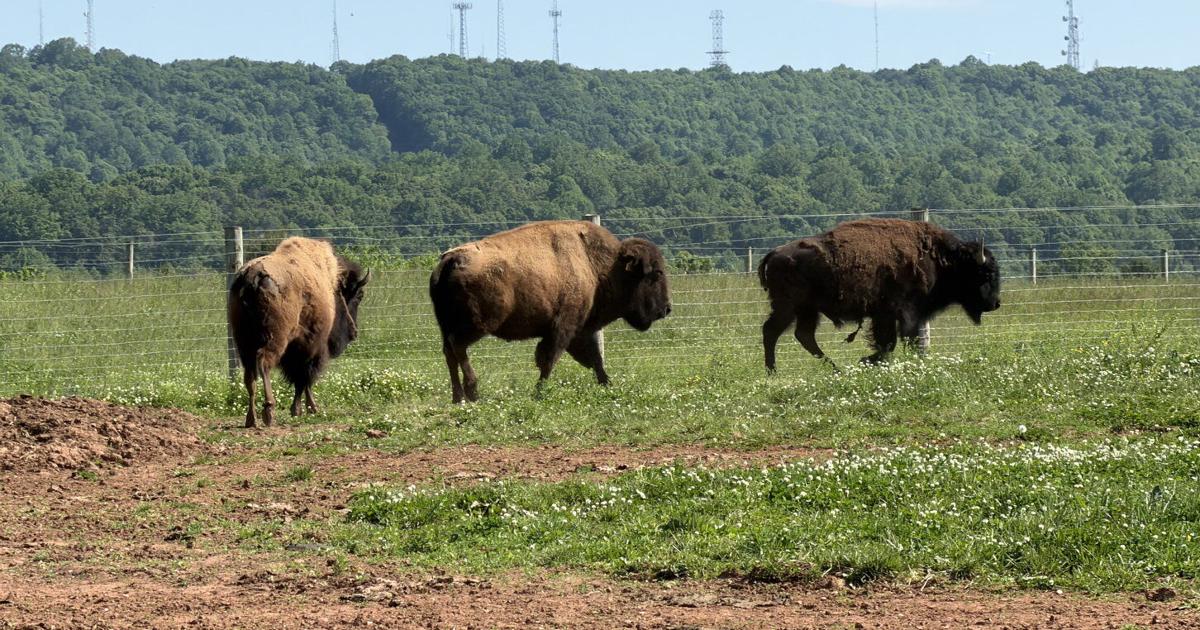
Bison at Brush Mountain are fed a diet that includes hemp seed cake.
Submitted
Why Bison Belong in Pennsylvania
Bison are well suited to Pennsylvania’s pasture-based agriculture, smaller diversified farms, and strong consumer interest in local foods. With more than 7 million acres of farmland and many small and midsized operations, the state offers room for grazing animals that can become part of broader farm businesses.
Well-managed grazing supports soil health, reduces erosion, improves water infiltration, provides wildlife habitat, and turns pasture into food without heavy reliance on purchased feed. Because bison are natural grazers, they can fit farms that already emphasize pasture, conservation, and direct marketing.
For compact, family-run farms, specialty livestock can add flexibility and identity. A bison enterprise may support local meat sales, education, tourism and conservation — and bison are hard to miss, which makes them memorable storytellers for farms welcoming visitors.
Bison also support agriculture that keeps land in productive open space. As development pressure, rising land costs, and farm succession challenges affect rural communities, profitable grazing enterprises can give families another reason to maintain fields, fences, lanes and farm buildings.
The ecological benefits depend on good management, but bison are naturally associated with grassland renewal. Their grazing can vary plant height, recycle nutrients through manure, and help maintain open habitats when they are part of pasture systems that protect soil and water.
Bison has gained attention as a lean, nutrient-dense alternative to conventional red meat. USDA data show that raw lean bison contains fewer calories and less fat per 100 grams than comparable Choice-grade beef while still offering a rich color, satisfying flavor, and valuable nutrients such as selenium, choline and heme iron.
Consumer interest is another reason bison can succeed in Pennsylvania. Many shoppers want food that feels local, traceable and connected to place. Bison is distinctive enough to stand apart from conventional beef while still familiar enough for burgers, steaks, roasts and everyday meals.
Restaurants, farmers markets, farm stores and online sales can introduce bison to new customers. The story behind the product matters, too. A locally raised bison burger carries associations with American history, grassland conservation, and Pennsylvania farm entrepreneurship — plus the important advantage of being very good on a bun.
Old Springhouse Bison Farm in Manheim, Pennsylvania, sells bison meat, hides and even tallow soap to local customers and those a bit far flung.
Pennsylvania’s Promising Bison Market
Pennsylvania’s bison sector is small but increasingly valuable. Because bison meat is marketed as a premium specialty product, local producers can command higher prices through direct-to-consumer sales, restaurants, farm stores and specialty retailers.
Between 2017 and 2022, Pennsylvania’s bison sector grew across every key measure. Registered bison farms increased from 58 to 69, inventory rose from 1,251 to 1,686 head, bison sold climbed from 306 to 506 head, and aggregate sales value nearly tripled, from $545,000 to $1,446,000. Even with a small producer base, those gains point to stronger market value within specialty livestock.
Examples of that market can be seen across the state. Pennsylvania bison farms include The Bison Farm in Mount Wolf, Backyard Bison in Coopersburg, Hillside Farms in Telford, Wooden Nickel Buffalo Farm in Edinboro, The Buffalo Shoppe in Lake Ariel, Red Hollow Country in Gouglersville, Nature’s Comeback Bison Ranch in Punxsutawney, Paradies Daal Bison Ranch in Biglerville, and Old Springhouse Bison Farm in Manheim.
Together, they show how bison production has taken root in different regions, from southeastern Pennsylvania to the northwest and the northern tier.
Beyond direct sales, bison support rural businesses connected to meat sales, farm visits, restaurants, processors and specialty retail. They remain a niche within Pennsylvania’s broader agricultural economy, but rising sales show how specialty livestock can strengthen local food systems.
Bison can also help small and midsized farms diversify income through meat sales, breeding stock, tours, school visits and agritourism events — an approach well suited to farms that build close relationships with consumers.
The future of bison in Pennsylvania will likely remain specialized rather than large-scale, but that is part of its strength. Bison occupy a premium niche where history, nutrition, conservation and local food overlap. Growth will depend on consumer education, processing access, strong farm branding, and continued interest in lean, locally raised protein.
For Pennsylvania, that niche offers real possibilities. Their return is more than a glance back at the state’s past; it is a practical and hopeful reminder that agriculture still has room for ideas rooted in land stewardship, local enterprise, good food, and the occasional shaggy surprise.
Carol Hardbarger has spent a lifetime in agriculture, from living on a family farm to a career in agricultural education, consulting and research.