
An independent five-year projection of Scranton finances forecasts rising expenses and suggests modest tax increases might occasionally be necessary to sustain the city’s much-improved fiscal health.
The report from the nonprofit Pennsylvania Economy League research organization cites the city’s historic turnaround from the brink of bankruptcy in 2012 to its successful exit in 2022 from the state Act 47 oversight program for financially distressed municipalities.
PEL was the city’s 30-year-long recovery coordinator under Act 47. Now, four years removed from Act 47, the city chose to have PEL do a five-year forecast for an unbiased outlook that can help guide future planning and budgeting.
“The turnaround in Scranton and its now-stable future cannot be understated,” PEL Executive Director Vinny Cannizzaro, Ph.D., said in a statement. “The City enters the projection period from 2026 to 2030 with several important strengths. This forecast is an important tool that examines trends that will help leaders lay the groundwork for continued improvement in the City’s financial position for years to come.”
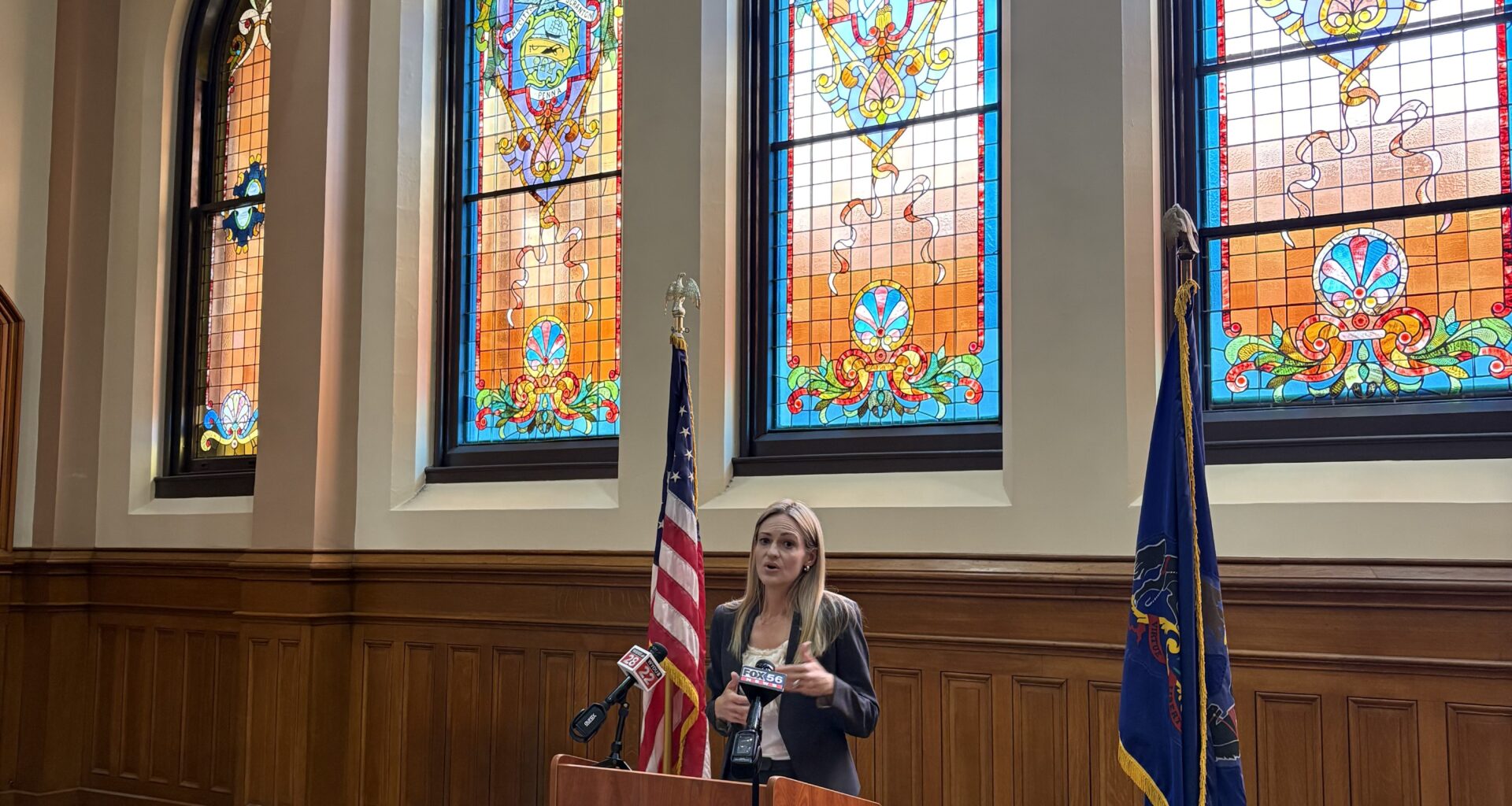
Mayor Paige Gebhardt Cognetti, who on Tuesday released the report publicly during a media event at City Hall, said the report will help the city better plan and prepare future budgets to build upon fiscal strides already made.
“Looking back at the progress we’ve made and planning for the future is critical to Scranton’s continued financial stability. In PEL’s words, this report will help the city ‘protect the financial progress we’ve achieved,’ ” Cognetti said.
The report included a review of the city’s financial performance from 2020, with a focus on revenues, expenses, tax base, operating positions and debt structures; an overview of how Scranton allocates revenue; and projections out through 2030.
Some highlights include:
Costs continue to rise: Despite a relatively stable outlook, the report forecasts a budgetary “structural imbalance” emerging as early as 2027, with expenses outpacing revenues and annual operating deficits projected to grow, driven primarily by personnel-related costs. “Police and fire services alone are projected to account for more than half of the general fund expenditures by 2030, with combined costs increasing approximately $8 million over the fire-year period,” reflecting contractual pay raises, rising costs in healthcare and pensions, and the “labor intensive nature of maintaining essential emergency services.” Rising costs are not limited to Scranton, as all municipalities face similar economic pressures.
Try to avoid big tax hikes: The report does specifically call for tax increases, but cites best practices as including “incremental and balanced approaches, such as moderate needs-based tax adjustments,” to avoid big spikes in property taxes. The report recounts the city’s recent tax history, including double-digit tax hikes in 1999, 2000, 2007, 2013, 2014 and 2015; and a tax decrease in 2011. In a budget enacted in 2019 under a former mayor for 2020, the city increased its land millage tax 2.4%. At that time, the city had two separate millages, including one on land and one on improvements. Cognetti took office in January 2020. Under her tenure, there were no tax increases in 2021 and 2022, a 2% hike in each of 2023 and 2024, and no tax hikes in 2025 and 2026.
Grade A credit rating helps bottom line: The city’s fiscal rebound went from having no bond rating or junk bond status to an A- credit rating and stable outlook from the Standard & Poor’s credit ratings agency. Credit rating upgrades in 2023, 2024 and 2026 were based on improved budget performance, stronger financial reserves, enhanced management practices and reduced debt burdens. The city having a bond rating break into grade A for the first time is significant to helping the city’s bottom line, because credit ratings on municipal borrowing through bonds impact the amount of interest paid on the debt. A higher credit rating reflects financial stability and translates into lower interest rates. A lower credit rating — or worse, no rating at all — reflects distress or uncertainty and translates into higher interest rates. The higher the credit rating, the less debt will cost the city as it can command lower interest rates on borrowing.
Debt has been significantly reduced: The city cut its debt principal nearly in half during the review period, decreasing from $112.8 million to $59.6 million. That reduced annual debt service payments from $17.3 million to $10 million. The ratio of debt service to expenses dropped from 18.6% in 2020 to 8.8% in 2024. Spending less on debt service meant the city could commit more funds to operations and capital expenses. Beginning in 2030, the city’s annual debt service payments will decrease further, allowing for opportunities to reinvest savings in capital projects or reserve funding.
Other best practices: The city transformed annual capital budgets from wish lists to five-year plans for major investments impacting public safety, technology, infrastructure, stormwater management and recreation. The city also has continued to improve procurement practices, with nearly 200 projects seeking competitive bids throughout the Cognetti administration. With all of its current financial strengths considered, and using conservative assumptions, the report projects manageable budgeting for the foreseeable future.
“Through sustained fiscal discipline, the City has restored investment-grade credit ratings, stabilized tax rates, rebuilt reserve balances, and strengthened financial controls. These outcomes reflect responsible City governance across multiple budget cycles and provide the City leaders with credibility, flexibility, and options that were not available in prior years,” the report said.
Whether the city might raise property taxes in 2027 remains unknown, as a proposed budget has not yet been created. The administration typically presents a proposed annual budget to Scranton City Council in mid-November and it gets adopted in December.
Scranton Councilman Patrick Flynn attended the event Wednesday and said he looks forward to reviewing the PEL report and “working with the administration and my fellow council members to make sure we put Scranton in the best position to move forward.”

At Scranton City Hall on Wednesday, Aug. 12, 2026, Mayor Paige Gebhardt Cognetti discusses a five-year financial projection of city finances completed recently by the nonprofit Pennsylvania Economy League. (JIM LOCKWOOD / STAFF PHOTO)

At Scranton City Hall on Wednesday, Aug. 12, 2026, Mayor Paige Gebhardt Cognetti, at right, discusses a five-year financial projection of city finances completed recently by the nonprofit Pennsylvania Economy League. (JIM LOCKWOOD / STAFF PHOTO)

A pie chart of the city of Scranton’s 2026 departmental operating expenses, cited in a five-year financial projection report released Wednesday, Aug. 12, 2026. (IMAGE PROVIDED / CITY OF SCRANTON)

At Scranton City Hall on Wednesday, Aug. 12, 2026, Mayor Paige Gebhardt Cognetti discusses a five-year financial projection of city finances completed recently by the nonprofit Pennsylvania Economy League. (JIM LOCKWOOD / STAFF PHOTO)

Scranton City Hall on on Wednesday, Aug. 12, 2026. (JIM LOCKWOOD / STAFF PHOTO)
Show Caption
1 of 5
At Scranton City Hall on Wednesday, Aug. 12, 2026, Mayor Paige Gebhardt Cognetti discusses a five-year financial projection of city finances completed recently by the nonprofit Pennsylvania Economy League. (JIM LOCKWOOD / STAFF PHOTO)