
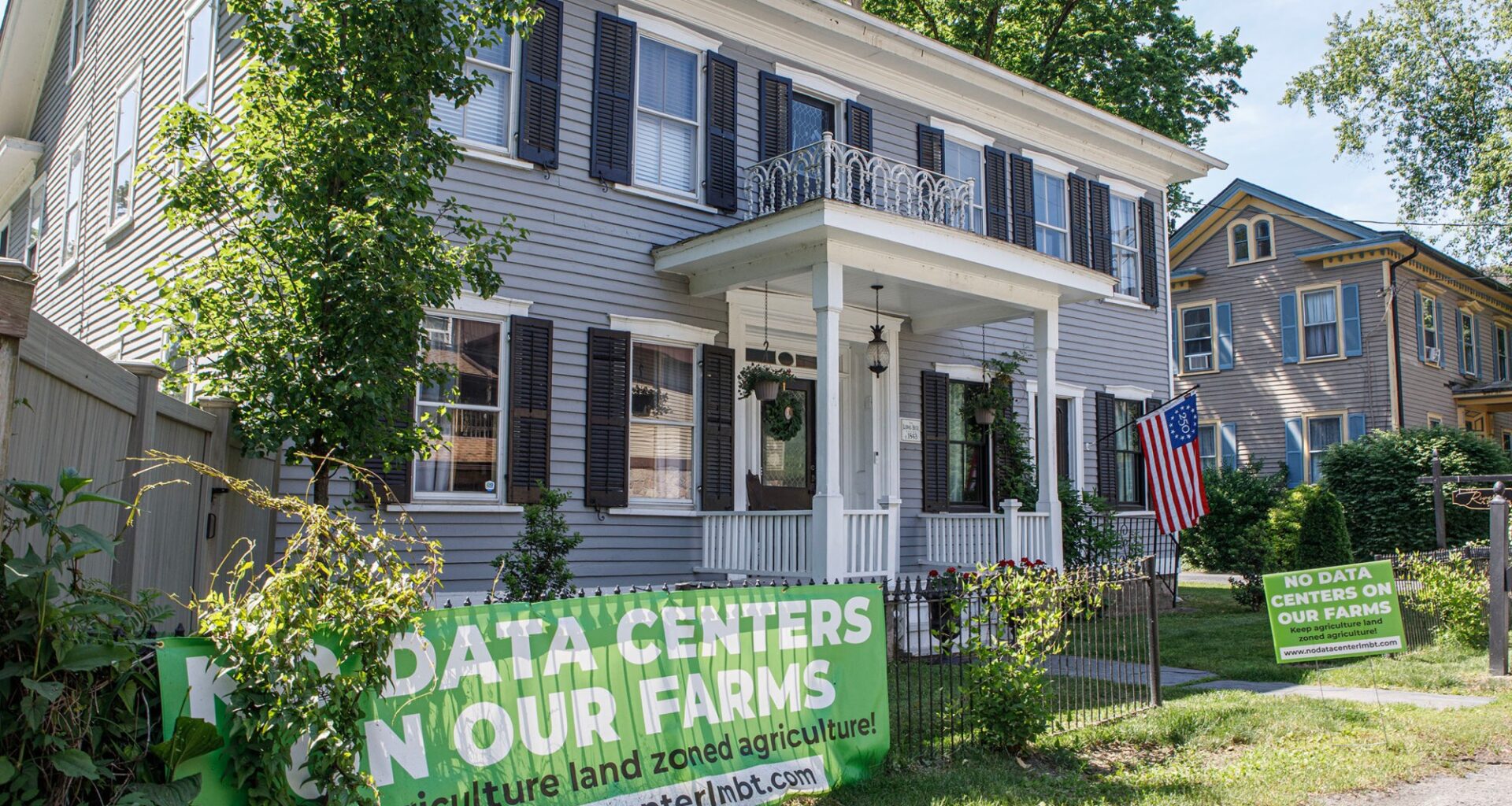
When Todd Rehrig and his wife, Heather, first became aware in late January of a proposed data center near their home in Lower Mount Bethel Township, they felt such information shouldn’t stay hidden.
So they organized, starting a Facebook group and marshaling their neighbors into what would become No Data Center LMBT in February, two months before developers of a data center held a town hall to discuss their plans.
As data center proposals pop up across the Lehigh Valley, residents are organizing in opposition. But they’re not just voicing concerns at township meetings. They’re launching websites, disseminating petitions, even raising funds to support legal challenges to the plans.
Nationwide, the opposition movement to the data center boom has seen some impact. A 2025 report by Data Center Watch said opposition from activist groups and the general public blocked or delayed $64 billion worth of data center projects across the United States between May 2024 and March 2025.
“Opposition to data center construction is largely motivated by local concerns,” the report said. “While the exact reasons opponents cite vary from location to location, some common themes are higher utility bills, water consumption, noise, impact on property value, and green space preservation.”
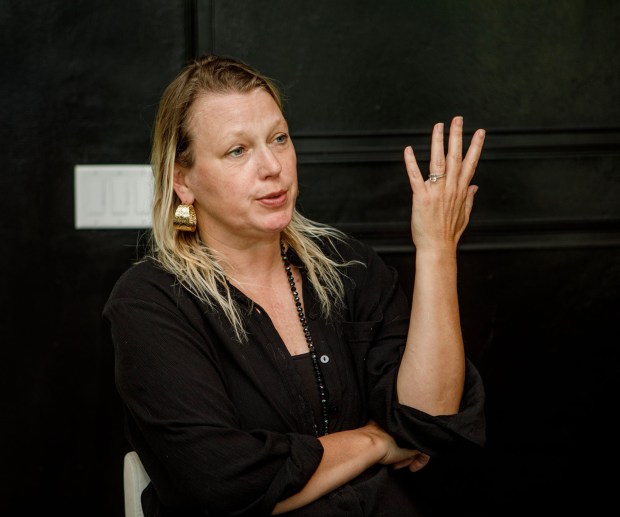 Heather Rehrig speaks during a No Data Center meeting at her home Friday, June 5, 2026, in Lower Mount Bethel Township. (Jane Therese/Special to The Morning Call)
The movement in the Lehigh Valley
In addition to social media, the Rehrigs’ efforts also extended to starting a petition that obtained more than 8,000 signatures as of Monday, which Heather Rehrig said have come from both Lower Mount Bethel residents and others outside the township.
“Just because they don’t fall in the ZIP code for the petition doesn’t mean they didn’t once live here, they don’t have a mother who lives here or an aunt lives here or they don’t visit here or have a second home here,” she said. “It’s a broader picture of just the people who they can say they’ll be affected.”
The efforts of the Rehrigs and the rest of No Data Center LMBT have not gone unnoticed by their community, and they said they’ve been successful in changing people’s views.
“Two, three months ago, we saw a lot of posts on social media saying, ‘There’s nothing you can do about it, they’re going to do whatever they want,’ ” Todd Rehrig said. “I don’t see those as much, ’cause you hear about communities actually making a difference by voicing their opinions by standing up to these tactics of the corporations and the people are seeing you don’t have to roll over and play dead.”
In South Whitehall Township, similar efforts are underway in opposition to the Project Atlas hyperscale data center proposed for land across from Parkland High School.
While South Whitehall Township resident Greg Sussman said he is not opposed to data centers being constructed in general, he is opposed to Project Atlas’ location and how the noise and pollution could harm students’ ability to perform well in their studies.
“There’s lots of places where you can put data centers in the middle of industrial areas that have warehouses and factories and other noise and industrial traffic around them,” Sussman said. “Why would you put it next to a school?”
 Greg Sussman, a member of the South Whitehall Civic Alliance, talks about his concerns for the proposed Project Atlas data center across from Parkland High School on Monday, July 6, 2026, in South Whitehall Township. (Monica Cabrera/The Morning Call)
Sussman and others formed the nonprofit South Whitehall Civic Alliance and created the website opposeatlasdc.com to help spread the word about Project Atlas and coordinate efforts to combat its approval. They are now fundraising to support legal challenges to the project.
Opposition has also organized in Allentown against a data center proposal by Philadelphia developer Quantm LLC, which seeks to convert a warehouse at 2401 Emmaus Ave. in close proximity to homes, businesses and the nonprofit Camelot for Children.
Among those pushing back against Quantm’s proposal is the group Lehigh Valley Stands Up, which first became involved in organizing against data centers after some of its members learned about a proposal at the former Air Products headquarters in Upper Macungie Township. The application was rejected by the township zoning hearing board in May.
Gillian Wenhold, one of LVSU’s organizers, said the group conducted a door-knocking campaign to drum up support against the Air Products proposal and worked to increase turnout at public meetings to ensure people’s voices were heard.
“It’s very clear, once we talk to them and ask them questions and share information, that these [data centers] are things that are not going to bring us any good,” Wenhold said. “The more people that show up, the greater our power is and our ability to get the outcome that we want, which is no data centers in our communities.”
As vice chair of the Lehigh Valley Planning Commission, Armando Moritz-Chapelliquen has stayed informed about the discussion of — and opposition to — data center proposals throughout the region.
He’s also familiar with the task of organizing people into a cause, as both the president of the Wilson Area LINCS Coalition for Families & Youth and director of national economic development with the Local Initiatives Support Corp., an affordable housing organization.
He said these discussions have helped him to understand why organizing against data centers has been able to remain a largely bipartisan issue on the local level.
“When we just ground our conversations and ground our interactions with each other around things that we’re worried about — where we want to make sure our utility bills aren’t going up really high, we want to make sure that we have clean air and clean water and we want to make sure that the communities that we have been living in and taking part in are still going to be here in the long term — those are all things that I think cross political boundaries,” said Moritz-Chapelliquen, who recently published “A Neighbor’s Primer to Organizing, Advocacy, and the Urgency of Community,” to help guide others on how to lead their community through organization and advocacy campaigns.
Moritz-Chapelliquen said he believes the level of involvement and organization against data centers has the potential to influence other community issues.
He said this is through individual members developing leadership skills and also gaining the knowledge on the workings of government, such as the processes behind zoning and land use, allowing them to best find solutions to whatever problems they may work to solve next.
“What I’ve seen from my own work doing organizing over many years is that once people start to understand how those systems work, they’re going to start noticing other things happening that might not be at the same scale or might not be at the same intensity as that first thing,” Moritz-Chapelliquen said. “They’re going to realize, ‘Hey, maybe we should be following land use more closely on these other issues too,’ ‘maybe we should be following stormwater runoff or maybe we should be following how these decisions are getting made at city council or at our planning commissions or at our zoning boards.’ ”
 Armando Moritz-Chapelliquen
Obstacles to opposition
While the ability, and willingness, of residents to organize against data centers has been widely demonstrated, their goal of seeing a proposal denied often comes with a series of challenges that become increasingly difficult to navigate over time.
Lower Mount Bethel residents have expressed frustration about what they feel is a lack of transparency surrounding the data center project and discussions between township officials and data center developers.
This was compounded when Lower Mount Bethel supervisors publicly admitted to signing a nondisclosure agreement with the power company Talen Energy, which has partnered with Peron Development and J.G. Petrucci Co. to advance the data center campus proposal in the township.
“Nothing was ever said to the public until we submitted Rights-to-Know recently and they have either refused to comment or they have denied signing any when asked in the past,” Todd Rehrig said.
Talen said the nondisclosure agreements were never enforced, and the project developers said they were not related to the data center proposal.
In South Whitehall, Sussman’s said Project Atlas’ location in South Whitehall’s Planned Improvement, Research and Technology district makes the opposition efforts harder, due to the district’s allowing for the construction of data centers so long as developers adhere to the township’s guidelines and requirements for such proposal.
Revisions to the plans have also complicated opposition efforts, Sussman said, as each revision needed to be reviewed to see if it remained compliant with the PIRT’s data center regulations.
“The only way that we were going to be able to fight this successfully is if we stood up a nonprofit such that it wasn’t my neighbor and I funding this completely out of our own pocket, which is what we had done up to this point,” Sussman said. “We needed the community’s help to fund that effort and we still need the community’s help to fund that effort.”
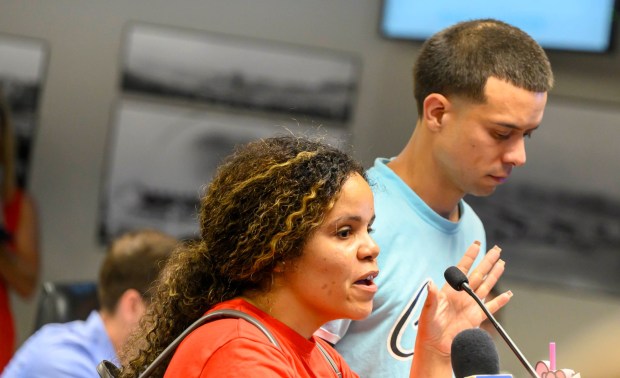 Allentown residents Priscilla and Angel Declet speak out against the purposed data center with concern about the noise and vibrations that will affect their young son, who suffers from hyper sensitivities to noise, on Thursday, July 16, 2026, during an Allentown planning commission meeting at Allentown City Hall. The commission had a meeting before voting on plans for a data center at 2401 W. Emaus Ave. (April Gamiz/The Morning Call)
Continuing the fight
Despite obstacles, data center opponents do not appear willing to give up their push against local proposals. And they’ve seen some success.
Following the expression of concerns about Allentown’s data center ordinance’s effectiveness in regulating data center development, City Council announced continued hearings to consider changes, and recently passed stricter rules.
For Lehigh Valley Stands Up’s Wenhold, the enforcement of strong zoning ordinances and data center regulations are the steps needed to achieve what she views as the ideal outcome from opposing data centers in both Allentown and throughout Pennsylvania: their complete banning from the commonwealth.
That outcome, however, is unlikely. Data centers already are under construction in the state, and the Shapiro administration has expressed some support for their development, under certain regulations.
 A woman holds up a sign Thursday, July 9, 2026, during a South Whitehall Township Planning Commission meeting involving the Project Atlas data center proposal in the auditorium of Springhouse Middle School in South Whitehall Township. Project Atlas has drawn concerns from township residents due to its potential impacts to the nearby Parkland High School and surrounding community. (Jon Chiu/The Morning Call)
Municipalities in Pennsylvania also must legally allow for all types of building use under state law, including data centers, or risk legal repercussions.
Wenhold said continued organization will be key to the fight against data centers.
“I think the way to move elected officials and get the outcomes that we need is to organize and bring everyday working class people together to meet with their elected officials to talk to them, to share their concerns and to hold them accountable so that decisions that they make have the best interests of the people they work for in mind, which is us,” Wenhold said.
For Sussman, the rejection of Project Atlas in South Whitehall Township is the only outcome acceptable to him and other residents.
However, he sees such an outcome as impossible without community contributions to fund the SWCA’s efforts to oppose the project.
“We are fighting for the residents of South Whitehall and Parkland School District and we will continue to fight, but what we need is community support to continue that,” Sussman said.
Even if Sussman is ultimately unable to muster up enough support for the SWCA to fight Project Atlas, his and others’ efforts to fight data centers across the Lehigh Valley have still given residents who may have been initially afraid to voice their concerns the courage to speak up against proposals in their communities.
“I’ve seen people from the very beginning who’ve been afraid to write letters to the board of supervisors because they’re afraid of pushback and now I see the same people at meetings standing up and asking those supervisors direct, important questions,” Heather Rehrig said. “People have gotten encouraged because they’ve seen other people do it and they realize they have the power too.”