
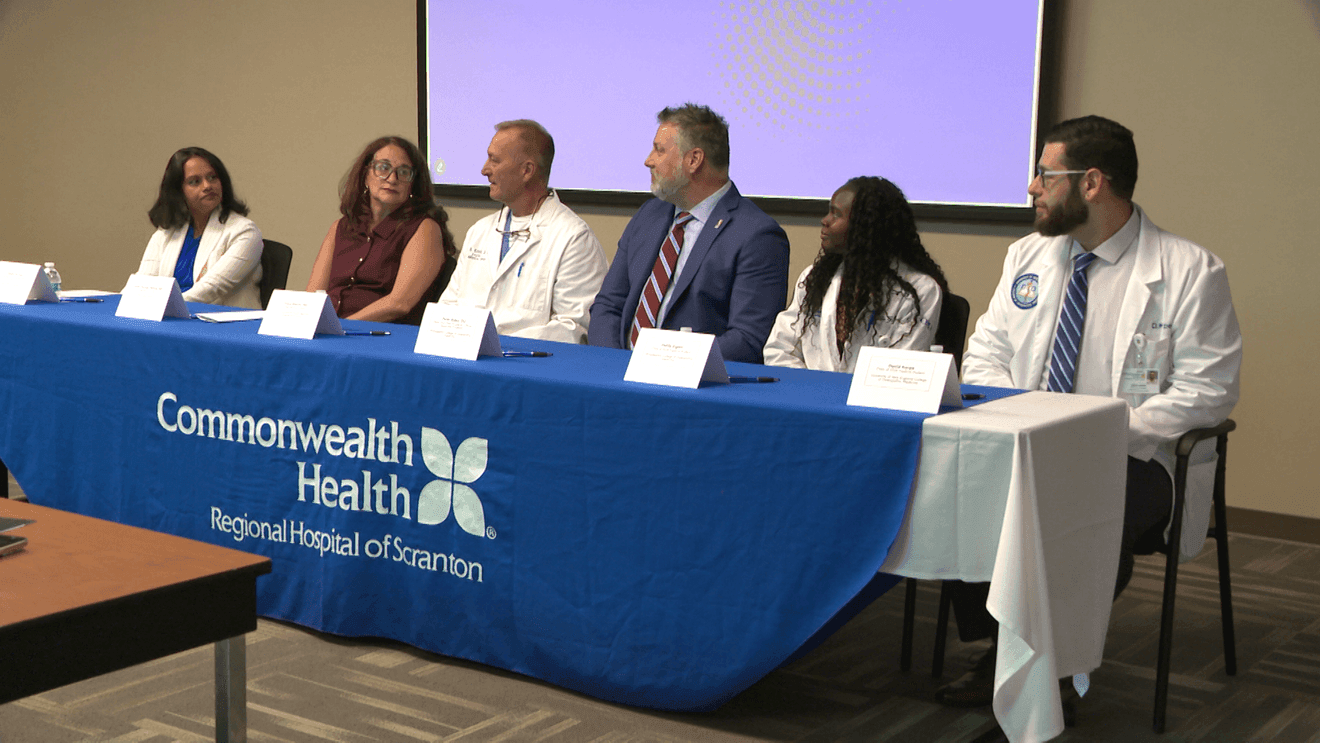
SCRANTON, LACKAWANNA CO. (WOLF) — The Northeast Pennsylvania Clinical Education Consortium (NEPA-CEC) brought health care and medical education leaders together Wednesday in Scranton to highlight a new approach to training future physicians.
The program provides clinical rotations for osteopathic medical students by connecting hospitals, medical schools, higher education institutions and community partners across Northeast Pennsylvania. Rather than having medical schools compete for individual training sites, the schools work with the region to develop shared clinical education opportunities.
The model comes as medical schools across the country report growing difficulty finding places for students to complete the hands-on clinical training required as part of their medical education. Research from the American Association of Colleges of Osteopathic Medicine (AACOM) found 73% of responding osteopathic medical school deans said developing clinical sites or recruiting physicians to serve as preceptors had become more difficult over the past five years.
Schools have responded by expanding their geographic reach and paying more for clinical rotations. According to AACOM, 83% of responding schools were sending students farther from campus, while 80% were increasing payments to clinical sites and preceptors. The research also found the average clinical site was 157 miles from campus, with nearly 6% located more than 500 miles away.
NEPA-CEC offers an alternative built around cooperation between medical schools and the community. The program currently provides clinical training for 36 students from the Philadelphia College of Osteopathic Medicine, Touro University College of Osteopathic Medicine and University of New England College of Osteopathic Medicine, with more students expected next year.
The event featured a panel of health care and medical education leaders, including Radha Savitala, president and chairman of the board of Tenor Health Foundation; Linda Thomas-Hemak, MD, president and CEO of The Wright Centers for Graduate Medical Education and Community Health; Frank Kolucki, MD, chief medical officer of Commonwealth Health Regional Hospital of Scranton; Peter Bidey, DO, dean and chief academic officer and associate professor at Philadelphia College of Osteopathic Medicine; and medical students Dalila Zigani and David Karpe.
Mark Speicher, senior vice president for research, learning and innovation at AACOM, said the partnership can do more than provide medical schools with places to train students. By bringing future physicians into Northeast Pennsylvania for their clinical education, the model can also help develop a longer-term physician workforce for the region.
“We think that having a pipeline of future physicians, having new blood come in that is freshly trained and has new ideas, is really going to bring something special to this community. We hope it becomes a national model so that other communities can try the same thing,” said Speicher.
Through this program, students gain experience in hospitals, physician practices and other health care settings throughout the region, exposing them to different specialties and patient populations while helping them build relationships with physicians and communities in Northeast Pennsylvania.
Organizers said the NEPA-CEC model could provide a framework for other communities looking for new ways to expand clinical education opportunities.