
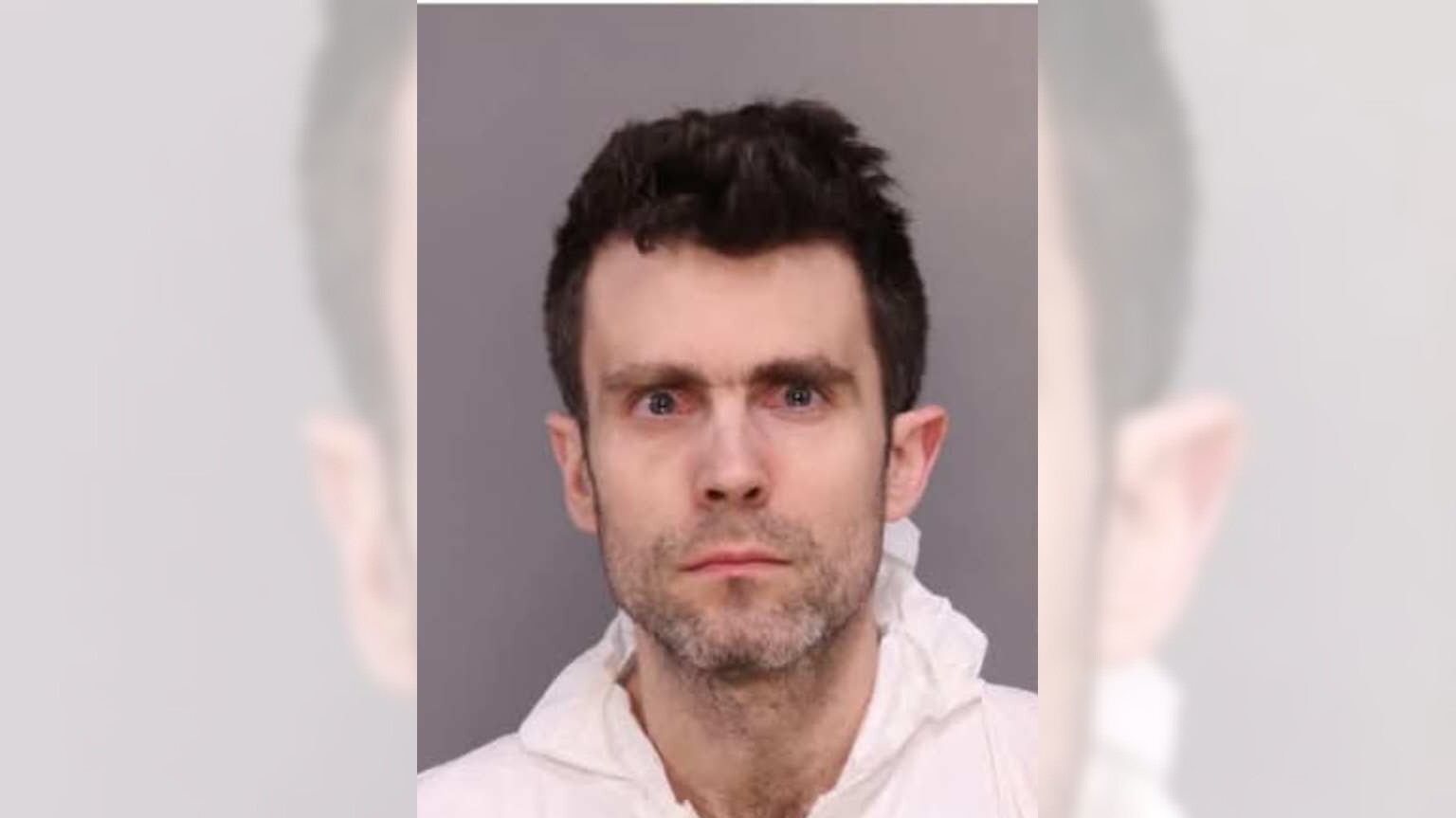
A former Lowe’s employee on trial for killing his co-worker in June 2025 took the stand on Wednesday to explain his actions.
Chris Wasnetsky, 37, maneuvered his wheelchair to the witness stand and spoke with a halting voice as he began his testimony.
He told jurors he knew what he did was wrong, especially because he wasn’t aware that his victim, Jeffrey Moeller, was a father, a husband and a veteran.
If he had it to do over again, he wouldn’t have shot Moeller, he said, acknowledging he caused a lot of people a lot of pain by taking things into his own hands on June 14, 2025.
Wasnetsky is charged with first- and third-degree murder.
Detailing early success, health
Prompted by his defense attorney, Joseph McGraw, Wasnetsky detailed his life as a high school athlete at Bishop O’Hara in Dunmore, excelling in cross country and track and field. When he got to the University of Scranton, he continued running competitively, making it to national competitions several times.
He graduated from the University of Scranton with a degree in mathematics, he testified.
Even after being afflicted with ataxia, Wasnetsky told the jury, he always strived to do things properly. He worked hard for Lowe’s and believed there were mechanisms in place to address any concerns he had.
So, in May 2024, when he reached out to management alleging co-worker Moeller was mocking his disability and making his job harder, he expected a solution. He even expected Moeller to be penalized in some way by a company that purported to provide a safe work environment.
After sending an email at that time, the situation improved for about three months before Moeller’s behavior started to worsen again, Wasnetsky testified.
Then Wasnetsky started reaching out again for help, first to an immediate supervisor, then to other management, then to the human resources department. Several times he referenced emails where a member of the company recommended he talk to an immediate supervisor.
And so he did. He told supervisors that Moeller was putting carts in his way in order to slow down his work. He even provided a photo of items in the aisle he alleged Moeller left.
After a year, Wasnetsky told jurors, he felt he had run out of options to solving his problem with Moeller. He went out and bought a gun, practiced using it and then shot Moeller as he worked — four times.
When Wasnetsky called 911 to report he had shot his co-worker, he testified he was planning to shoot himself also.
McGraw then asked him why he hadn’t; he said the main reason was that he didn’t think one bullet would be enough.
When asked why he hadn’t simply gotten another job, Wasnetsky said it was because his condition dictated he could work only at night and he didn’t think he could find one.
Cross-examination
During cross-examination, Chief Deputy District Attorney Sara Varela pointed out that Wasnetsky had been diagnosed with ataxia only after the shooting. At the time of the shooting, he wasn’t being treated by a doctor, he admitted.
He testified during cross that he hadn’t been to an eye doctor for an extended period before the shooting.
Wasnetsky also admitted on cross that he hadn’t requested Americans with Disabilities Act accommodations from Lowe’s.
Varela again asked why Wasnetsky didn’t just get another job.
This time, in addition to mentioning the difficulty he would have getting another night job, he also testified that he felt being forced out of his position would have been unfair to him.
“I spent 11 years building up my salary,” he said, adding that he would have almost certainly needed to take a pay cut if he switched jobs.
The trial continues Friday.