
SCRANTON, LACKAWANNA CO. (WOLF) — Schools across Northeastern Pennsylvania will receive more than $412,000 in state funding to provide free menstrual products to students as Pennsylvania expands a program aimed at reducing barriers to school attendance.
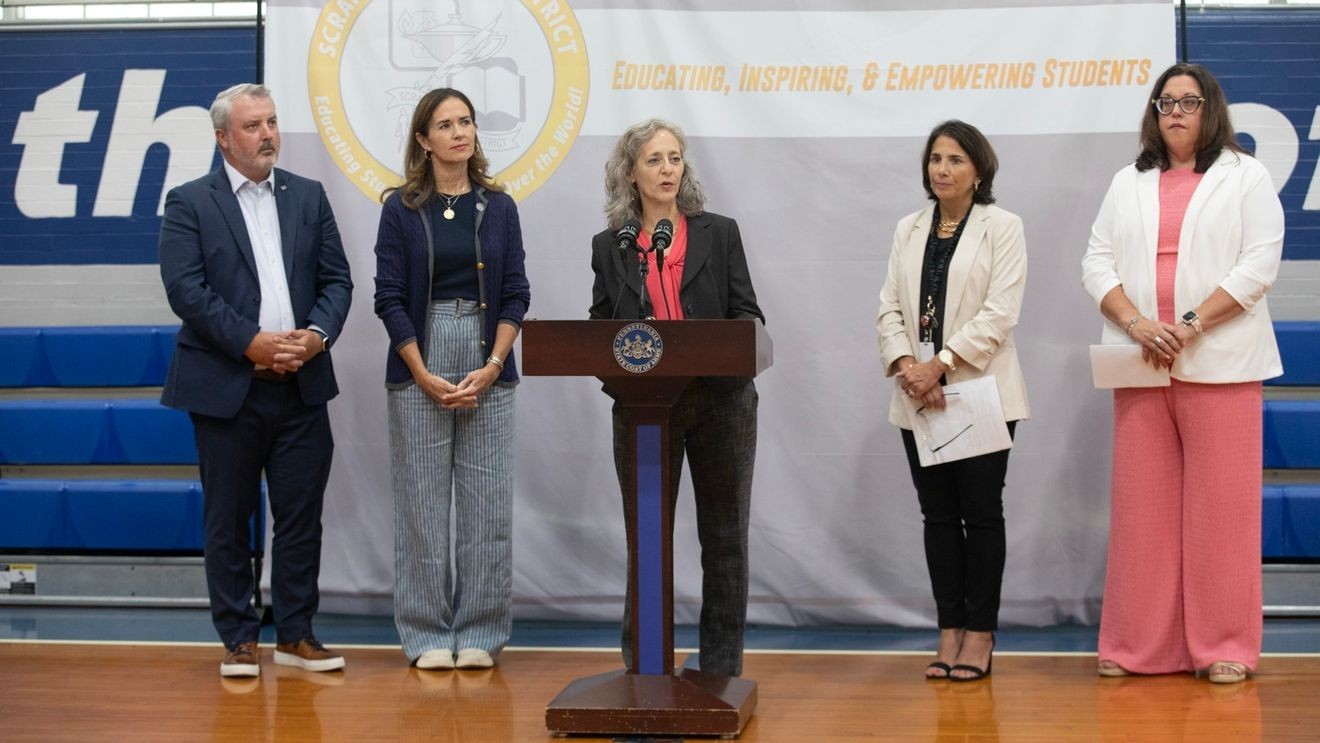
Pennsylvania Secretary of Health Dr. Debra Bogen visited West Scranton High School Thursday to highlight the initiative, which received another $3 million in the 2026-27 state budget.
The latest allocation brings Pennsylvania’s total investment in the program to $9 million over three consecutive state budgets, according to the Shapiro administration.
In Northeastern Pennsylvania, schools across 10 counties are set to receive a combined $412,604.52. The Scranton School District alone has been allocated nearly $17,000.
The regional allocations include $85,549.74 for Luzerne County, $50,613.59 for Lackawanna County and $42,679.05 for Monroe County.
Other allocations include $101,753.22 for Lehigh County, $81,420.66 for Northampton County, $14,471.60 for Carbon County, $12,593.29 for Pike County, $11,071.10 for Susquehanna County, $7,301.79 for Wayne County and $5,150.48 for Wyoming County.
State officials said more than 750 school districts, intermediate units, career and technical centers and brick-and-mortar charter schools participate in the initiative.
Funding for qualifying schools will be based on enrollment as of October 2025, with schools receiving $1.81 per student, an increase from previous years.
The administration said the program is expected to make free period products available to more than 650,000 girls across Pennsylvania.
State officials cited national research indicating one in four girls struggles to afford menstrual products and 23% have missed class because they lacked access to them.
“Not having access to period products should never lead to a missed day of school,” Bogen said. “When a student is forced to stay home because she lacks basic health essentials, it doesn’t just derail one lesson—it creates a ripple effect that impacts her grades, graduation, and future.”
Scranton School District Superintendent Dr. Erin Keating said providing the products can help students remain focused on their education instead of worrying about whether they have access to basic necessities.
“While it seems small, this initiative is a massive investment in both education and the destigmatization of menstruation in our society,” Keating said.
Scranton Mayor Paige Cognetti also praised the program, saying eliminating barriers to attendance can contribute to students’ long-term educational and career success.
Schools receiving the money are encouraged by the state to consider privacy, accessibility, responsiveness and education when determining how menstrual products are made available to students.