
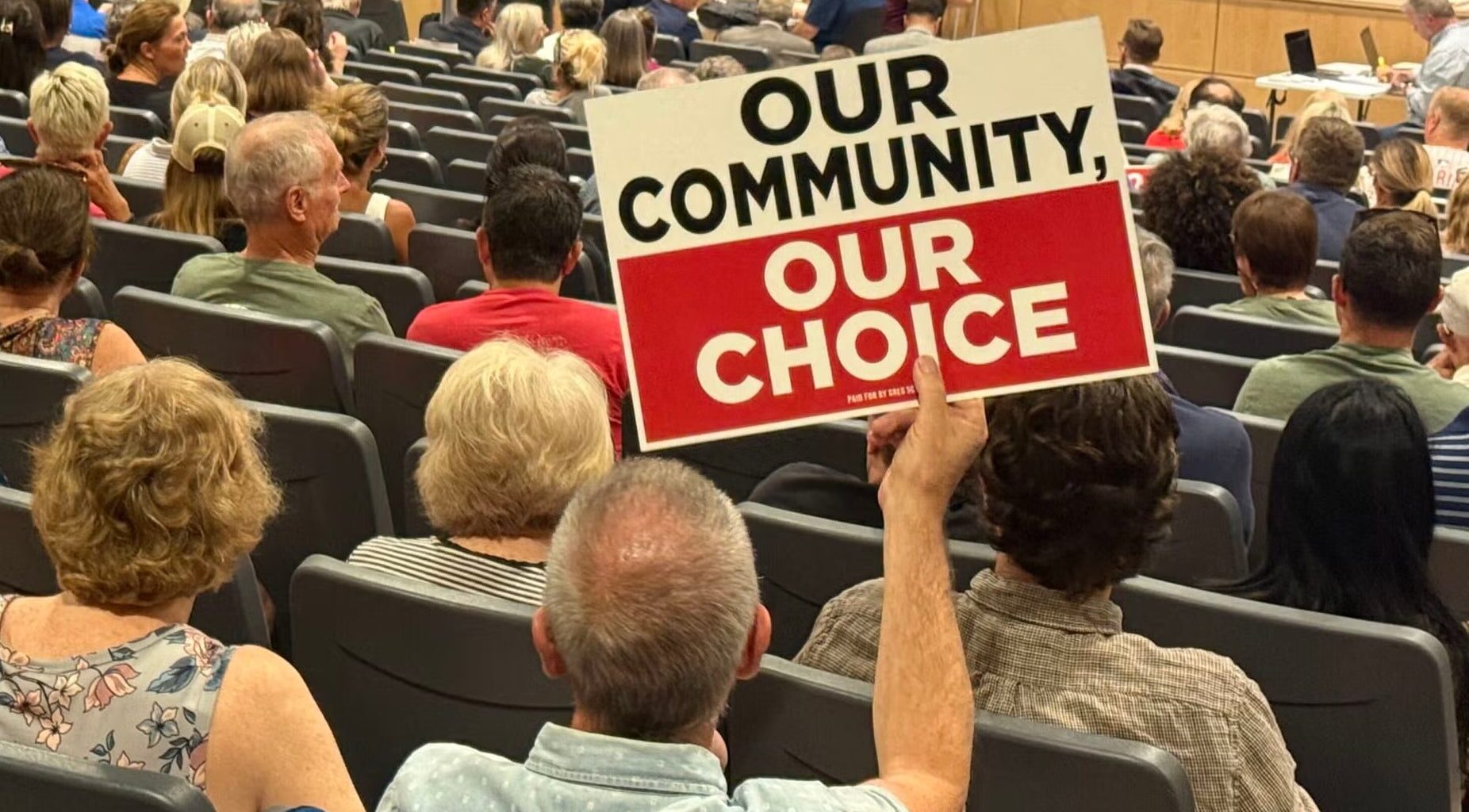
Widespread opposition to data centers
Penn professor Matt Levendusky, who is chair of the Institutions of Democracy at the Annenberg Public Policy Center, said the opposition to new data centers is widespread.
“We find it in places where there is already organized opposition to data centers, [and] where there is not,” Levendusky said. “We find it among Democrats, Republicans, independents. We find it among people who don’t use AI at all, people who just use it a little bit, and people who use it quite a bit.”
Levendusky said in the current political atmosphere, where so many issues are polarized between the left and right, the issue surrounding data centers has become a unifying force.
“It’s almost the antithesis of a partisan issue, which is super rare these days,” Levendusky said. “So there aren’t very many issues where you could find Bernie Sanders and Ron DeSantis on the same side of an issue, but this is one of them.”
Levendusky said the sharp jump in opposition just this year could be attributed to greater press coverage of the issue and the impact data centers have on increasing electricity bills.
Maria Serna, a native of Colombia who lives in Northeast Philadelphia, pointed to her rising electricity bills when it comes to her opposition to data centers.
“How are you gonna decide between paying your bills or putting your food on the table,” she said. “That’s the big decision, not just me, too many families, my neighbors, my friends. I know a lot of people [making] this kind of decision right now.”
Like Hossain, she is worried about the impact of surveillance.
“They are taking information and sharing it … with the Flock cameras,” Serna said.
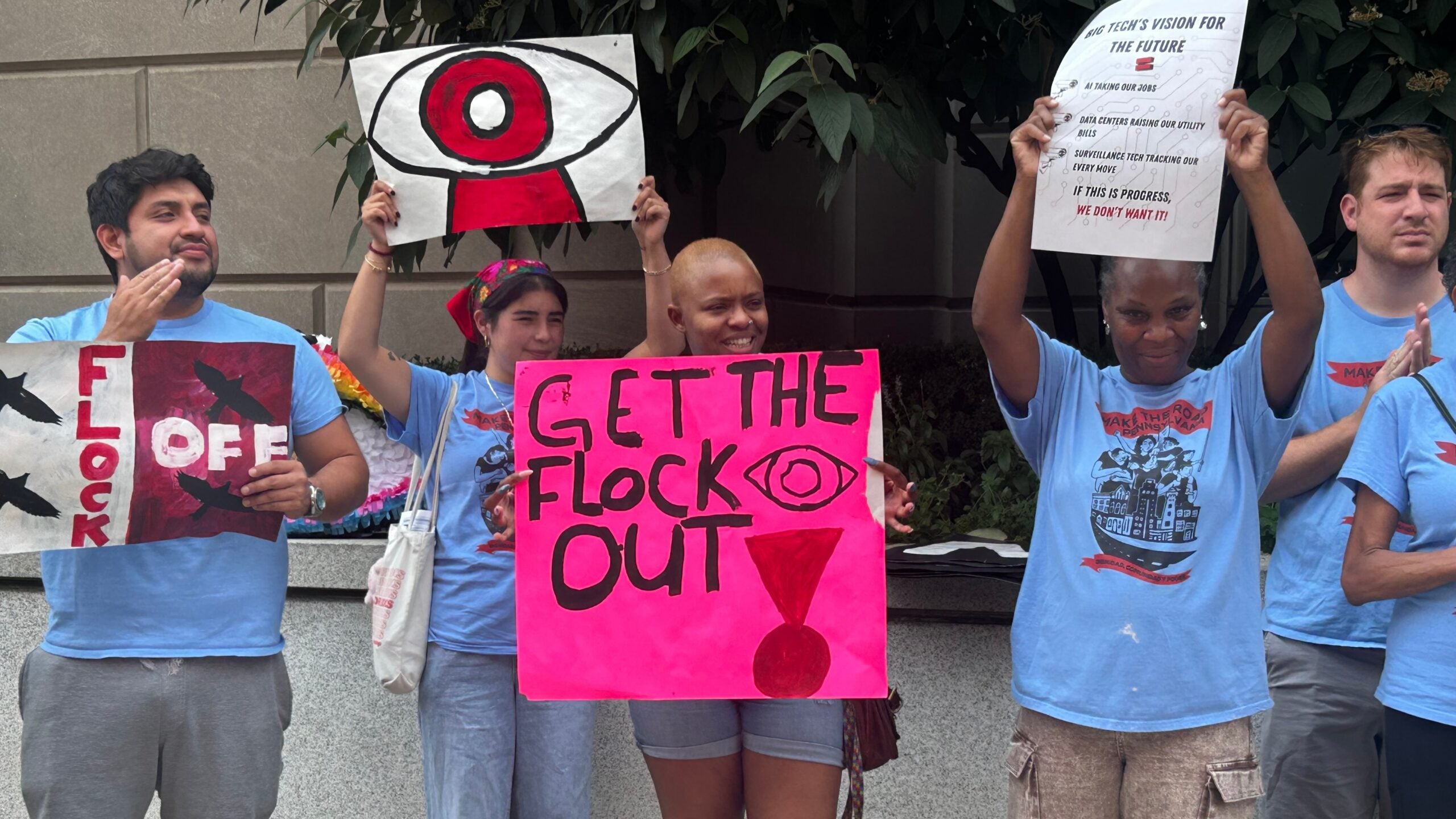 Protesters picket against data centers in Old City, Philadelphia, Aug. 13, 2026. (Susan Phillips/WHYY)
Neither Serna nor Hossain live near a proposed data center, but both sympathize with those who do and are fighting them on a local level.
Levendusky said the research shows the sharp increase in resistance to data centers is not NIMBYism — as in “not in my backyard” — because those living near and far from proposed sites oppose them equally. The research also shows younger adults like Hossain are more likely to oppose data centers than older adults.
“I think one interesting thing about the data center story is that if you think about other types of AI or other technologies, you hear people on both sides of the issue,” Levendusky said. “So whether that’s, say, driverless cars, there are people who are opposed to them, but people who also support them, right? There aren’t really a lot of people who are advocates for data centers beyond the AI companies themselves.”
Given the fears around and opposition to AI, Levendusky said the messaging from data center developers that we all use AI and that we need data centers to power that usage “is probably not a terribly compelling argument.”