
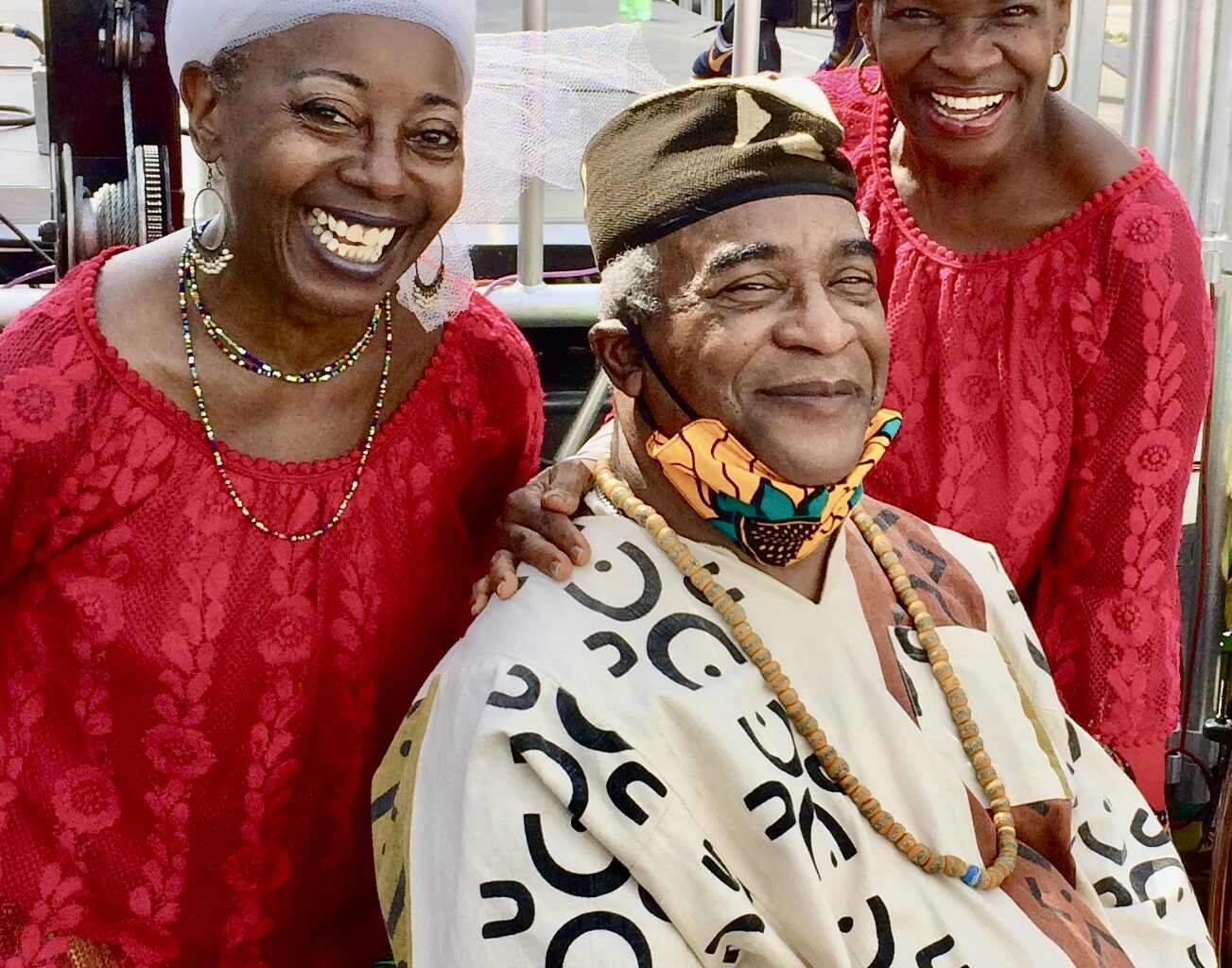
Maxine Canada Brown, left, drummer Baba Joe Bryant, and Carmen Butler.
Photo courtesy: Carmen Butler
By Constance Garcia-Barrio
If “…dancing is like dreaming with your feet,” as Constanze Mozart, wife of the famed composer said, then award-winning dancers Maxine Canada Brown and Carmen Butler have spun gorgeous visions for audiences.
“I have always just loved to move,” Butler, who lives in Mt. Airy and has two grown daughters, said.
Likewise, for Brown, who resides in Germantown, artful movement seems as easy as breathing.
“Dancing is …natural to me,” Brown said. “To move unencumbered to the rhythms of life is a blessing from the Creator.”
While both women have long felt drawn to express themselves through dance, they have done so with a practical approach.
“Dance can take a toll emotionally, physically, and financially, but it’s irresistible,” Butler said.
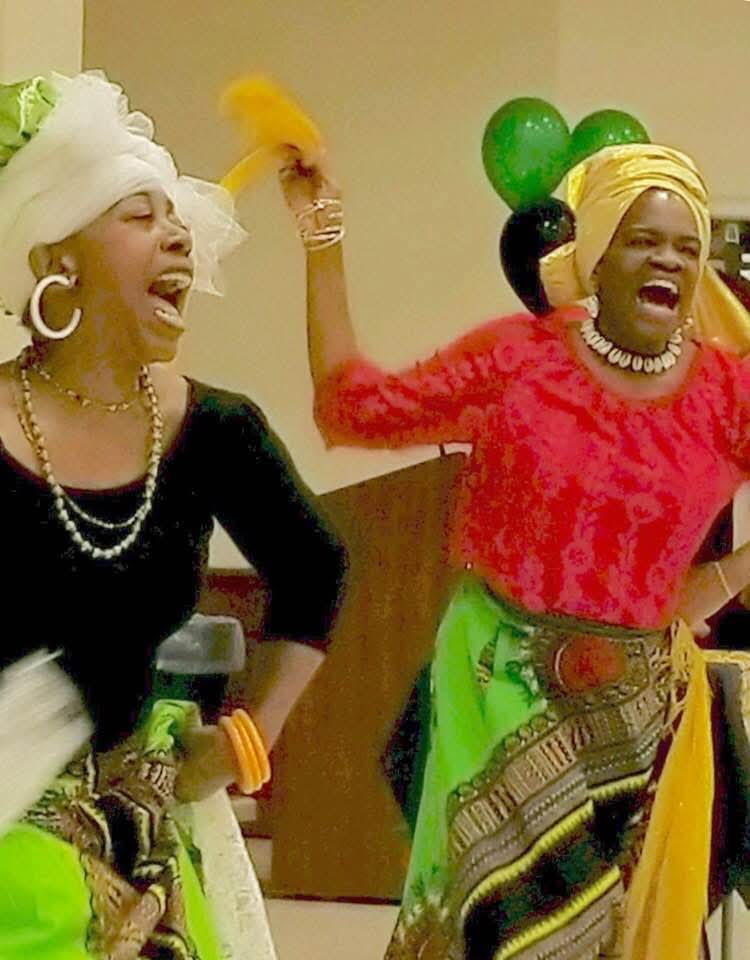
Maxine Canada Brown and Carmen Butler during a performance
Photo courtesy: Maxine Canada Brown
To weather the financial ups and downs that often accompany careers in the arts, Brown and Butler studied alternate fields in addition to dance.
“I received training as a dental hygienist at the National School of Health Technology in Philadelphia in the ‘70s,” Brown, who performed in popular Philadelphia cabarets, said. “I worked as a dental hygienist for two or three years.”
Brown also has an associate’s degree in early childhood education.
A second occupation frees artists in another way, Brown added.
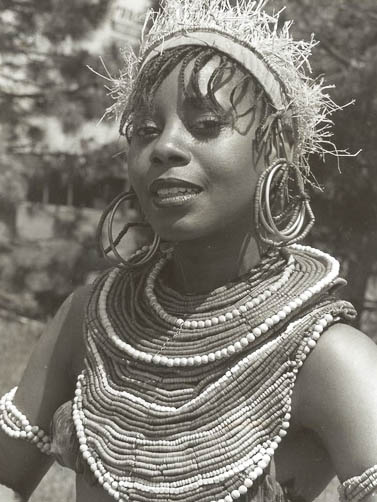
Maxine Canada Brown as a young dancer.
Photo courtesy: Maxine Canada Brown
“It takes the pressure off your craft,” she said. “You dance for the joy of it, not to eat or pay your bills.”
Butler also equipped herself to work in different fields. She earned a bachelor’s degree in dance from Point Park College in Pittsburgh, as well as a master’s degree in education from Cheyney University.
Serendipity first led Brown and Butler to dance.
“I’m from the Raymond Rosen Projects in North Philly,” Brown said. “[As a child] I found a flyer that advertised dance classes for 50 cents at the community recreation center. My first performance was at the Nile Swim Club in Yeadon in 1959,” she said.
The Nile Swim Club — which is still open and serving the community — was the first private swimming pool in the U.S. owned and operated by Black Americans.
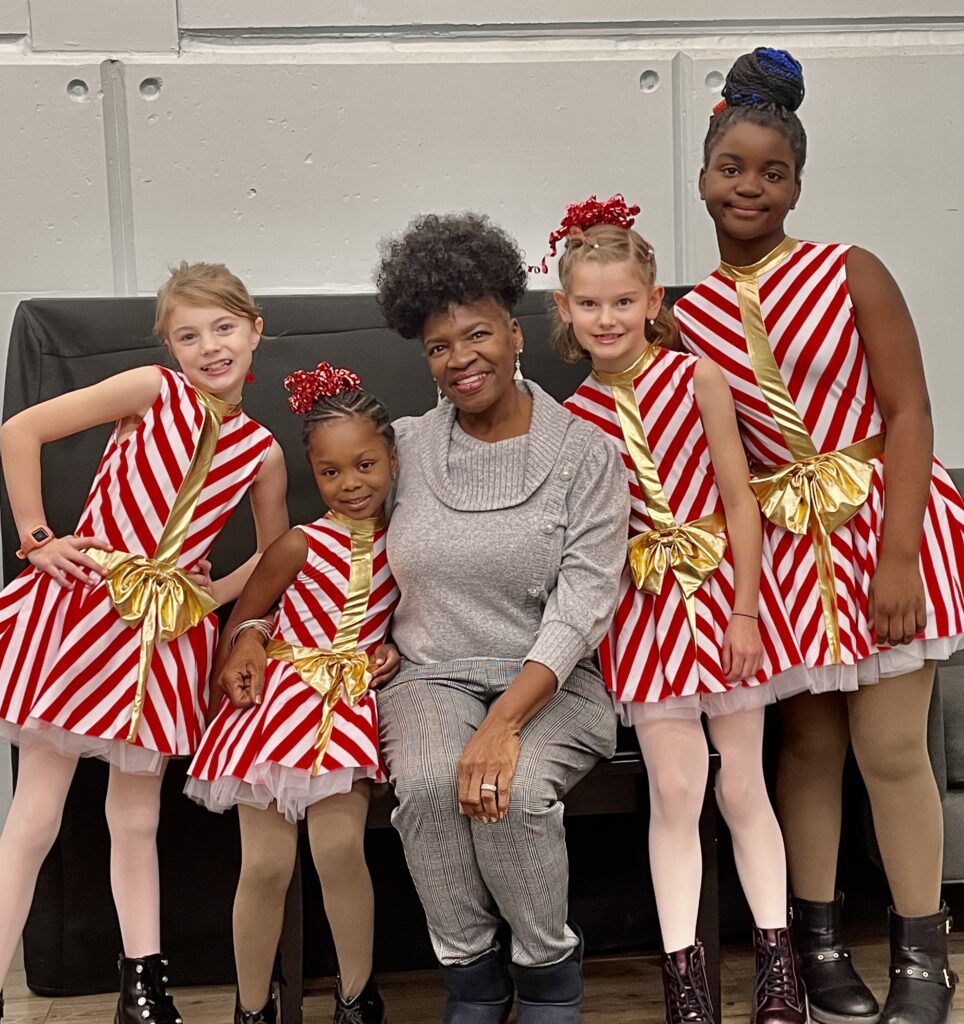
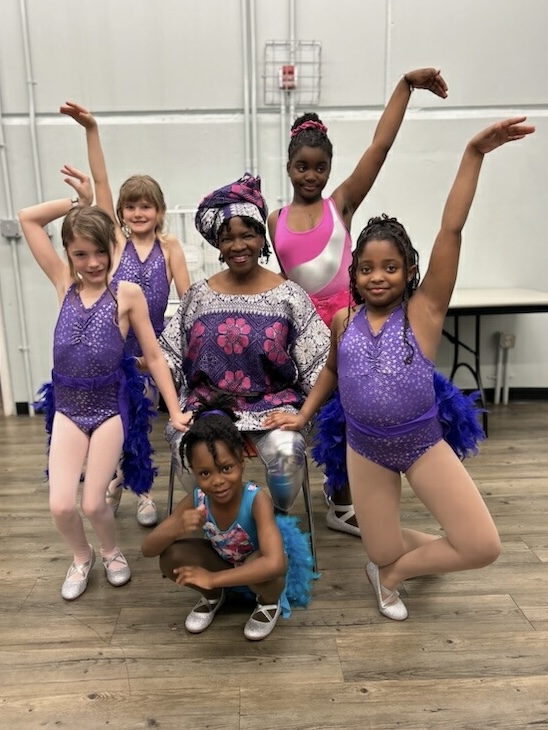
Carmen Butler with her dance students. In top and bottom photos.
Photos courtesy: Carmen Butler
Butler admits that she had a spotty start in dance training.
“I was eight years old when I took my first class,” she said, “but I didn’t study consistently. I picked up dance again at junior high school because my father said I was getting too fat.”
Butler and Brown met at the Ile Ife, the dance school of internationally known dancer and choreographer Arthur Hall .The women’s paths diverged as they began establishing themselves as performing artists with dual careers. Little did they know that time would bring them together again.
During those decades apart, Butler won a scholarship to study at New York City’s Alvin Ailey American Dance Center. She went on to teach workshops and perform in Liberia, Mali, Senegal, and Italy in addition to Philadelphia venues. A member of the Screen Actors Guild, Butler has film credits that include “Beloved,” “Dark Field,” “Safe,” and “The Last Airbender.”
Brown broadened her repertoire, becoming a vocalist and actor as well as a dancer. She was awarded the Daphine Nichols Herbert Communications Award in Theatre while studying at the Community College of Philadelphia. She also won a monologue competition at Stagecrafters Theatre in Chestnut Hill. Her side gigs included delivering singing telegrams, for which she dressed up as a showgirl and sang personal messages to telegram recipients. In addition, she participated in the national tour of “Bubbling Brown Sugar,” whose cast included iconic band leader Cab Calloway. Her role in that musical led to traveling to Paris to perform.
Around 2013, Butler gave Brown a call to see if she wanted to join her for a performance. The women soon discovered that they were both working a lot with students in the School District of Philadelphia.
“I love teaching special ed students,” Butler said. “The classes are smaller and an aide helps. Some students are in wheelchairs. Some thank you with a look or a smile.”
Butler was also a recreation leader at South Philadelphia’s Hawthorne Cultural Center with the Philadelphia Department of Parks and Recreation until her recent retirement. Her offerings there included Mexican folk dance, Zumba for children, and salsa–African and Caribbean-influenced dance, and even old school dance for adults. She also teaches yoga.
Brown, for her part, has taught in Philadelphia schools for many years in Get Set, Bright Futures, Head Start, and other programs.
“[Besides teaching dance] I produced plays with the children,” she said. “Who’s Who Among American Teachers,” which honors stellar educators, included Brown in the 2003-2004 edition.
If they had to choose again, Brown and Butler would opt again for dual careers that included dance. You face uncertainties, but you use your God-given gift, they said.
Aspiring young dancers may find classes at recreation centers and in some schools, Butler and Brown noted. Future dancers on a tight budget could also take some classes at a dance studio, let teachers see their talent and passion, and then ask them to be considered for a scholarship.