
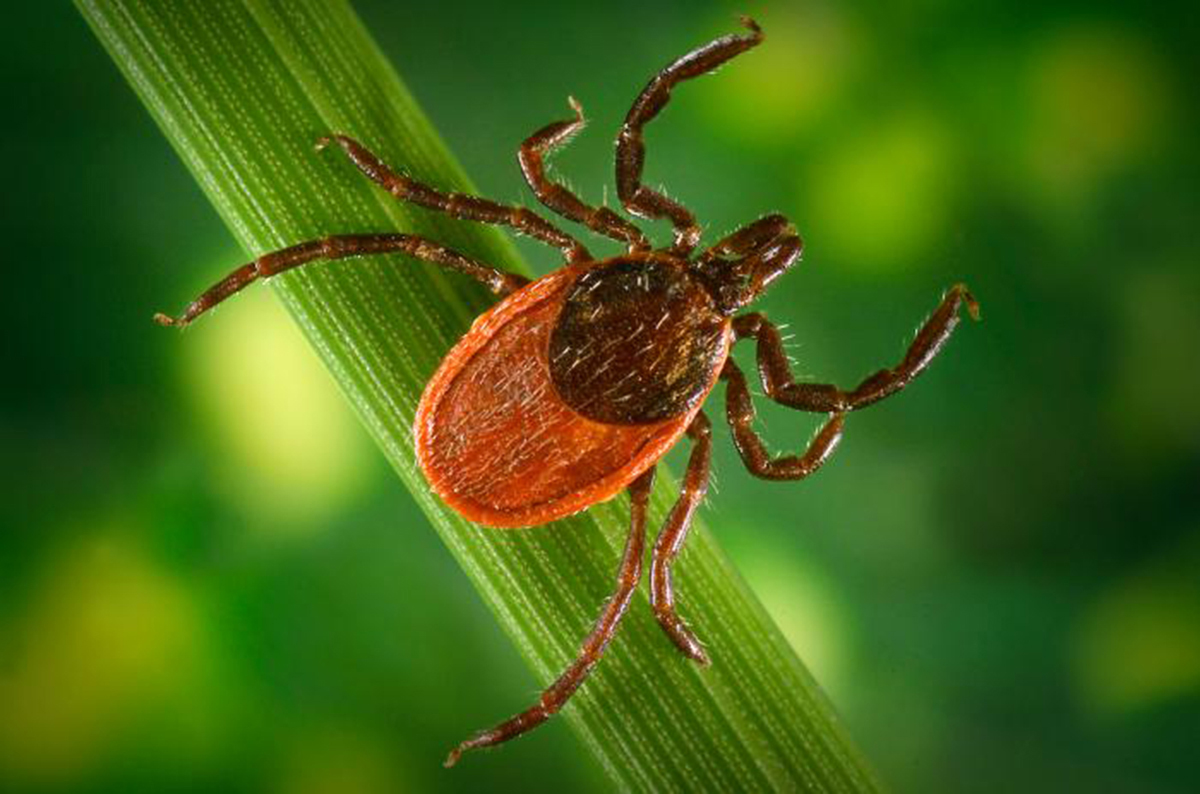
In a summer marked by health scares related to hantavirus, Ebola and diarrhea-causing Cyclospora, infectious disease and public health experts say that people still need to be aware of more conventional health threats such as ticks.
According to the Centers for Disease Control and Prevention, every year, 31 million people in the United States are bitten by ticks. And unfortunately, ticks have only become more prevalent, and tick-related illness has only been getting more common over the last few decades.
This year may be particularly bad, Dr. Jeffrey Jahre, chief emeritus of infectious disease for St. Luke’s University Health Network, said. St. Luke’s has treated 39 cases of anaplasmosis, a disease that can be caused by deer ticks, in the first six months of 2026. He said that last year the health system only had 19 cases, and in 2024 only 41 for the entire year.
Deer ticks, certain species of dog tick and the Lone Star tick are the primary species of concern in this region of Pennsylvania.
Deer ticks, also known as eastern black-legged ticks, are the most infamous in the Northeast and are the main cause of Lyme disease, which, while rarely fatal, can be debilitating and lead to long-term complications or health problems, similar to long COVID-19, if allowed to progress. Jahre said 2026 has been a particularly bad year for Lyme disease, with what he described as “record numbers” of people coming in with the illness.
However, deer ticks are capable of spreading other diseases, such as Powassan, babesiosis and anaplasmosis, and Jahre said it is possible for a single tick to cause multiple infections.
He added that St. Luke’s has treated 15 cases of babesia, which causes flu-like symptoms, this year, whereas it only treated four during all of 2025 and no cases in 2024.
Dog ticks are vectors for far fewer diseases in humans, though they can cause Rocky Mountain spotted fever, a horrific and potentially fatal condition that can cause spotted rashes across the body, leaking blood vessels, and damage to organs, muscles and the nervous system. Dog ticks can also cause tularemia, an illness with varying symptoms depending on where the infection occurs in the body but generally associated with fever and swollen lymph nodes. Complications associated with the disease include acute respiratory distress syndrome, pneumonia, sepsis, internal bleeding, kidney failure and inflammation of the brain, heart, liver, bones or bone marrow.
Tick populations on the rise
Tanu Altomare, a professor of public health at Moravian University, said cases of tularemia are rare in Pennsylvania.
“As our tick populations hang around for longer periods of time, it’s not just the risk of Lyme disease and long Lyme that we have to worry about, but we have to worry about all these other weird diseases as well that normally we wouldn’t care about, but now we’re starting to see in areas that didn’t have to worry about it before,” Altomare said.
Altomare said that part of the increased prevalence of ticks is due to climate change. Shorter winters and longer, hotter summers mean ticks have more time to be active.
“At a large scale, we really need to think about climate change and how not just ticks, but mosquitoes especially are just having the time of their lives with how warm everything is getting and milder winters,” Altomare said. “You start seeing ticks in, like, February instead of, like, June or July. They’re popping up earlier, they’re staying around for longer, and that just increases our risk of exposure.”
She said another factor is continued human encroachment into tick habitats via housing and development.
Jahre said fewer natural predators and fewer people hunting have also allowed mice and deer populations, which are crucial in the life cycles of deer ticks, to flourish.
He added that the particularly snowy winter that we just experienced may have contributed to tick prevalence and activity this year, as the snow insulates the ground and provides a breeding environment for ticks.
“What you have to be aware of is even though there are certainly times of the year where exposure to the disease-carrying forms of ticks is more common, it can be throughout the entire year and then includes winters,” Jahre said.
What you can do
Being conscious and aware of ticks is the first step in preventing tick bites and tick-related illness.
Ticks do poorly in exposed, sunny areas, as they are exceptionally vulnerable to death from drying out. They require shaded and relatively humid environments with plenty of ground cover, whether it’s a forest with plenty of dense shrubs and leaf litter or a field with tall grass.
Staying safe from ticks starts with preparation before going into the woods. That includes wearing light-colored shirts with sleeves and long pants, tucking clothes in, and treating clothing with permethrin or DEET, said Dr. Shuisen Li, associate chief medical officer at Lehigh Valley Hospital-Carbon and LVH-Schuylkill.
Doing a thorough full-body check after spending time outdoors, showering, and washing and drying clothes upon returning home are also important steps in preventing ticks from getting on or staying on your body. Altomare said checking for ticks after spending time outdoors is the most critical thing to prevent tick-related illness.
“Make sure you also check your animals. It’s one thing like you check yourself and you’re, like, ‘Oh, I’m good.’ And then you go sit on the couch and cuddle your dog and your dog is transmitting ticks all over you. Make sure your dogs are getting preventives,” Altomare said.
Jahre said that if a tick is found on your or a loved one’s body, it should be examined and handled carefully. He said first look at its size; if it isn’t engorged, then it is likely to have been feeding for less than 24 hours. He said removing ticks should be done carefully. Recklessly yanking it out or squeezing it is dangerous, and trying to burn it off is ineffective. Tweezers can be effective or tick-removal devices can be purchased online or at some sporting goods stores. He said the key is to put gentle pressure on the tick’s mouthparts attached to the skin and pull slowly and gently until the tick releases itself.
“The important thing here is not to squeeze the tick because if you do, you’re going to literally pump out from the tick’s body what you’re trying to avoid, which is the agent that causes these diseases,” Jahre said.
It generally takes about 24-36 hours for a tick to transmit a disease after it has embedded, so not every tick found on your body will necessitate treatment, though Jahre said Rocky Mountain spotted fever can be transmitted in two to 20 hours, and the Powassan virus can be transmitted by a deer tick in as little as 15 minutes.
Lyme disease, Rocky Mountain spotted fever and most other tick-borne illnesses are treatable with antibiotics and can be prevented from progressing if found early enough. Li said many tick-related diseases can have fairly general symptoms, so it is important to let your doctor know if you spend a good deal of time outside or have been bitten by a tick.
Danielle Roman, director of infection prevention for St. Luke’s, said over-the-counter commercial tests for tick-borne illness are not particularly reliable and it is best to see a doctor for testing. A Lyme disease vaccine is under development for humans, and one exists for dogs.
There is also an inexpensive method for helping reduce the populations of Lyme disease-carrying deer ticks, called tick tubes. These tubes are made by spraying permethrin on cotton balls or dryer lint, allowing it to dry and then inserting the lint or cotton in old paper towel or toilet paper tubes, which are then left outside. Mice — which are the main way ticks pick up the bacteria that causes Lyme — love using soft material to build their nests, and will happily take the permethrin-treated cotton or lint, which is harmless to them once it’s dried but kills ticks on contact.
Deer ticks also prefer certain low-lying invasive shrubs, such as Japanese barberry, and removal of these plants from forests and private properties can significantly reduce areas where deer ticks can survive. One study found that removal of Japanese barberry was associated with up to a 60% decrease in Lyme disease-spreading deer ticks.