
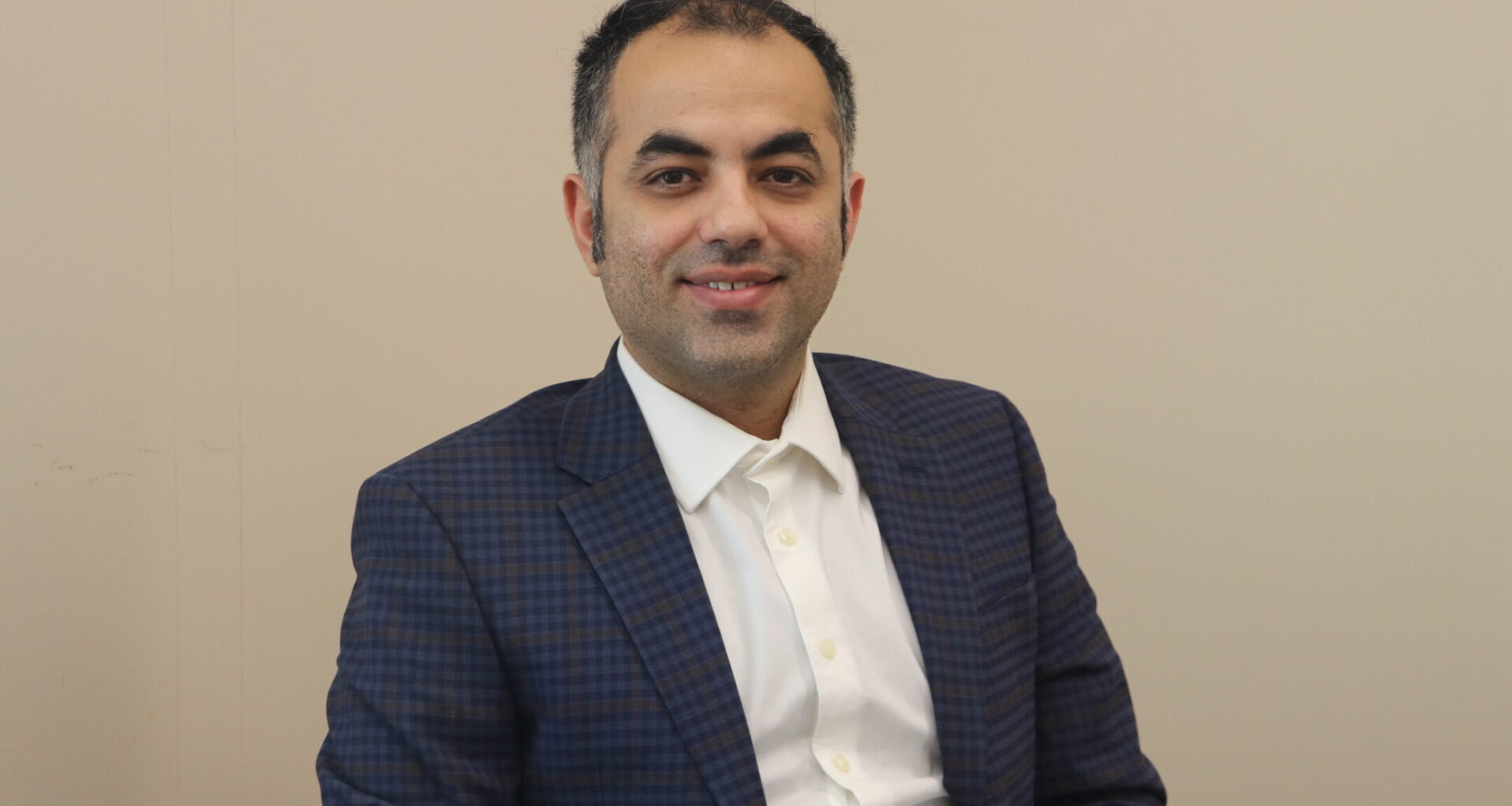
17 years ago, as an undergraduate student at Sharif University of Technology in Tehran, Iran, Amirtahà Taebi was thinking about his life’s direction. While choosing between careers in engineering, cinema and political science, he chose bioengineering because of his love for the subject and solid foundation in mathematics and physics.
This semester, Taebi has joined Lehigh as an assistant professor in the Department of Bioengineering, bringing his research and teaching experience from Iran, Italy, California and Mississippi to the classroom.
In Taebi’s lab, his research focuses on developing systems and methods that analyze tiny vibrations generated by the heart and cardiovascular system to assess human health. These body surface vibrations, caused by cardiovascular activity, help diagnose diseases and monitor overall cardiovascular function.
As a R1 institution, Taebi said Lehigh has a high level of research output that allows for interdisciplinary research and collaboration with faculty members from different departments.
“What I like about Lehigh is that we have a very high-quality education system and undergraduate teaching here, and our students are fantastic,” Taebi said.
Ph.D. student Mohammadali Monfared, ‘27, previously worked with Taebi at Mississippi State University. He has continued his research under him after coming to Lehigh, focusing on developing computational models that simulate cardiovascular signals on the chest’s surface.
Monfared said Taebi stands out as a researcher because he really listens to students’ ideas and the different topics they ask about.
“He has such flexibility that he does not limit us in our projects, and for any idea that we have, he tries to help us develop it and mentors us to reach logical results,” Monfared said.
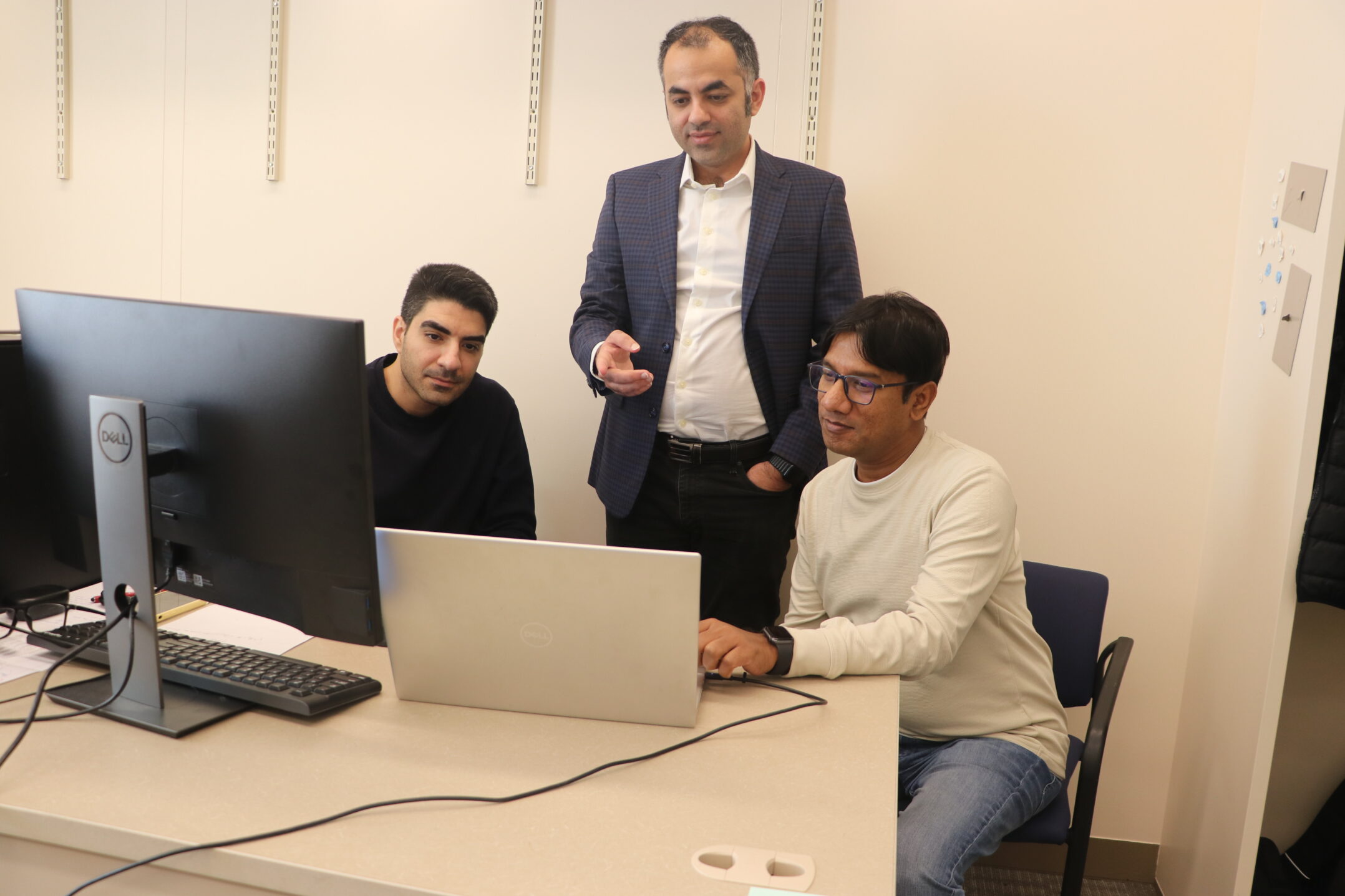 Pictured from left to right: Mohammadali Monfared, Amirtaha Taebi, Mohammad Muntasir Rahman, graduate students and faculty members in Lehigh University’s Department of Bioengineering pose in Iacocca Hall on Oct 31, 2025. Taebi is a new assistant professor brings brings international research experience from Iran, Italy, California and Mississippi to Lehigh, where his lab studies cardiovascular biomechanics and vibration-based diagnostics. (Noah Ali/ B&W Staff)
He also said he appreciates Taebi’s courage, and one of the most valuable lessons he has learned from him is that there is no limit to any project.
Monfared said working in Taebi’s lab has given him many opportunities that will contribute to impactful research in cardiovascular biomechanics, such as collaborating in a highly interdisciplinary and innovative environment.
To join Taebi’s lab, undergraduates have a one month trial period to make sure their interests align with the research focus. During that time, students fully participate in projects, attend meetings and receive feedback before deciding whether to continue.
Neil Rana, ‘27, an undergraduate student majoring in bioengineering, joined Taebi’s lab after discovering his research on Lehigh’s website. He said he was drawn to the projects because they aligned with his experience using engineering software.
When they first met, Rana said Taebi clearly explained the progress of the project and detailed the plan for accepting undergraduate students to participate in the research trial.
Rana said the research trial was a cool experience, and Taebi was a supportive mentor throughout it.
“(Taebi) mainly just wanted to make sure whatever I’m doing is most important and something I feel passionate about,” he said.
While conducting research, the team presents weekly. Rana said the biggest lesson he’s learned from this is to never be afraid to ask questions.
Rana also said when scientists get deeply involved in their work, they often use technical terms that are hard to interpret. He said Taebi emphasizes the importance of presenting complex
Taebi said he encourages students at every level to take ownership of their projects and explore what excites them most.
He said he doesn’t view his students as mentees, but as future collaborators. He hopes to one day follow their research and learn about their future work.
Rana said Taebi’s arrival has brought new opportunities for both undergraduate and graduate students to engage in research from different perspectives.
“What I want students to take away is to become a better version of themselves,” Taebi said. What makes me happiest is seeing my students grow continuously and enjoy what they do.”