
SCRANTON — Lackawanna County Commissioner Bill Gaughan credited the pronounced data center opposition movement in Archbald and elsewhere in the county for Gov. Josh Shapiro’s executive order targeting the industry, but warned Wednesday that the local fight must continue unabated.
In that context, he reiterated the urgent need for a county-commissioned study probing the potential health and air-quality impacts of all data centers and power plants proposed here. It’s a project commissioners plan to pursue, albeit not as quickly as Gaughan would prefer.
He and fellow Commissioner Chris Chermak met Wednesday — Commissioner Thom Welby was absent due to a family emergency — a day after Shapiro issued an executive order imposing strict requirements on data center development in Pennsylvania and two days after the county issued a request for proposals for the cumulative health-impact study.

Lackawanna County Controller Gary DiBileo walks to the podium to offer comment on data centers during the commissioners’ meeting held at the county government center in Scranton Wednesday, August 19, 2026. (SEAN MCKEAG / STAFF PHOTOGRAPHER)

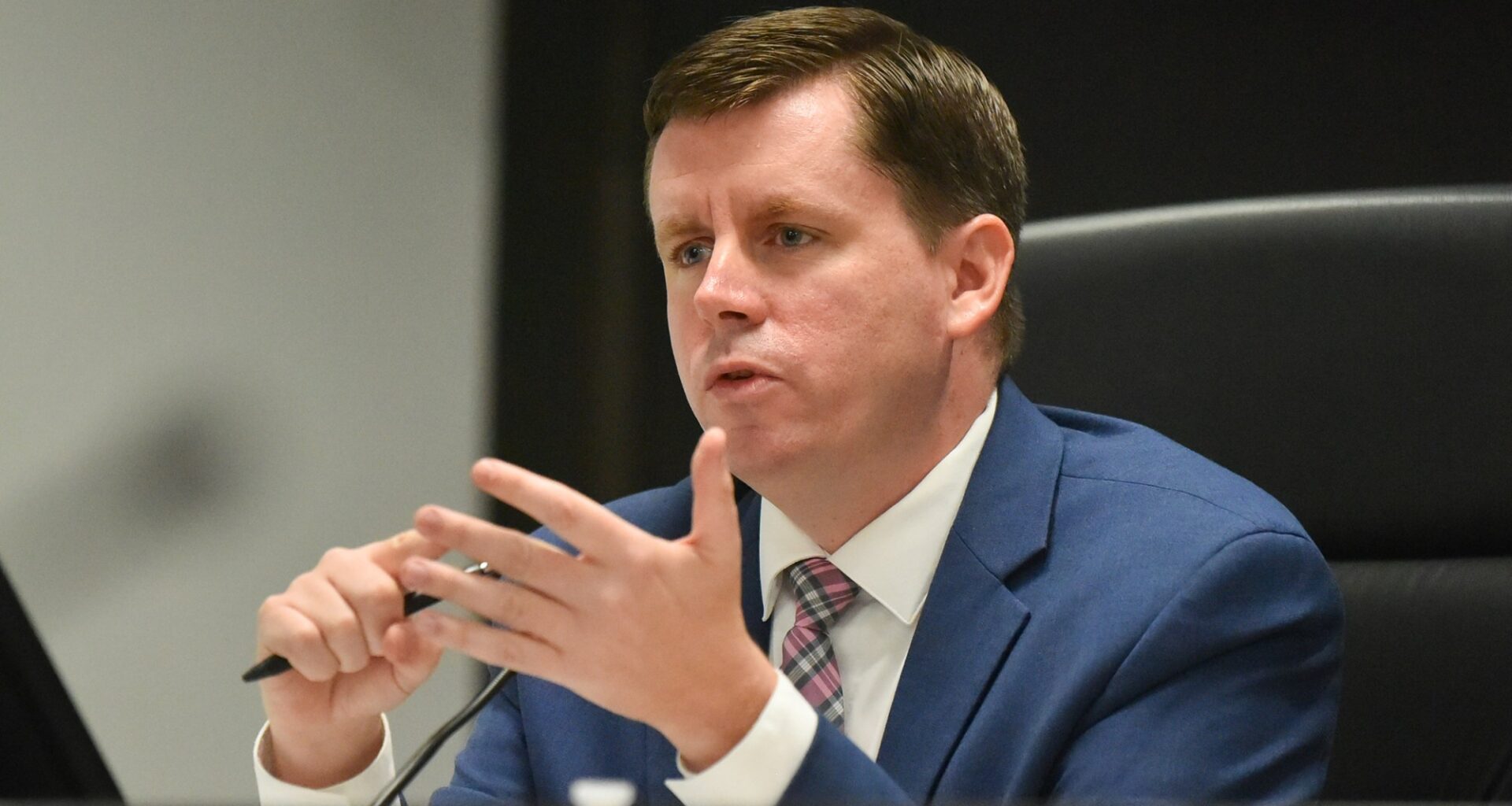
Lackawanna County Commissioner Bill Gaughan, left, speaks during the commissioners’ meeting held at the county government center in Scranton Wednesday, August 19, 2026. (SEAN MCKEAG / STAFF PHOTOGRAPHER)

Scranton resident Mike Mancini speaks at the podium during the Lackawanna County Commissioners’ Meeting held at the county government center in Scranton Wednesday, August 19, 2026. (SEAN MCKEAG / STAFF PHOTOGRAPHER)

Lackawanna County Commissioner Bill Gaughan speaks during the commissioners’ meeting held at the county government center in Scranton Wednesday, August 19, 2026. (SEAN MCKEAG / STAFF PHOTOGRAPHER)

Lackawanna County Commissioner Bill Gaughan speaks during the commissioners’ meeting held at the county government center in Scranton Wednesday, August 19, 2026. (SEAN MCKEAG / STAFF PHOTOGRAPHER)
Show Caption
1 of 5
Lackawanna County Controller Gary DiBileo walks to the podium to offer comment on data centers during the commissioners’ meeting held at the county government center in Scranton Wednesday, August 19, 2026. (SEAN MCKEAG / STAFF PHOTOGRAPHER)
Among other features, Shapiro’s order removes all data center projects from the “Fast Track” permitting program he created via executive order in 2024 and makes data centers ineligible for the program moving forward. It also directs the state Department of Environmental Protection to evaluate data center permit applications “only if developers have made a legally binding commitment to meet the Governor’s GRID requirements and have received local approval,” per a Shapiro administration press release.
Shapiro unveiled the Governor’s Responsible Infrastructure Development, or GRID, standards in May during a visit to Lackawanna County, stopping in Archbald before meeting with local activists in Blakely. The GRID standards and the recent executive order are testaments to the political potency of the anti-data center movement and stand in stark contrast to Shapiro’s early embrace of data center development as a potential economic driver.
“From Archbald to Montgomery County to all across Pennsylvania, to your comments, texts, calls, and letters to my office, I’ve heard you loud and clear: Pennsylvanians do not want AI data centers in their communities that would raise their utility costs and pollute their resources,” Shapiro said Tuesday in a social media post. “It’s my responsibility as your Governor to listen and take action accordingly.”
His evolving position on data centers, arguably an about-face, shows the myriad voices making up the local data center opposition movement are being heard in Harrisburg, Gaughan said Wednesday. The commissioner who’s emerged as a prominent elected ally of and leader in that movement called the executive order “a significant step” while acknowledging the “fight is far from over.”
“An executive order does not erase every proposal currently threatening communities in Lackawanna County,” Gaughan said. “It’s not going to stop billion-dollar developers from continuing to try to drag council members throughout our county through the mud and intimidate them. It doesn’t answer every question about our air, our water, our electric grid, noise, public health or what happens when dozens of these facilities are concentrated in one region.”
The health-impact study he called for in June and continues to push for could answer some of those questions by attempting to quantify the cumulative impact of data centers and related infrastructure on residents’ health and the air they breathe. The local opposition movement sees the study as potentially invaluable evidence in future legal fights over data center proposals.
Welby and Chermak also see value in the study and support the project. But they’ve frustrated Gaughan and other data center critics by not immediately moving forward with a $165,000 proposal for the countywide assessment. Gaughan solicited that proposal from EmPower Analytics Group, the firm behind a similar assessment that served as the foundation of the grassroots Stop Archbald Data Centers movement’s case against the Wildcat Ridge Data Center Campus proposed there.
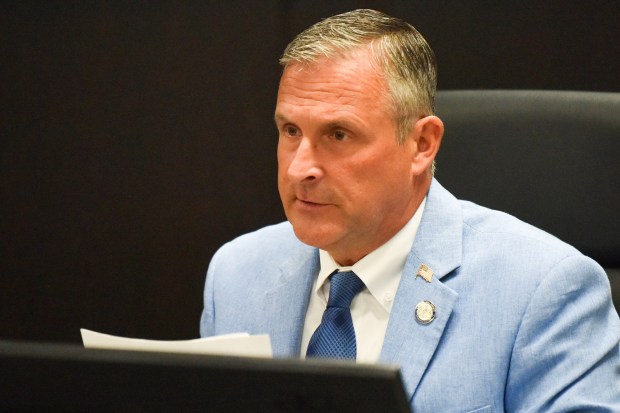 Lackawanna County Commissioner Chris Chermak speaks during the commissioners’ meeting held at the county government center in Scranton Wednesday, August 19, 2026. (SEAN MCKEAG / STAFF PHOTOGRAPHER)
Archbald is ground zero for data center proposals locally, but data centers have also been proposed in Clifton Twp., Covington Twp., Dickson City, Jessup, Olyphant, Newton Twp. and Ransom Twp. A data center developer, meanwhile, proposes building a natural gas power plant in Archbald and three more in Dickson City.
Gaughan’s frustration over his colleagues’ recent decision to solicit additional proposals for the project was clear again Wednesday. He’s skeptical the RFP process will produce a stronger and less-expensive study, as Welby and Chermak contend it might, and instead regards it as an unnecessary delay.
“There’s a really important distinction between being deliberate and simply being slow,” Gaughan said.
Chermak defended the move to solicit additional proposals and rejected the suggestion that he and Welby are dragging their feet. Officials expect responses to the RFP within a “very short timeline,” he said, describing the RFP as the responsible move and the “right thing to do” since the commissioners are stewards of taxpayer dollars.
“We will make a quick decision once we get (proposals) back and analyze everything,” Chermak said. “It is interesting … what happened yesterday with Governor Shapiro, so that’s also changing a little bit of what is going on and hopefully will slow some of this stuff down and give the local municipalities a little more control of what they can do.”
Proposals for the health-impact study are due back to the county by 3 p.m. on Sept. 11.