
Stephanie Kappeler, a resident of Walnutport in the Lehigh Valley, wants policymakers to understand something: The country is struggling. She is struggling. People are living under constant stress as they try to afford groceries, healthcare and gas.
When Kappeler’s 6-year-old son slipped and smashed his head into the toilet seat a few weeks ago, she told the Pennsylvania Independent, she panicked because she didn’t know if she could afford his hospital bill on top of groceries.
“It’s being squeezed in every angle — being able to afford the cost of healthcare just in case of an emergency, but then that doesn’t actually cover everything,” Kappeler said. “So then having to pay the follow-up, having to pay to feed your kids but having to pay to just get to the grocery store. It is really untenable.”
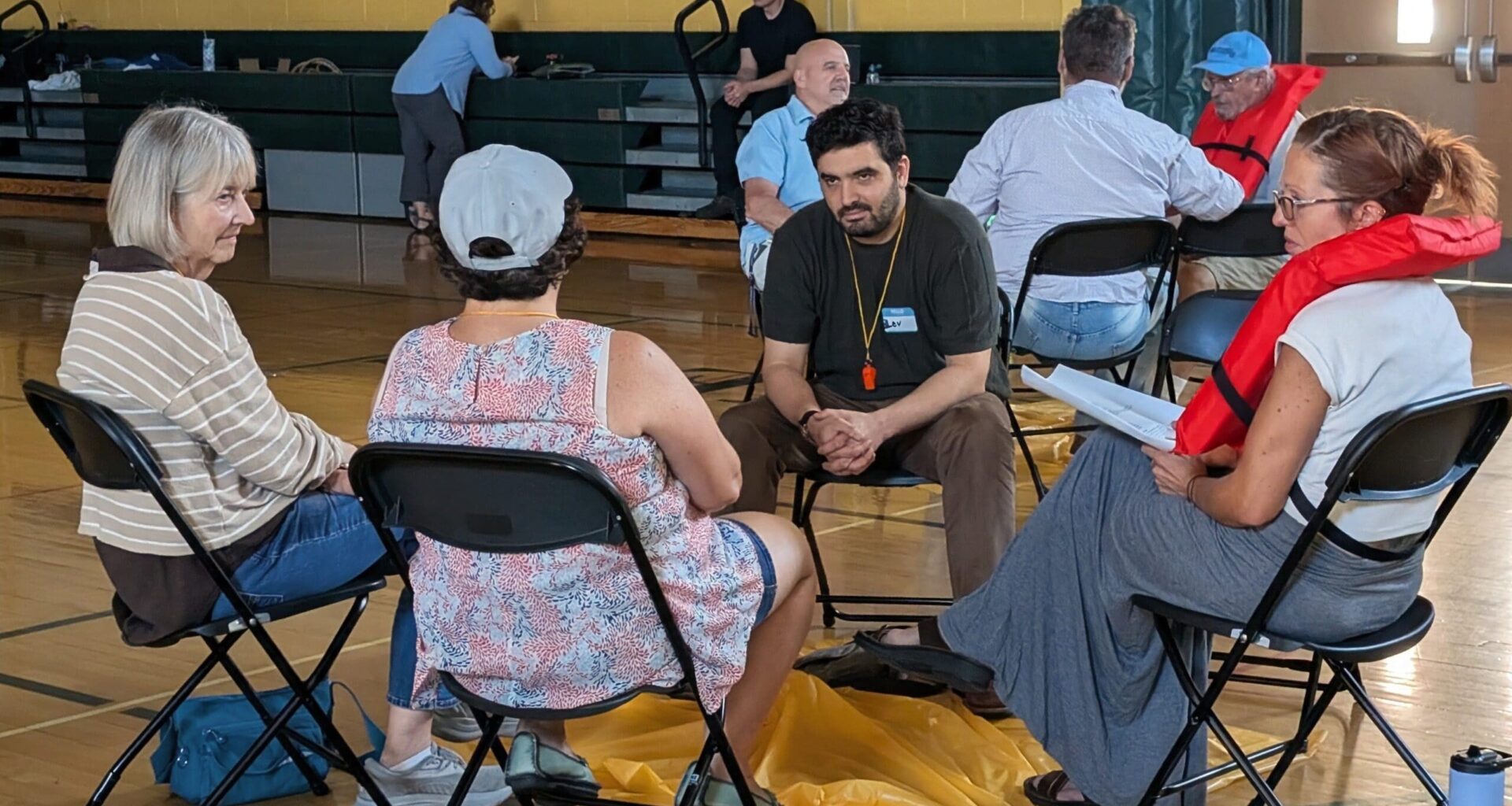
Kappeler shared her story at an Aug. 18 town hall organized by Affordable Pennsylvania. The event, titled “The People’s Raft-Up” and billed as an SOS!-themed affordability crisis town hall, drew people from throughout the Lehigh Valley to discuss financial challenges and to call on U.S. Rep. Ryan Mackenzie, the Republican congressman who represents the area, to reverse course on the policies he has championed.
Mackenzie, who is up for reelection in November, voted for the One Big Beautiful Bill Act, the budget bill that slashed funding for Medicaid and federal food assistance and cut taxes for the country’s wealthiest residents. He has also backed President Donald Trump’s tariffs on goods imported into the United States, which have led to higher prices for groceries and other consumer goods, including school supplies, and supported the Trump administration’s war in Iran, which has caused energy costs to rise worldwide. Along with other congressional Republicans, Mackenzie opted not to extend the Affordable Care Act enhanced premium tax credits that helped millions of Americans purchase health insurance. Since the lapse of the tax credits, 191,000 Pennsylvanians have lost health coverage, according to the state’s ACA marketplace.
A June fact sheet issued by Democratic members of the congressional Joint Economic Committee stated that the average household in Pennsylvania has spent $3,900 more on goods and services under Trump, including $842 more on housing costs, $395 more on gas and $210 more on electricity.
“People just want their elected leaders to fight for them instead of lining the pockets of billionaires with tax breaks,” Affordable Pennsylvania executive director Rachele Fortier told the Pennsylvania Independent. “They want to see these Medicaid and SNAP cuts reversed. They want to see the enhanced premium tax credits restored. They want to end the conflict in Iran. They don’t want us getting into foreign wars that are making everyone’s bills more expensive. They want to see the tariffs reversed.”
Rising costs and financial stress permeate Kappeler’s life. Two years ago, she left her job, and lost the health insurance that came along with it, because she had ended up spending her entire paycheck on childcare. Now she’s working on launching a nonprofit, Sunshine Soul Squad, aimed at building children’s confidence through crafts and creativity.
Just getting to the town hall meant driving 37 minutes at a time when it costs $70 to fill her gas tank. As Kappeler drove home from the town hall, she and her daughter spoke of the event, and of the kind of world for which they hold out hope — a place in which everyone is doing well and has a place to sleep and food to eat.
“Whereas right now the policymakers and everybody that is so far removed from us, they don’t look at us,” she said. “They don’t take our actual lives into consideration. They make these policies; they line their pockets, and then we are left to help each other while we’re all drowning.”