
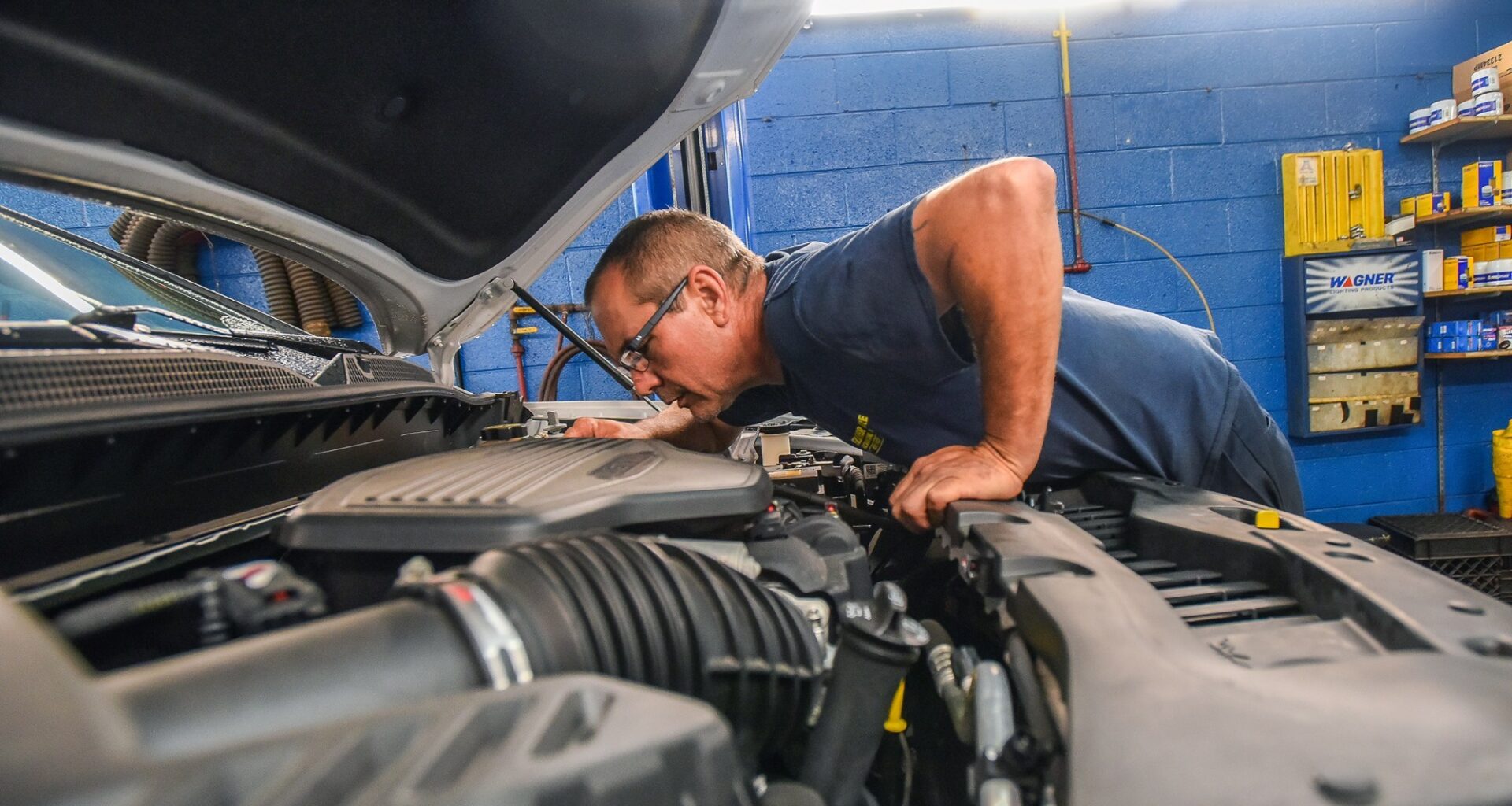
From oil changes to tire alignments, preventive maintenance can keep vehicles on the road longer and save consumers money in the long run.
Average car maintenance costs range from around $400 to $1,200 per year. However, how much each driver pays depends on the type of car and how they keep up with routine maintenance, which can reduce the frequency of unplanned repairs, according to RepairPal data for more than 30 car brands.
Tom Tranguch, owner of T&F Tire Service & Supply on Market Street in Kingston, sees customers going in two different directions amid the current economic landscape.
“There is one set of folks that decide they’re going to maintain these cars because new ones are so expensive, so it makes sense to invest in what they have to prolong their usefulness,” he said. “Then there are other folks that wait until it breaks before they spend any money on the car, and that is usually the most expensive option.”

Mechanic Aaron Atlee begins an inspection on a vehicle at Kelleher Tire in North Scranton Thursday, August 20, 2026. (SEAN MCKEAG / STAFF PHOTOGRAPHER)

Mechanic Aaron Atlee begins an inspection on a vehicle in the garage of Kelleher Tire in North Scranton Thursday, August 20, 2026. (SEAN MCKEAG / STAFF PHOTOGRAPHER)

Mechanic Aaron Atlee removes the wheel of a vehicle during an inspection at Kelleher Tire in North Scranton Thursday, August 20, 2026. (SEAN MCKEAG / STAFF PHOTOGRAPHER)
Show Caption
1 of 3
Mechanic Aaron Atlee begins an inspection on a vehicle at Kelleher Tire in North Scranton Thursday, August 20, 2026. (SEAN MCKEAG / STAFF PHOTOGRAPHER)
Tranguch sees many customers who have the financial means taking their vehicles into the shop for routine work.
“We’re busy because cars are just so expensive that people are repairing and maintaining them, but not everybody can afford to do that,” he said. “And, sadly, if you can’t, it just seems like it becomes more expensive. So if it’s difficult to put a little bit of maintenance into your car, it becomes even harder to fix the car when something major breaks later. Maintenance makes sense because you can plan for it and you can budget for it. The repairs are more difficult financially and time wise. They’re usually inconvenient and expensive.”
Roger Swingle, a mechanic with Kelleher Tire, 430 W. Market St., Scranton, stressed that regularly scheduled oil changes help preserve the vehicle’s motor.
“An oil change is very inexpensive compared to a whole motor,” he said. “If you keep putting off your oil changes, eventually your motor is going to have to be replaced.”
While Swingle noted drivers can likely find a used motor for about $5,000, a new motor for the average domestic vehicle runs around $10,000, with motors for high-end brands like BMW and Cadillac selling for up to $20,000.
Mechanics diagnose many potential issues during state safety inspections each year, Swingle added.
“Our roads in Pennsylvania aren’t kind to cars anymore,” he said. “There are potholes and everything. You see that your suspension wears out quicker. When you have a worn suspension, it takes longer to stop the vehicle and it creates tire wear. If your brake system is faulty and your pads aren’t working right, your vehicle is not going to stop as quickly. If your fluids are bad, it’s going to take a lot of toll on the vehicle, and cars today aren’t cheap to replace anymore. It’s easier and more cost effective to do the services on them that are required by the manufacturer.”
Additionally, drivers should take the same preventive measures with new cars as used ones, Swingle said.
“It’s an investment,” he said. “New cars aren’t cheap anymore. Years ago, you could buy a new car for $15,000 to $20,000. Now you’re averaging $20,000 to $30,000. You have to stay on top of it if you want it to last.”
Swingle recommends customers who purchase new tires have an alignment done at least once a year.
“The best time to do it is in the springtime after the snow’s gone and the potholes start getting filled in,” he said.
Tranguch also urges drivers to keep their vehicles aligned as they traverse streets and highways throughout the region.
“Our roads are in pretty rough shape, so aligning your vehicle and checking your tire pressure typically extends the life of the tire,” he said. “If the vehicle is out of alignment, you’re going to prematurely wear tires, and that can be a big expense, and unsafe. Since COVID, like everything, we’ve seen inflationary pressure on tire pricing. It would not be uncommon to spend $1,000 on a set of tires, or more, depending on the type of vehicle.”
Replacing spark plugs and paying prompt attention to diagnostic issues can help drivers save money at the pump, Tranguch said
“The other big cost is fuel, so it may make sense to check under your hood to see if your plugs need to be changed,” he said. “Or, if you have a check-engine light on, it could indicate that the car is not running efficiently, costing you more in terms of fuel and maybe other repairs.”
A task as simple as regularly washing your vehicle during the winter months can also help preserve the exterior, Swingle said.
“The salt they put on the roads actually deteriorates the metal pretty quickly,” he said. “It sticks to the car and you have to get that stuff off after a snowstorm to keep the body lasting a lot longer, too.”