
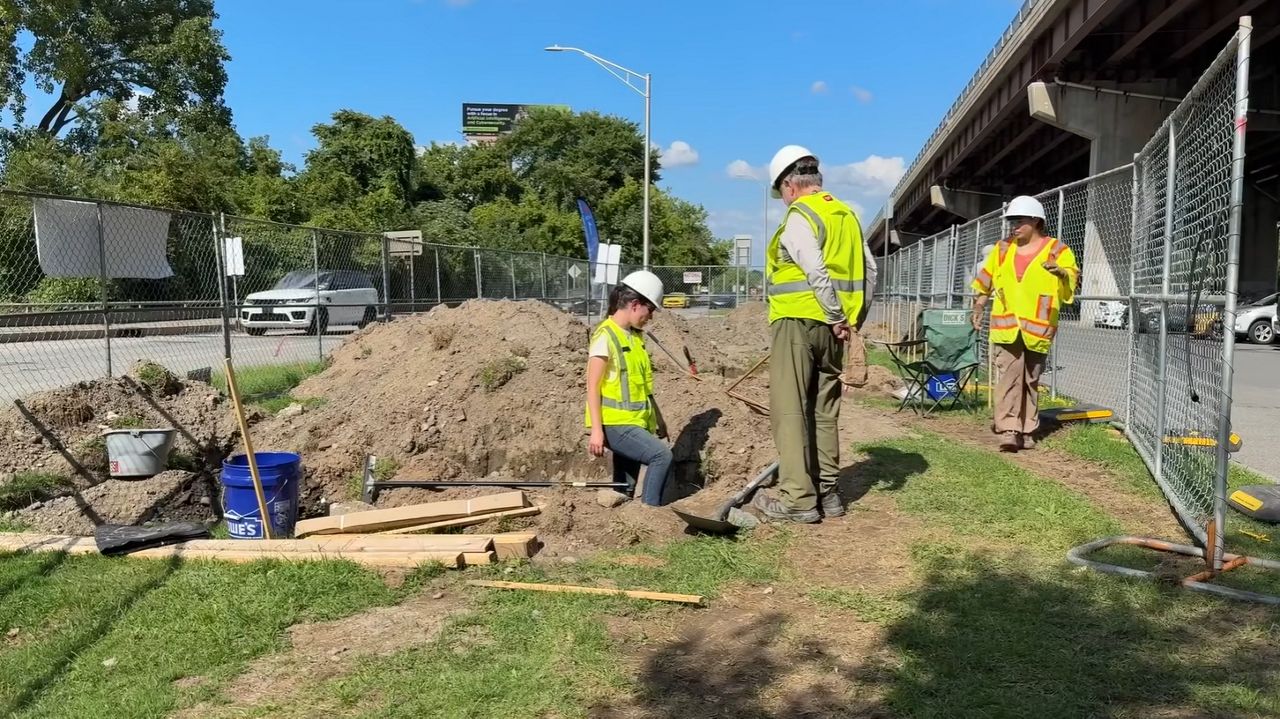
Archelogists and crews from Albany Waterway Inc. and SUNY Polytechnic Institute have been digging to uncover the eastern section of the historic Erie Canal Lock 1 since Aug 3.
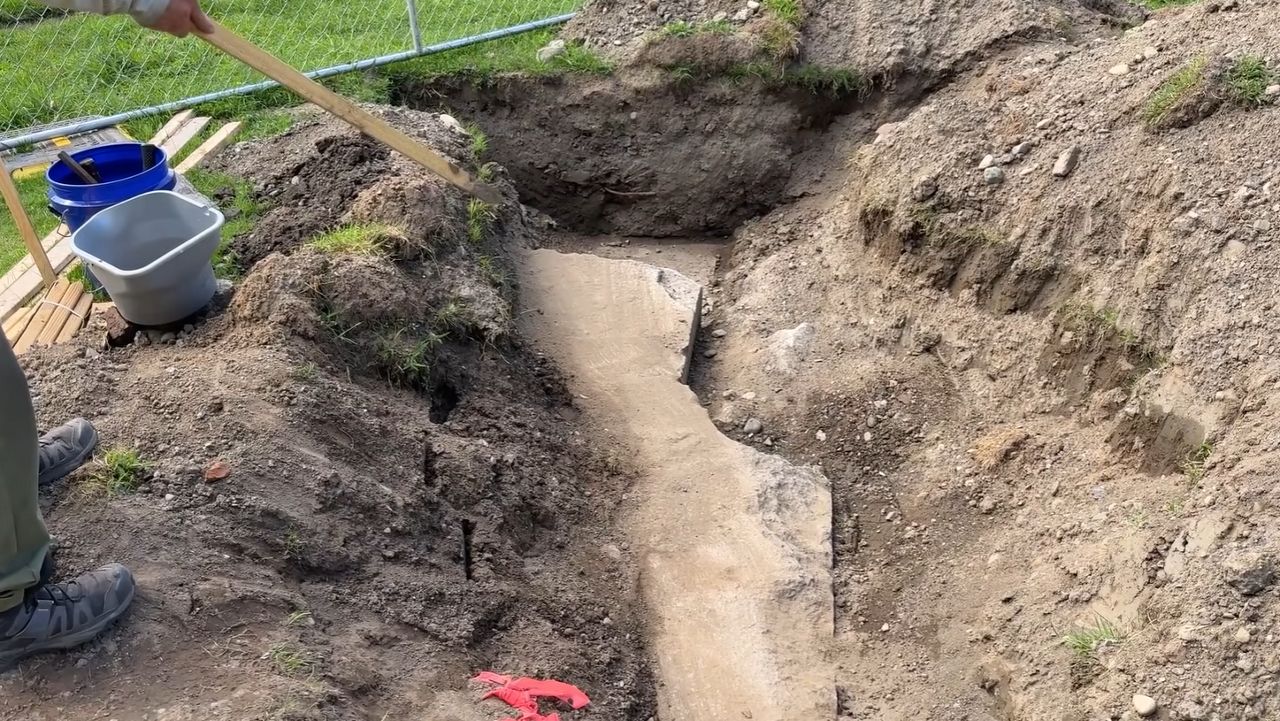
“The original lock is 1823, 1825. That’s called Lock 53. It was measured from Rome, New York to Albany, and then from Rome to Buffalo. They had so much traffic that in 1842, they enlarged it. And this is the enlarged lock,” archaeologist Denis Foley explained.
They found the location of the lock using maps and ground-penetrating radar. And they’re now using LiDAR — light detection and ranging techonology – as they dig.
(Spectrum News 1)
“It doesn’t penetrate the earth like ground-penetrating radar, but … it finds the small irregularities,” said Andrew Wolfe, associate professor of civil engineering and project manager at SUNY Polytechnic Institute. “Even though the ground looks flat, you’re probably going to see some indentations where the lock walls were.”
According to Albany Waterway Inc., the area was abandoned in 1921. The Delaware and Hudson Railroad filled the area around Lock 1 and used the lock as a dump. The lock played a major role in New York’s history, including the Underground Railroad.
“Harriet Tubman came here in the 1850s to Albany in order to facilitate getting runaway slaves to Canada,” Wolfe said.
There are big plans for the future of the lock.
“They would come into this lock, they come into a marina, and there’d be development all around that, similar to what happened in Buffalo, where they built something called Canalside,” said B.J. Costello, chairman of Albany Waterway Inc. “And Canalside draws millions of visitors, has produced a lot of income for Buffalo, and there’s a lot of good development. That would happen here.”
For now, digging ends on Friday next week. They hope to leave the dig open so people can come view the historic stones and run some occasional tours.
“The Erie Canal changed America,” Costello said. “Albany, when it was built 200 years ago, was the eighth largest city in America. Why? Because of the Hudson River. But today, we take advantage of none of that. So this is to change Albany back to what it was.”