
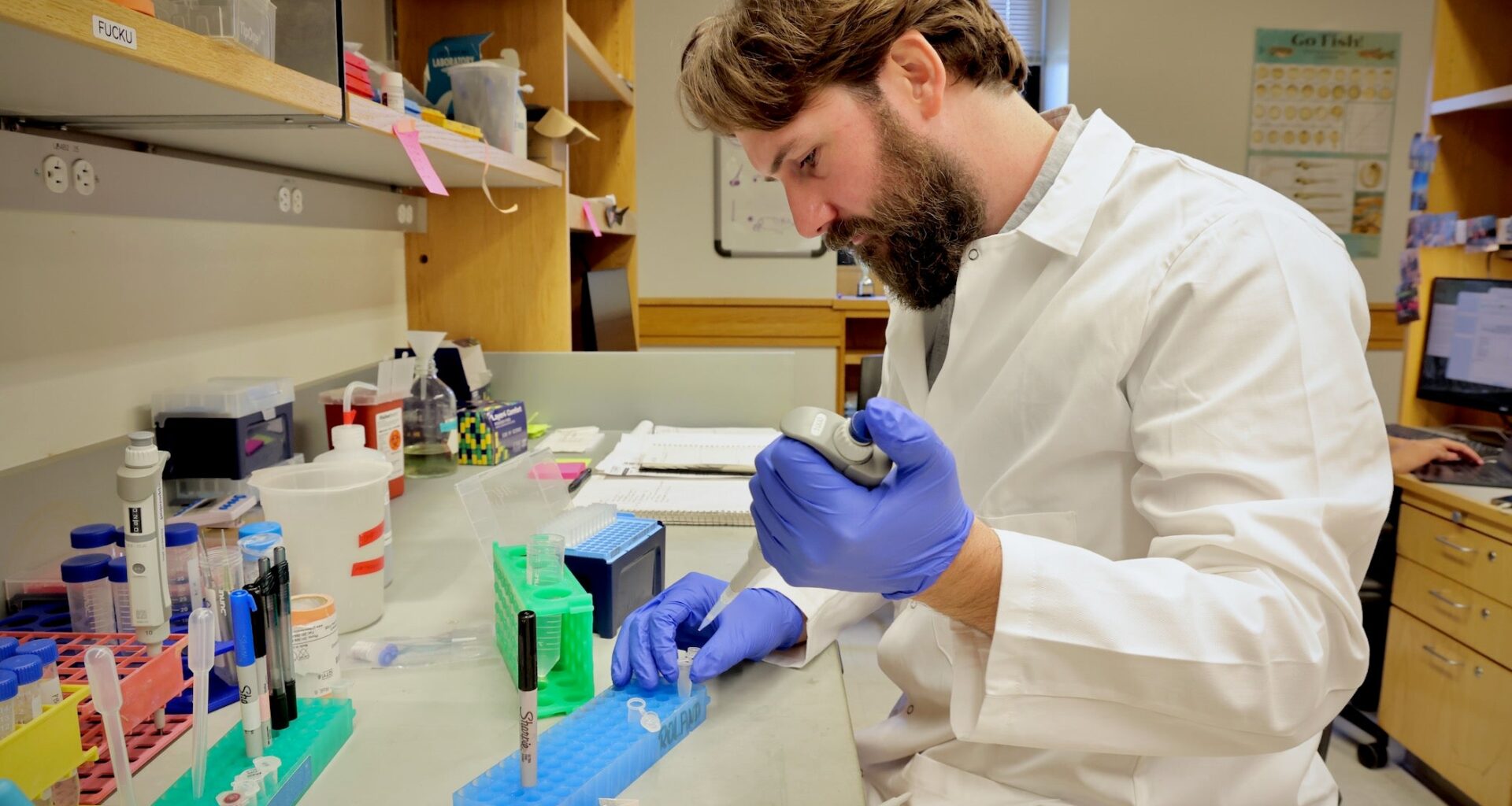
Researchers around the country have submitted comments objecting to the new rules, including Tjaden.
She said that it will make it harder to do research. For instance, she studies a rare disease called Hirschsprung disease where nerve cells are missing in a baby’s intestine, so the baby cannot relax their colon, leading to backed up bowels and sometimes life-threatening infections. She said much of this research is led by Chinese researchers because China has a much larger population, and there are hospitals that perform surgeries to treat these patients multiple times a week, whereas there are not that many patients in the U.S.
“They’re actually able to push the science forward in a really, really meaningful way that we just can’t do because we don’t have that many people in our population,” she said. “And so to then limit people who study rare diseases from working with those people who have the population to study this, I think that’s another thing that really, really scared a lot of pediatricians and a lot of people who study rare disease.”
She added that it ultimately will be harder for scientists to remain in academia and make advances.
“Many people are considering their backups of, ‘Well, maybe I just won’t be a scientist in academia anymore. And maybe I’ll go into, you know, a more stable job, instead of this,’” she said. “And I think that losing scientists who invested their entire lives up until this point because of something like this is going to be a major, major hit to our scientific community.”
Researchers worry about losing future scientists, discoveries
Graduate students and other early career scientists who might have gone on to have careers in research may look for different options, and the U.S. will lose out on the discoveries they could have made as a result, said Usama Bilal, associate professor of epidemiology and urban health at Drexel University.
“That’s something that we’ll have to reckon with in a few years when we see: Was there a generation of scientists that was lost or not? Maybe we will be able to recover. I’m hopeful that we will be able to recover,” he said.
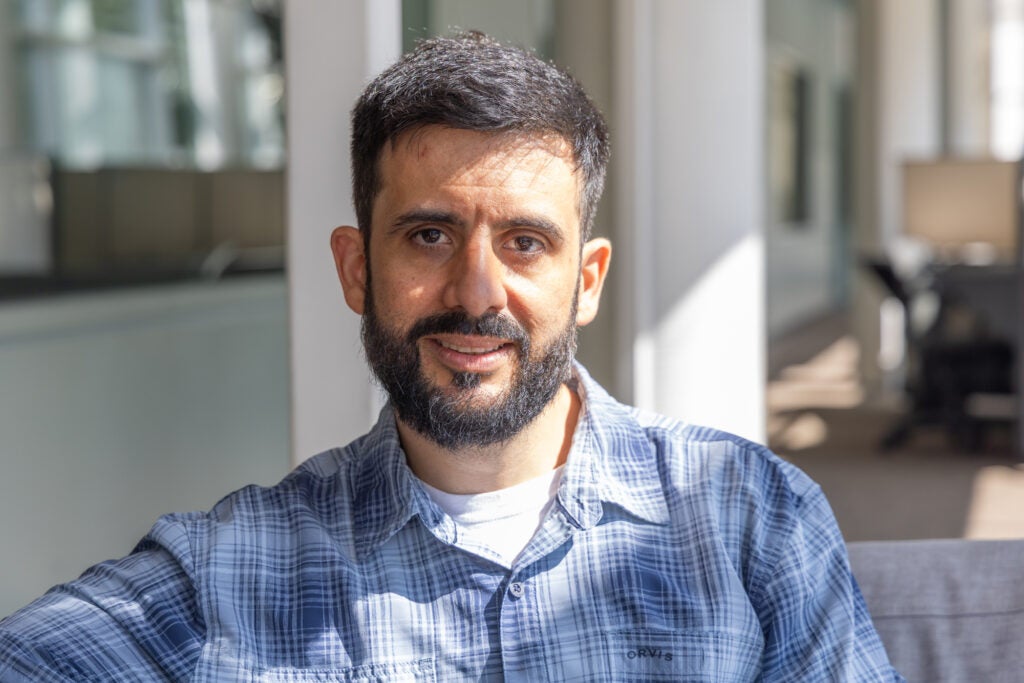 Usama Bilal, an epidemiologist at Drexel University, spoke out publicly against a rule change which would give political appointees a greater say over what research projects get funding. (Kimberly Paynter/WHYY)
As an example of the kind of science that may no longer get the sustained federal funding needed for a discovery, Andrew Landstrom, professor of pediatrics at CHOP, pointed to a patient he saw in 2012 — a child who died of cardiac arrest while playing basketball. Doctors didn’t know why he was sick, and by studying his family members, found a new gene. This family had a variant of the gene that caused the heart conditions. By studying the new gene, researchers found that it could be a target for therapies to treat future patients, and published their discovery in a journal article in 2025.
“That’s the kind of work that we strive to do. A tragedy to potentially a new therapy. But that process took nearly a decade,” Landstrom said. “And I worry that when the process of awarding meritorious grants is no longer left to the specialist scientist, the jury of our peers, that the opportunity for those kinds of discoveries that are a long game, that can make big jumps but require time and sustained effort, that that will be lost.”
 Andrew Landstrom, a professor of pediatrics at the University of Pennsylvania and a clinician at CHOP, spoke out publicly against changes to federal science funding. (Kimberly Paynter/WHYY)
The White House did not respond to a request for comment.
In response to the scientists’ comments, Mike Gonzalez, a senior fellow at the Heritage Foundation, a conservative think tank, said that no one has a right to federal funding, and the new rules simply make scientists accountable to an elected president who can pick political appointees to make the funding decisions.
“Just stay on real pure science, nothing that will have a political impact is liable to be changed if the next administration changes,” he said. “The fact that they fear that their peer-reviewed investigation is going to be halted if a different administration gets into power shows … this political dimension to their investigation. Otherwise, they wouldn’t be concerned at all. If we’re talking about cancer research, then it doesn’t matter what administration is in charge. We’re obviously not talking here about cancer research or cardiac condition research. It has to do with other things.”
The public comment period for the new regulations have passed, but it remains to be seen what happens in the end. The Senate introduced a plan to delay this rule until mid-December, tying it to a plan to fund the federal government.