
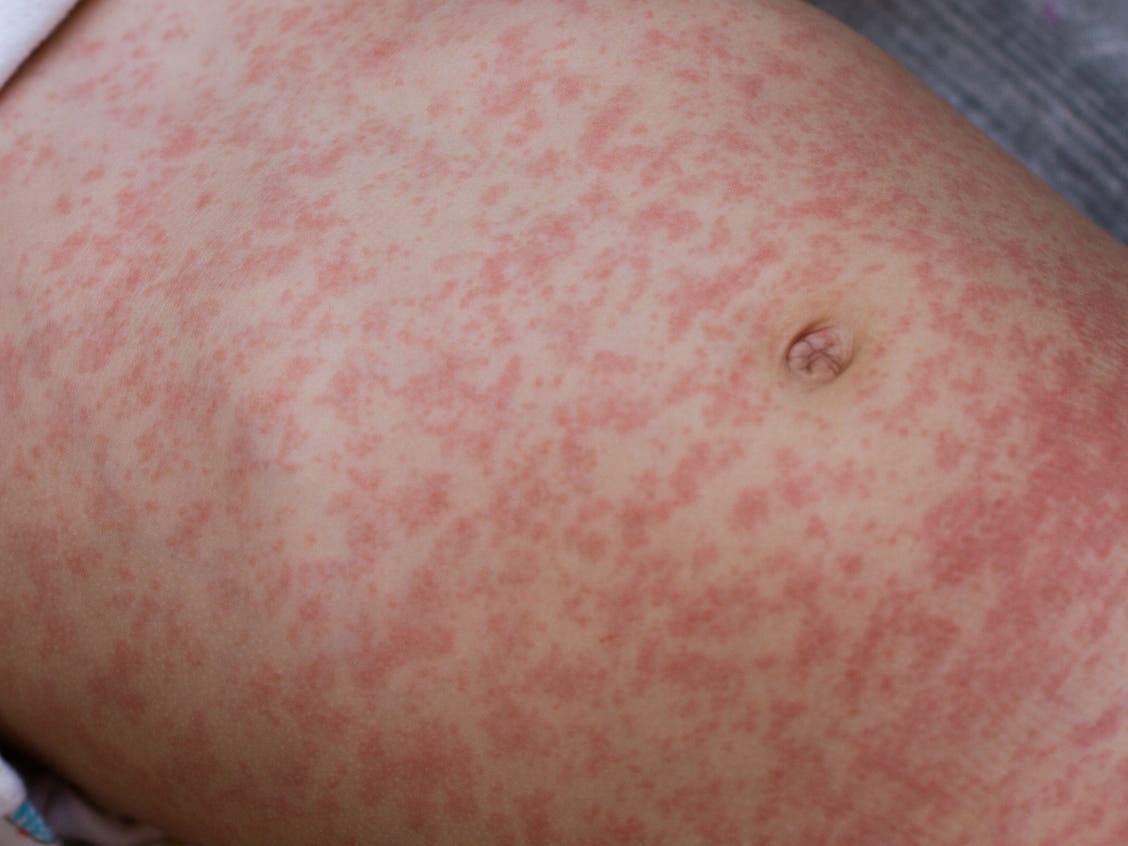
A highly contagious virus, measles can cause serious short- and long-term health problems, including pneumonia and brain swelling. Nearly 20 percent of people who contract the virus require hospitalization.
According to the health department, although deaths related to measles are rare, they occurs in one to three patients per 1,000 cases.
Measles spreads when a person who is infected breathes, coughs, or sneezes. The virus remains infectious in the air and on surfaces for up to two hours after the person with infection leaves the area.
Early symptoms of measles include fever, cough, runny nose, and red, watery eyes (conjunctivitis). The measles rash follows a few days later, starting on the head and spreading downward. Because early symptoms look similar to other respiratory viral infections, health department officials said it is imperative to contact a health care provider early if someone has these symptoms or may have been exposed to measles.
Symptoms can start 7 to 21 days after exposure.