
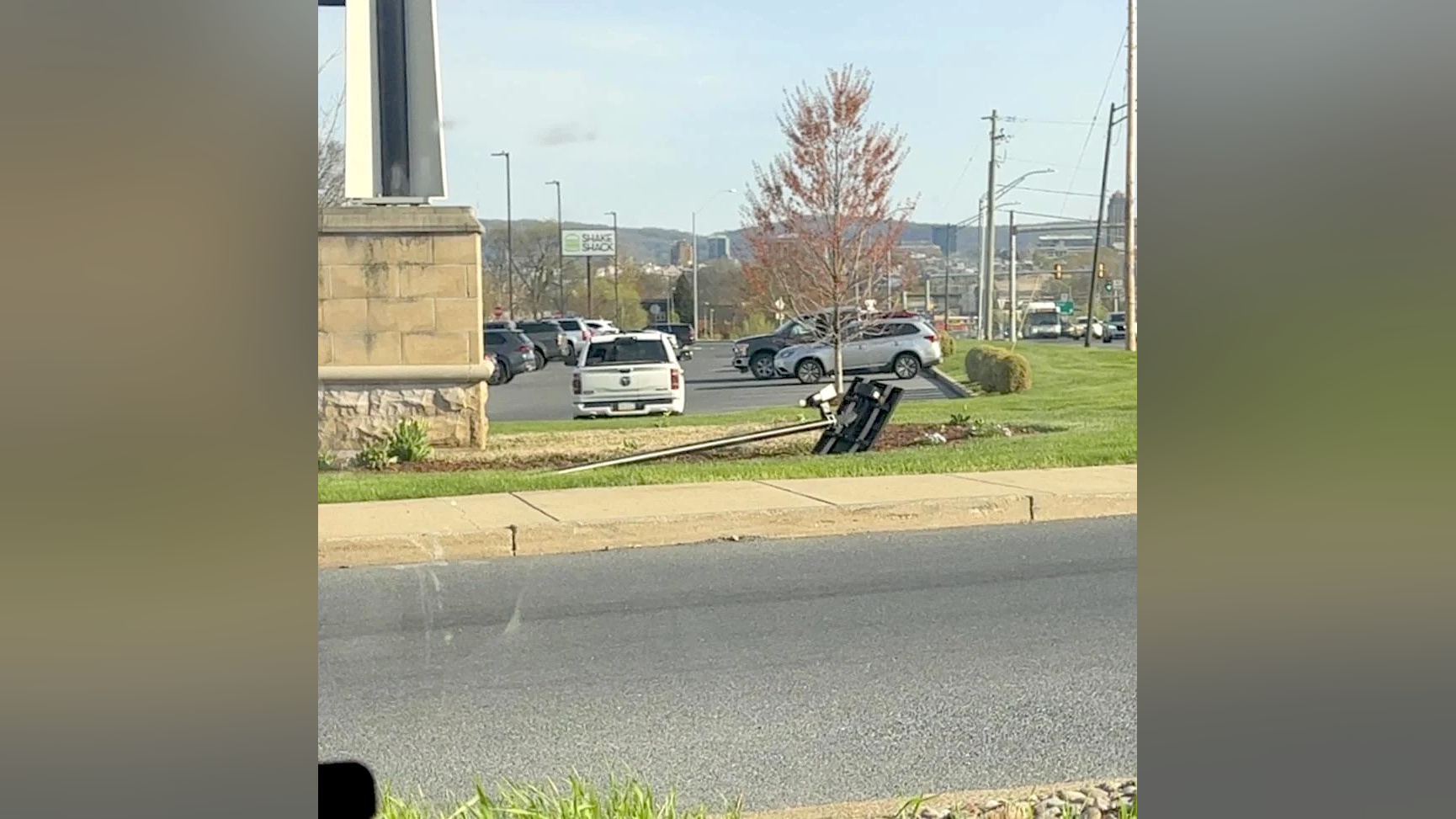
BETHLEHEM, Pa. — The Bethlehem Police Department released a public report Friday defending its use of Flock automated license plate readers, saying they are investigative tools rather than instruments of mass surveillance — a characterization civil liberties advocates dispute.
The report, signed by Police Chief Michelle Kott, addresses concerns that readers are being used to monitor residents. It does not disclose how many readers the city operates, how many searches officers have run, which outside agencies can query Bethlehem’s data, or whether any audit has found misuse.
The department denied a news organization’s request for those records earlier this year.
What the department says the readers do — and don’t do
The readers capture a license plate number, state of registration, vehicle make, model and color, plus the date, time and location of the camera, according to the report.
The department says data is purged after 7 days and that most vehicles captured by the readers are never reviewed by an officer.
Stay informed on Lehigh Valley technology
Get the latest technology news and updates from across the Valley.
By subscribing, you agree to our Privacy Policy and consent to receive updates.
Flock announced on Aug. 13 that it would cut its default retention period nationwide from 30 days to 7 days, though departments may keep the longer window. The company also said it would require users to enter a criminal case number for every search and to use a feature that flags abnormal activity for review.
The report states the readers do not use facial recognition, identify drivers or passengers, record conversations, monitor protests, provide live video feeds or catalog residents’ daily routines. The department says it does not own or operate Flock’s separate surveillance video cameras.
The department also runs a separate, voluntary Community Camera Program, powered by Flock, in which residents and businesses register or integrate their own security cameras with police. The department said that when it launched the program in September 2024, integration gives it direct access to live feeds in the event of nearby emergencies.
Participants set their own permissions, including whether to provide live or recorded access. Those cameras are privately owned and are not plate readers, consistent with the report’s wording, but the report does not mention the program.
Investigators generally query the system only after a crime or to find a vehicle linked to an identified public safety threat, the report says. Every search is logged with the user’s identity, the time, the information queried, and the stated reason, and misuse may result in discipline or termination under Police Directive 3.18.1.
Stay informed on Lehigh Valley technology
Get the latest technology news and updates from across the Valley.
By subscribing, you agree to our Privacy Policy and consent to receive updates.
Cases the department credits to the technology
The report cites investigations it says plate reader data aided, including a 2025 shooting at Sizzling Bites, where it says the data helped detectives identify vehicles used by fleeing suspects, and a 2026 case in which officers located a missing person.
The department calls the 2018 murder of Tyrell Holmes its most compelling example. Holmes, 18, was stabbed and set on fire while still alive outside the Parkhurst Apartments, and the report says plate data corroborated witness testimony, disproved false statements by the defendants and documented one defendant’s travel to and from the scene.
All four men charged were convicted; the last, Zahmire Welcome, was sentenced this year to life without parole.
Holmes was killed in April 2018, more than six years before Bethlehem announced its Flock readers, so the data in that case did not come from the Flock system.
The report describes its examples as involving “ALPR technology” generally rather than Flock specifically, and does not say which system produced the data in any of the cases it cites.
The report also frames the readers as a “force multiplier” amid staffing shortages. Kott told City Council at a budget hearing in November 2025 that the department, authorized for 154 officers, had 138 on the roster, 16 vacancies and only 127 able to report for work.
What the report doesn’t address
The report’s central assertion — that the readers are “not mass surveillance” — is disputed.
In a letter signed by the American Civil Liberties Union and other groups, opponents wrote that the cameras photograph every passing vehicle “regardless of any suspicion of wrongdoing,” with most of the data flowing into a searchable national database law enforcement can query without court approval.
Regarding data sharing, the report states that access is limited to authorized criminal justice agencies. It does not say whether Bethlehem participates in Flock’s national lookup network, which lets agencies nationwide search a local department’s data, or whether federal agencies can query the city’s records.
The oversight it describes is internal: the police administration reviews its own search logs, and the document identifies no independent audit.
Those questions have driven controversy elsewhere. Audits in San Francisco and in Bend, Oregon, found federal and out-of-state agencies had searched local Flock data, in some cases with departments running queries on behalf of federal immigration authorities.
Flock says it does not work with U.S. Immigration and Customs Enforcement and removed federal agencies from its national search network in August 2025.
The department has not made its search records public. The Pennsylvania Capital-Star filed Right-to-Know requests earlier this year with six departments seeking Flock system data; Bethlehem and Allentown each denied, citing the Right to Know Law’s exception for records related to criminal investigations. Allentown also cited a state law restricting access to criminal history records.
Chad Marlow, a privacy expert at the ACLU, told the outlet that plate reader data and audit logs are not investigative materials. “They capture data on every single car that goes by without any suspicion that any of those cars are involved in a crime,” he said.
The one department that granted the request was New Castle, in Lawrence County, which has two Flock cameras. Its external search logs for the 36 months from January 2024 through June 2026 contained more than 11 million records of searches of its database by other departments around the country, according to the Capital-Star. New Castle’s own officers ran just over 10,000 searches in that period.
Other departments and agencies listed “immigration” or “ICE” as the reason for thousands of those searches. Flock says it has no business relationship with federal immigration authorities and that federal sharing is off by default, though individual departments may turn it on.
New Castle’s internal log showed that some officers ran dozens of searches for the same plate numbers over hours, though they provided consistent, specific reasons. New Castle police Chief David Cumo did not respond to the outlet’s questions.
Pennsylvania has no statewide law setting privacy rules for the data, though 17 other states regulate the cameras, according to the National Conference of State Legislatures.
State Rep. Tarik Khan, D-Philadelphia, circulated a memorandum this month seeking cosponsors for a bill that would allow individuals to sue for misuse and authorize the attorney general and district attorneys to bring enforcement actions. It would also require documented reasons for searches, audit trails, retention standards and transparency measures. Among its seven cosponsors is Rep. Robert Leadbeter, R-Columbia.
“There is a clear misuse of this technology from some of the people who should be the guardians of it,” Khan said.
Rep. Nathan Davidson, D-Dauphin, a cosponsor, has separate legislation barring police from sharing the data with federal agencies or other states to track people seeking abortion or other health care. Rep. Jen O’Mara, D-Delaware, has proposed limiting what agencies may use the data for and barring vendors from selling it.
Davidson said the bills are unlikely to reach Gov. Josh Shapiro’s desk before the session ends this year. “I think it’s about teeing up the ball and the conversation for next session,” he said.
Bethlehem announced the readers in September 2024, the same day it launched the camera program, saying they would provide real-time alerts to track and recover stolen property. The department has not said publicly how many it operates or where they are mounted.
DeFlock, a crowdsourced map of reported camera locations, listed more than 200 plate readers across the Lehigh Valley as of Tuesday, more than 80 of them in Allentown and Bethlehem.
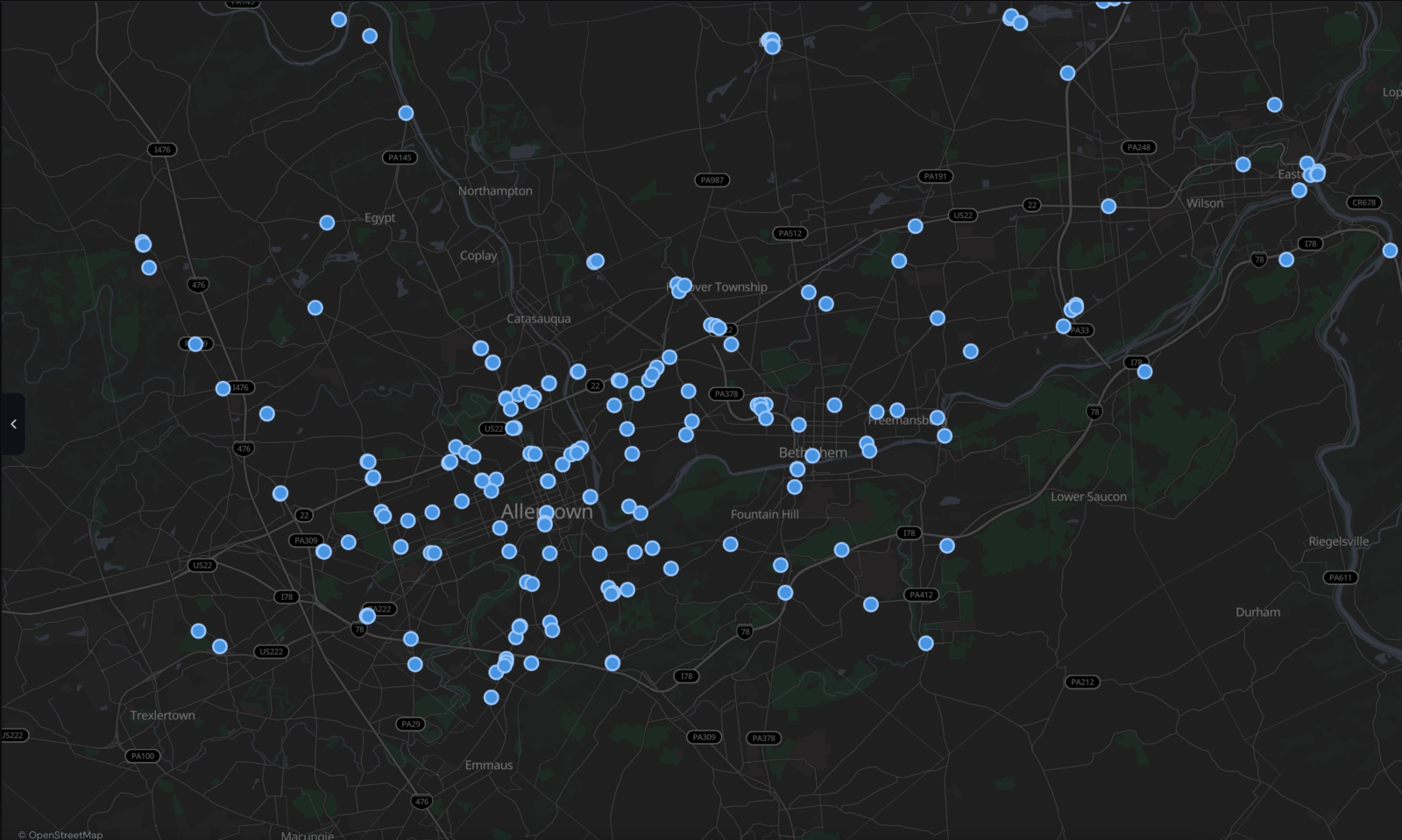 A crowdsourced DeFlock map shows the locations of Flock Safety license plate readers across the Lehigh Valley as of Aug. 25, 2026. (Credit: Deflock)
The city separately operates a network of traffic and intersection cameras, which are not plate readers and are not addressed in the report. Kott told council in March 2025 that it covered more than 28 intersections, and sought about $33,000 in federal grant money to add cameras at Broad and Center streets, Broad and Linden streets and along Stefko Boulevard.
“Public trust is earned through openness, accountability, and responsible policing,” the report says.
Stay informed on Lehigh Valley technology
Get the latest technology news and updates from across the Valley.
By subscribing, you agree to our Privacy Policy and consent to receive updates.